Cancer Survival Rate Estimator
Estimated Outcome
Getting a cancer diagnosis is one of the most frightening moments in a person’s life. The first question that usually pops into your head isn’t about side effects or insurance bills-it’s "How long do I have?" It is a natural human reaction to want a number, a timeline, a date. But if you are looking for a single answer to how long a cancer patient can live, you will be disappointed. There is no universal clock ticking down for everyone.
The reality is that survival depends on a complex mix of factors. Some people live decades after their diagnosis, while others face a much shorter journey. To understand what might happen, we need to look past the fear and examine the data: staging, tumor biology, treatment options, and overall health. This guide breaks down what "survival rates" actually mean and how doctors estimate life expectancy.
Decoding the Five-Year Survival Rate
When you hear statistics about cancer, you will almost always see the term "five-year survival rate." This is a standard metric used by organizations like the American Cancer Society and the National Cancer Institute. But it is often misunderstood.
A five-year survival rate does not mean you will only live for five years. It means that if you are diagnosed with a specific type of cancer, the percentage of people who are still alive five years later is X%. For many cancers, surviving five years without recurrence is considered a "cure," meaning the cancer is unlikely to come back. However, this is just an average based on large groups of people. It does not predict your individual outcome.
For example, according to recent data from the SEER Program, the five-year relative survival rate for all cancers combined is roughly 68%. But this number hides huge variations between different types of cancer:
- Skin melanoma: Approximately 93% survival rate when detected early.
- Breast cancer: Around 91% survival rate.
- Prostate cancer: Nearly 99% survival rate.
- Pancreatic cancer: About 13% survival rate.
- Lung cancer: Roughly 25% survival rate (though this is rising with new treatments).
These numbers give you a baseline, but they are historical data. They include people treated five or ten years ago. Today’s treatments are significantly better, which means your actual chances may be higher than the statistics suggest.
The Critical Role of Cancer Stage
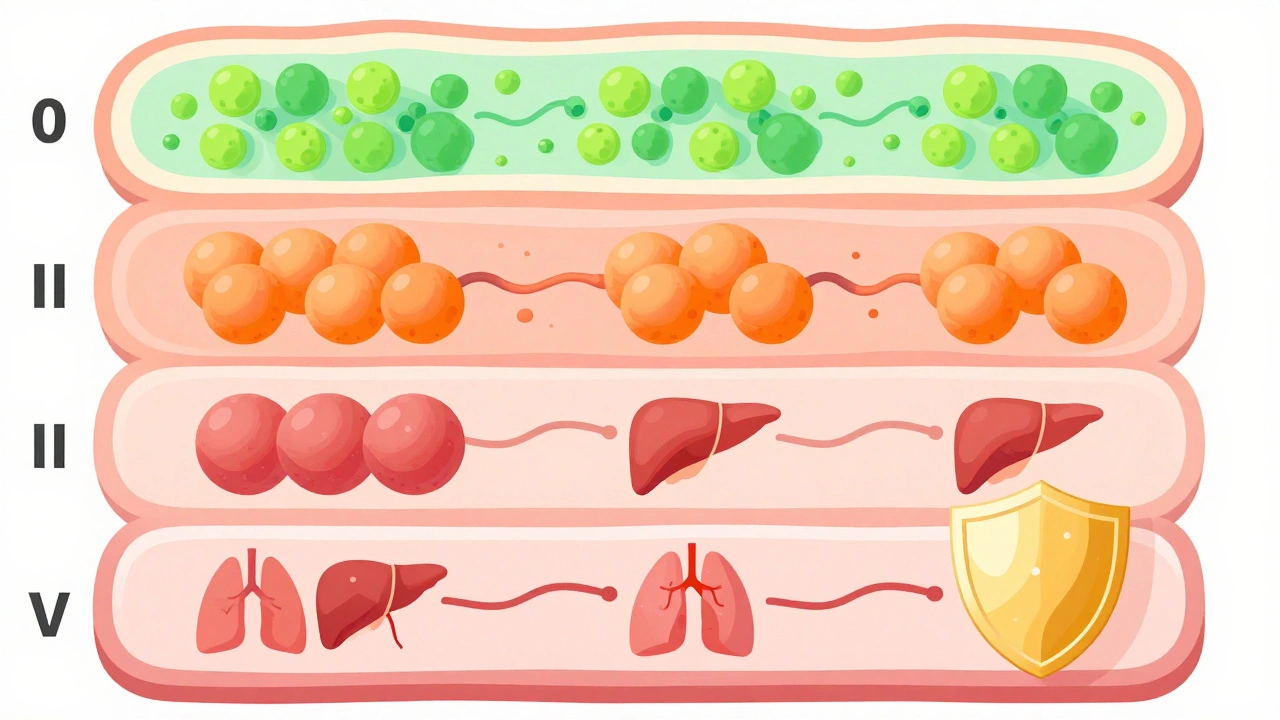
If there is one factor that matters more than any other in determining life expectancy, it is the stage of the cancer at diagnosis. Doctors use a system called TNM (Tumor, Node, Metastasis) to classify cancer, usually grouping them into four main stages:
- Stage 0: Carcinoma in situ. Abnormal cells are present but haven't spread. Survival rates are nearly 100% for many types.
- Stage I: Early-stage cancer. The tumor is small and confined to its original location. Treatment is often highly successful.
- Stage II & III: Locally advanced. The cancer has grown larger or spread to nearby lymph nodes. Treatment becomes more aggressive, involving surgery, radiation, and chemotherapy.
- Stage IV: Metastatic. The cancer has spread to distant organs like the lungs, liver, or bones. This is the most serious stage, but it is not always immediately fatal, especially with modern therapies.
Consider breast cancer as an example. If caught at Stage I, the five-year survival rate is over 99%. If it spreads to distant parts of the body (Stage IV), the rate drops to around 30%. This stark difference highlights why screening and early detection are so vital. You cannot change your genetics, but you can influence when the disease is found.
Tumor Biology: Why Two Patients with the Same Stage Have Different Outcomes
You might wonder why two people with Stage II colon cancer have such different prognoses. The answer lies in tumor biology. Not all cancers behave the same way, even within the same organ. Pathologists analyze the tumor to determine its grade and molecular characteristics.
Grade: This refers to how abnormal the cancer cells look under a microscope. Low-grade tumors grow slowly and look somewhat like normal cells. High-grade tumors look very abnormal and tend to grow and spread quickly. A low-grade prostate cancer might never cause harm, allowing for active surveillance instead of immediate treatment. A high-grade version requires urgent intervention.
Molecular Markers: Modern oncology looks at genetic mutations within the tumor. For instance, in lung cancer, the presence of EGFR or ALK mutations makes the cancer responsive to targeted therapies like osimertinib or alectinib. These drugs can keep the cancer in check for years, turning what was once a rapidly fatal disease into a manageable chronic condition. Similarly, HER2-positive breast cancer responds well to trastuzumab (Herceptin), dramatically improving survival compared to HER2-negative cases.
This personalized approach means that your specific tumor’s DNA profile is just as important as its size or location.
Impact of Treatment Advances on Life Expectancy
Medicine moves fast. The landscape of cancer treatment has changed drastically in the last decade, particularly with the rise of immunotherapy and targeted therapy. These advancements are rewriting the rules of life expectancy for several major cancers.
Immunotherapy: Drugs like pembrolizumab (Keytruda) and nivolumab (Opdivo) help the body’s immune system recognize and attack cancer cells. In some patients with advanced melanoma or kidney cancer, these treatments have led to long-term remission where none existed before. Some individuals have been cancer-free for over a decade after starting immunotherapy.
Targeted Therapy: Unlike chemotherapy, which kills all rapidly dividing cells, targeted therapies attack specific vulnerabilities in cancer cells. For chronic myeloid leukemia (CML), a drug called imatinib (Gleevec) transformed the disease. Before Gleevec, the median survival was less than two years. Today, most CML patients live a near-normal lifespan, managing the condition with a daily pill.
CAR T-Cell Therapy: This involves engineering a patient’s own T-cells to fight blood cancers like leukemia and lymphoma. It has achieved remarkable success in cases where other treatments failed, offering hope for cures in previously untreatable scenarios.
Because these treatments are relatively new, they are not yet fully reflected in older survival statistics. If you are being treated today, you likely have access to tools that previous generations did not.
The Influence of Age and Overall Health
Your body’s ability to withstand cancer and its treatment plays a massive role in longevity. Doctors assess this through something called performance status, often measured by the ECOG scale. It evaluates how well you can perform ordinary tasks.
A younger, healthier patient can typically tolerate more aggressive treatments, such as high-dose chemotherapy followed by a stem cell transplant. This intensity can lead to better outcomes. An older patient with heart disease or diabetes might not be able to handle the same regimen, leading doctors to choose gentler options that prioritize quality of life over maximum tumor shrinkage.
However, age itself is not a death sentence. Many people in their 70s and 80s respond well to treatment. The key is comprehensive care that addresses all aspects of health, including nutrition, mental well-being, and management of other chronic conditions.

Living with Metastatic Cancer: A Chronic Condition?
Historically, a Stage IV diagnosis meant a short time left. Today, for many cancers, metastatic disease is being managed as a chronic condition, similar to diabetes or hypertension. Patients can live for years, sometimes decades, with regular monitoring and ongoing treatment.
Hormone receptor-positive breast cancer is a prime example. Women with metastatic breast cancer can often live for many years thanks to hormonal therapies and targeted drugs. The goal shifts from "cure" to "control," focusing on keeping the cancer stable and maintaining a good quality of life.
Palliative care is also crucial here. It is not just for end-of-life; it is specialized medical care focused on relieving symptoms and stress. Studies show that integrating palliative care early in the treatment process can actually extend life expectancy by helping patients stay stronger and adhere better to their treatment plans.
| Factor | Impact on Prognosis | Actionable Insight |
|---|---|---|
| Stage at Diagnosis | High. Earlier stages have significantly higher survival rates. | Participate in recommended screenings (mammograms, colonoscopies). |
| Tumor Grade/Biology | Medium-High. Aggressive cells require faster action. | Ask for genomic testing to identify targetable mutations. |
| Treatment Type | High. Newer therapies offer better control. | Seek second opinions at academic centers for access to clinical trials. |
| Overall Health | Medium. Better fitness allows for more effective treatment. | Maintain physical activity and nutrition during treatment. |
| Access to Care | Medium. Timely treatment prevents progression. | Navigate insurance and healthcare systems proactively. |
Questions to Ask Your Oncologist About Prognosis
Having an open conversation with your doctor is essential. Instead of asking "How long do I have?" try these more specific questions that provide clearer information:
- "What is the stage and grade of my cancer?"
- "Are there specific genetic markers in my tumor that affect treatment options?"
- "What are the goals of treatment: cure, control, or comfort?"
- "Based on current data, what is the typical outcome for someone with my specific profile?"
- "Are there clinical trials available that might offer newer therapies?"
Your doctor can give you a range rather than a single number. They can explain the uncertainties and help you make informed decisions about your care path.
Is a five-year survival rate a guarantee of living five years?
No, it is not a guarantee. It is a statistical average based on large groups of people diagnosed in the past. Individual outcomes vary widely based on health, treatment response, and cancer type. Many people live much longer than five years, and some are cured.
Can cancer be cured at Stage 4?
In some cases, yes, particularly if the metastasis is limited and can be surgically removed. However, for most Stage 4 cancers, the goal is long-term control rather than a complete cure. With modern treatments, many patients live for years with metastatic disease.
How does age affect cancer survival?
Age affects survival indirectly through overall health and ability to tolerate treatment. Older adults may have fewer options for aggressive therapies, but many still achieve excellent outcomes. Biological age and fitness level are often more important than chronological age.
What is the difference between cancer grade and stage?
Stage describes how far the cancer has spread in the body (location and size). Grade describes how abnormal the cancer cells look under a microscope and how fast they are likely to grow. Both are critical for determining prognosis and treatment.
Do survival rates improve every year?
Yes, survival rates generally improve over time due to better screening, earlier detection, and more effective treatments like immunotherapy and targeted drugs. Statistics often lag behind current medical advances, so your personal prognosis may be better than historical data suggests.

Write a comment