Pain & Recovery Tracker for Knee Replacement
Your Recovery Day Two Tracker
Track your pain, swelling, and mobility progress during the most challenging phase of knee replacement recovery. Day two is often the hardest - this tool helps you understand your progress.
Recovery Insights
What this means: Your pain level and mobility suggest you're in the critical adjustment phase. This is normal and expected according to recovery guidelines.
Recommended Actions
- Apply ice for 20 minutes every hour
- Elevate leg above heart level
- Take short walks (aim for 20-30 steps)
After knee replacement surgery, most people expect the day of the procedure to be the worst. But for many, the real challenge hits on day two - the day after surgery. That’s when the anesthesia wears off completely, the pain meds start to lose their edge, and the reality of mobility resets sets in. It’s not just about discomfort. It’s about the sudden, overwhelming need to move when every muscle, ligament, and joint screams no.
Why day two? Because that’s when the body shifts from passive recovery to active healing. You’re no longer numb. You’re awake. And now, you have to walk. Not far, not fast - just enough to keep blood flowing, prevent clots, and start rebuilding strength. But standing up from a bed, taking two steps with a walker, or even bending the knee past 90 degrees feels like climbing a mountain in a full suit of armor.
Doctors and physical therapists often say the first 24 hours after surgery are about survival. Day two is about adaptation. You’re not just healing - you’re relearning how to be human again. Simple tasks become tests: using the bathroom, getting dressed, sitting in a chair without sliding off. Even breathing can feel harder because you’re not used to the way your body moves now.
Why Day Two Is So Tough
The pain on day two isn’t just from the incision. It’s from swelling. From inflammation. From the surgical trauma to bone, cartilage, and surrounding tissue. Your knee was cut open, reshaped, and replaced with metal and plastic. That’s not a minor tweak - it’s a major rebuild. And your body knows it.
On day one, you’re still under the influence of long-acting numbing agents injected during surgery. Pain pumps, epidurals, or nerve blocks are often still working. By day two, those effects fade. Oral painkillers take over - but they’re not as strong. And they don’t work instantly. You feel the pain before the medicine kicks in. That delay makes it worse.
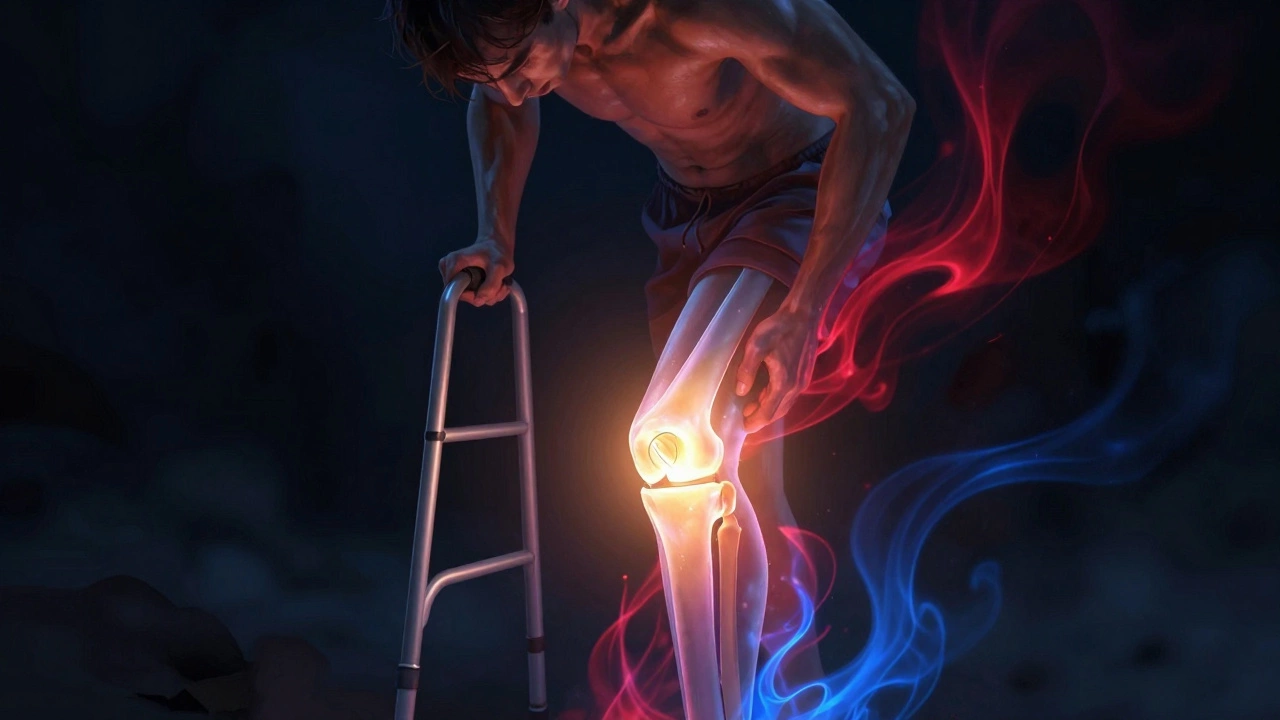
Also, swelling peaks around 48 hours after surgery. Your leg swells like a balloon. Tight skin. Tight muscles. Tight joints. That pressure adds to the pain. It’s not just sharp - it’s deep, heavy, and constant. Some people describe it as a dull, throbbing ache that never lets up. Others say it feels like someone is twisting a screw inside their knee.
And then there’s movement. Physical therapy starts on day one or two. You’re expected to bend your knee to 90 degrees. That’s not just a number - it’s the difference between sitting in a chair and needing a special recliner. It’s the difference between walking normally and shuffling. And if you can’t get there by day three or four, your recovery slows down. So the pressure builds.
What Happens During Physical Therapy on Day Two
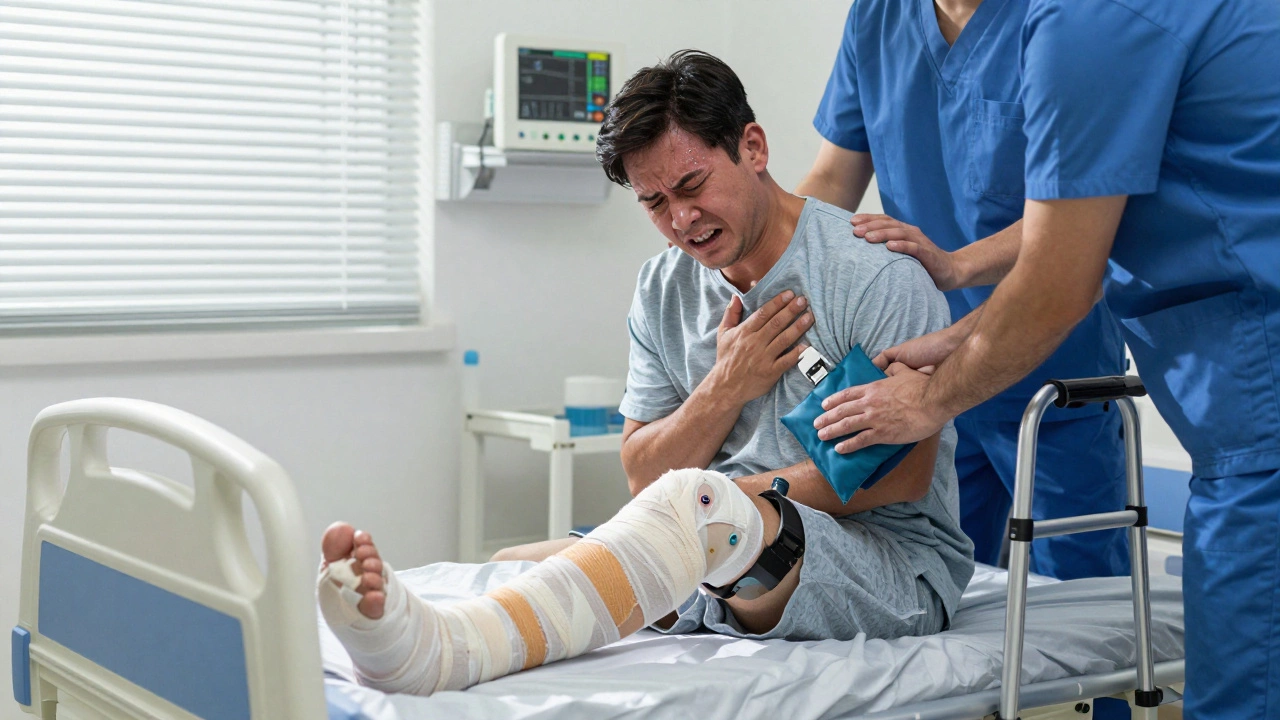
On day two, your physical therapist will likely ask you to do three things: sit up, stand, and take a few steps. Sounds easy? It’s not.
Sitting up requires core strength you didn’t know you lost. Standing means shifting weight onto a joint that’s been out of commission for months - or years. And walking? You’re on a walker, with two nurses or therapists holding you, and you’re still scared you’ll fall. Your leg feels weak, foreign, untrustworthy.
They’ll also bend your knee. Slowly. Carefully. But it still hurts. You’ll cry. You’ll swear. You’ll beg them to stop. And then they’ll make you do it again. Because if you don’t bend it now, you risk stiffness that lasts for months.
One patient in Bangalore told me: "I thought I was tough. But on day two, I broke down crying because I couldn’t lift my leg five inches off the bed. I felt like a child again - helpless, broken, and ashamed."
That’s normal. That’s part of the process. The emotional toll is as real as the physical one. You’re not just recovering your knee - you’re rebuilding your confidence.
What Helps the Most on Day Two
There’s no magic fix. But some things make it bearable.
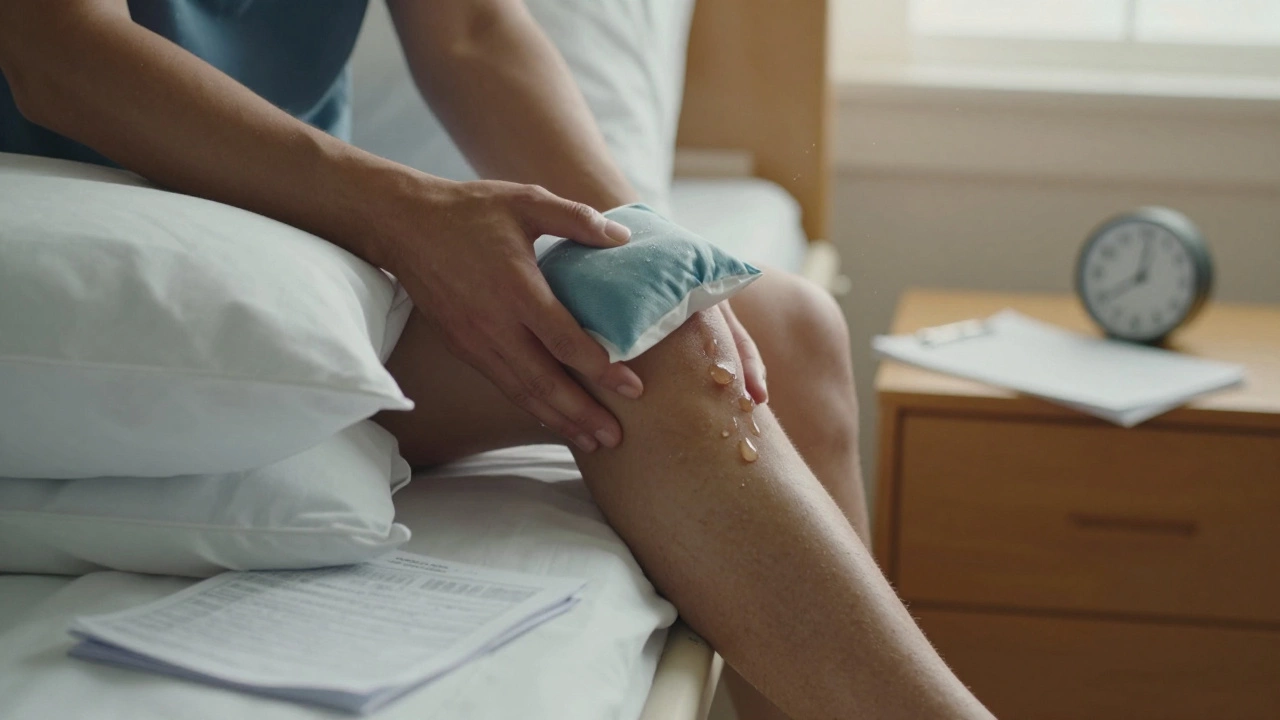
- Ice packs - applied every hour - reduce swelling faster than anything else. Keep them on for 20 minutes, off for 20. Repeat.
- Elevating the leg above heart level cuts swelling. Use pillows, not just one - stack them so your foot is higher than your hip.
- Deep breathing - yes, really. Slow inhales through the nose, long exhales through the mouth. It calms your nervous system and helps pain meds work better.
- Hydration - drinking water helps flush out inflammation-causing chemicals. Skip the coffee and soda. Stick to water, coconut water, or broth.
- Music or podcasts - distraction works. Listen to something you love. It doesn’t have to be calming. It just has to take your mind off the pain.
And don’t be afraid to ask for more pain relief. If your current dose isn’t working, tell the nurse. There’s no shame in needing stronger meds. You’re not weak - you’re healing.
What Not to Do on Day Two
There are three big mistakes people make on day two - and they all slow recovery.
- Staying in bed too long - Lying still sounds safe. But it causes stiffness, blood clots, and muscle atrophy. Even if you’re in pain, get up. Walk. Move.
- Ignoring swelling - If your leg is red, hot, or feels tight like a drum, tell someone. That’s not normal. It could be a clot.
- Comparing yourself to others - Social media shows people walking without crutches on day three. That’s rare. Most people need weeks. Your journey is yours alone.
Also, avoid painkillers with alcohol. No beer. No wine. No painkillers mixed with whiskey. It’s dangerous. And don’t skip your blood thinner pills. Those are not optional.
When Does It Get Better?
Day three usually feels easier. Not because the pain disappears - but because your body starts adapting. The swelling begins to drop. The muscles learn to work again. You get better at moving. You start to trust your new knee.
By day five, many people can walk across the room without help. By day seven, they can climb one flight of stairs with assistance. Progress isn’t linear - there are ups and downs - but the hardest part is behind you.
The real test comes later: at home, without nurses, without therapists, without immediate help. That’s when discipline matters most. But day two? That’s the wall you have to climb first.
What to Expect After Day Two
After day two, recovery becomes a routine. You’ll do exercises three to four times a day. You’ll ice your knee. You’ll take pills. You’ll track your range of motion. You’ll notice small wins: bending farther, walking longer, sleeping through the night.
But don’t let those wins fool you. Recovery takes 3 to 6 months. The first week is just the beginning. The first month is the hardest. And the first 90 days? That’s when your new knee becomes part of you.
Most people say they didn’t realize how much they’d lost - until they got it back. The freedom to walk without pain. To climb stairs. To play with grandkids. To go for a walk without thinking about every step.
Day two is brutal. But it’s also the turning point. It’s the moment you choose to fight - not because you have to, but because you want to. And that’s what makes all the difference.

Write a comment