
After a knee replacement, many people expect their knee to feel like new-flexible, pain-free, and easy to move. But what if it doesn’t? What if your knee stays stiff, even months after surgery? You’re not alone. Stiffness is one of the most common complaints, and the question everyone asks is: Does stiffness ever go away after knee replacement? The answer isn’t simple, but it’s hopeful.
Why does stiffness happen after knee replacement?
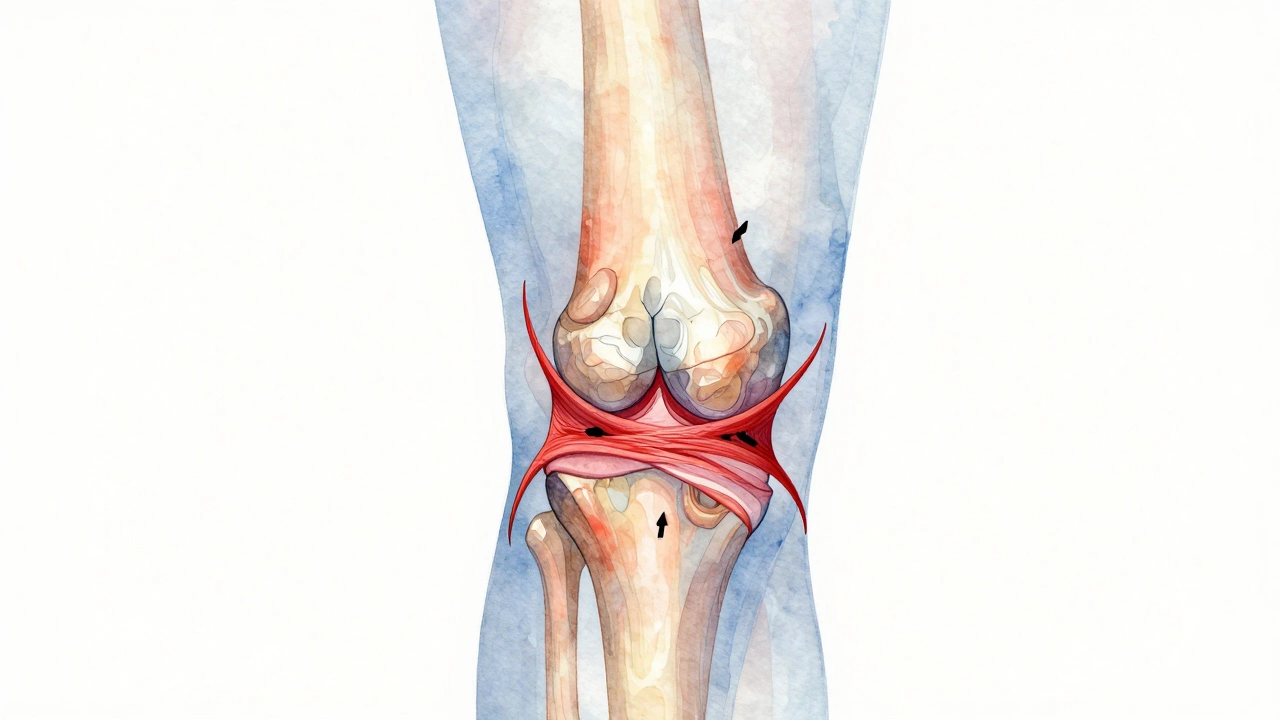
Stiffness isn’t a sign that something went wrong. It’s often the result of scar tissue forming around the joint, muscles weakening from lack of use before surgery, or swelling that doesn’t fully settle. The knee is a complex hinge joint. After it’s replaced, your body treats the new implant like an injury. Inflammation kicks in, and the body tries to protect the area by tightening everything around it. That’s when stiffness sets in.Some people notice stiffness right after the cast or brace comes off. Others don’t feel it until they try to climb stairs, squat down to pick something up, or sit cross-legged. If you’re struggling to bend your knee past 90 degrees or can’t fully straighten it, that’s stiffness. It’s not just discomfort-it’s limiting your daily life.
How long does stiffness last?
Most patients see major improvement in the first 6 to 12 weeks. By 3 months, about 80% of people regain enough motion to walk normally, climb stairs, and sit comfortably. But for some, stiffness lingers beyond 6 months. That’s not rare. Studies from the Journal of Bone and Joint Surgery show that up to 15% of patients still report noticeable stiffness at one year post-op.The key isn’t just time-it’s what you do during that time. Patients who stick to their physical therapy routine recover mobility faster. Those who skip sessions or avoid moving the knee because it hurts often end up with permanent limitations. Stiffness doesn’t magically disappear. It’s worked out-slowly, consistently, and sometimes painfully.
Can stiffness go away completely?
Yes, it can-but not always. For many, stiffness fades to the point where it no longer affects daily life. You might not be able to touch your toes or kneel on the floor, but you can walk without pain, get in and out of a car, and sleep comfortably. That’s success.But for a smaller group-around 5% to 8%-stiffness becomes permanent. This usually happens when scar tissue (called arthrofibrosis) forms aggressively and doesn’t respond to therapy. In these cases, the joint capsule becomes too tight, and the implant’s range of motion is physically blocked. It’s not the implant’s fault. It’s the body’s reaction to the trauma of surgery.
Early intervention is everything. If you’re still stiff at 3 months, don’t wait. Go back to your physiotherapist. Ask for a mobility assessment. If therapy isn’t working, your surgeon might recommend a manipulation under anesthesia (MUA), where your knee is gently moved while you’re asleep to break up scar tissue. It’s not surgery, but it’s a procedure that can reset your progress.
What helps stiffness go away faster?
There’s no magic pill. But there are proven, practical steps:- Physical therapy daily: Don’t wait for appointments. Do your home exercises every single day-even if it’s just 10 minutes. Focus on heel slides, seated knee extensions, and quad sets.
- Heat before, ice after: Warmth loosens tight tissue. Use a heating pad for 15 minutes before stretching. Ice for 15 minutes after to reduce swelling.
- Use a CPM machine: Continuous Passive Motion machines gently move your knee while you rest. Hospitals use them. Many patients rent them at home for the first 2-4 weeks. Studies show they improve early range of motion.
- Don’t avoid bending: Fear of pain makes stiffness worse. Your knee needs movement to heal. Start small. Sit in a chair and slide your heel toward your buttocks. Even 5 extra degrees of bend each week adds up.
- Stay active: Walking 20-30 minutes a day keeps blood flowing and prevents muscle atrophy. Use a cane if needed, but keep moving.
One patient I worked with in Bangalore, a 68-year-old grandmother, couldn’t bend her knee past 85 degrees at 4 months. She started doing seated knee bends while watching TV-just 5 minutes twice a day. By 6 months, she could sit cross-legged on the floor again. She didn’t need surgery. Just persistence.
When should you worry?
Not all stiffness is normal. Watch for these red flags:- Sudden increase in swelling or redness
- Fever or chills
- Sharp, shooting pain instead of dull tightness
- Leg numbness or tingling
- No improvement after 6 months of consistent therapy
If you have any of these, see your surgeon immediately. Infection, implant loosening, or blood clots can mimic stiffness but require urgent treatment.
What if therapy doesn’t work?
If you’ve tried 6 months of dedicated rehab and your knee still won’t bend past 90 degrees, your surgeon may suggest a second procedure. This isn’t a redo of the replacement. It’s a lysis of adhesions-a minimally invasive arthroscopy to cut away scar tissue. It’s done under general anesthesia, and recovery is faster than the original surgery.Success rates are high: 85% of patients gain at least 20 more degrees of motion after the procedure. But it’s not a guarantee. The body can form scar tissue again. That’s why post-op rehab is even more critical after this second step.
What about long-term mobility?
Even if you never regain full motion, most people live perfectly normal lives. You don’t need 135 degrees of bend to walk, drive, or dance. Most daily activities require less than 110 degrees. A knee that bends to 95 degrees is enough to sit on a chair, use the toilet, and get in and out of a car without help.What you lose is flexibility-not function. You might not kneel to pray or garden on your knees, but you won’t need to. Many patients adapt. They use a raised toilet seat. They sit in chairs with armrests. They take the elevator instead of stairs. These aren’t defeats. They’re smart adjustments.
What’s the biggest mistake people make?
Waiting too long to act. Too many patients think, “It’ll get better on its own.” It won’t. The longer you wait, the more scar tissue hardens. After 6 months, your knee becomes more resistant to therapy. The window for easy recovery closes.The best time to fight stiffness is in the first 8 weeks. That’s when your body is still healing and responsive. That’s when daily exercises make the biggest difference.
Final thought: It’s not about perfection
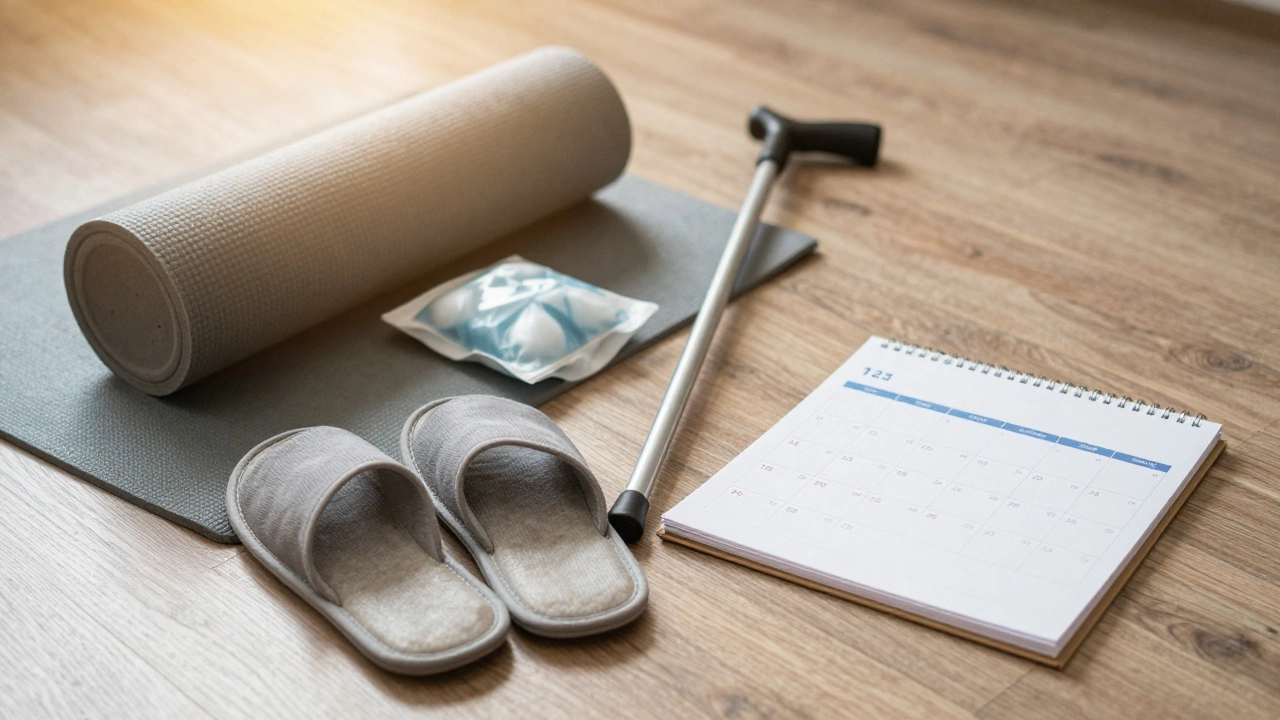
Knee replacement isn’t about getting back to how you were at 30. It’s about getting back to how you want to live now. You don’t need a perfect knee. You need a functional one. One that lets you walk to the market, play with your grandkids, or sit on the floor to pray.Stiffness can go away. But only if you push through the discomfort, show up for therapy, and refuse to accept limits. Your knee doesn’t heal in the operating room. It heals in your living room, on your mat, one small bend at a time.
Will my knee ever feel normal again after replacement?
It won’t feel exactly like your original knee, but most people say it feels better than it did before surgery. Pain fades, and mobility improves over time. While you may notice a slight difference in how it moves-especially when bending deeply-it shouldn’t interfere with daily life. Many patients say their replaced knee feels more reliable and predictable than their old, arthritic one.
How long should I do physical therapy after knee replacement?
Formal therapy usually lasts 6 to 12 weeks, but exercises should continue for at least 6 months. The first 3 months are critical for regaining motion. After that, maintenance exercises help prevent stiffness from creeping back. Think of it like brushing your teeth-once a day, even if you don’t feel like it.
Can I kneel after a knee replacement?
Most surgeons say it’s safe, but it’s not always comfortable. The kneecap is replaced with a plastic component that can feel pressure. Some people kneel without issues after 6 months. Others avoid it because it feels strange or painful. There’s no rule-you can try it gently once you’re cleared by your therapist. Use a cushion if you do.
Does weight affect stiffness after knee replacement?
Yes. Extra weight puts more pressure on the joint, making it harder to move and increasing swelling. Losing even 5-10 pounds can make a noticeable difference in how easily your knee bends and straightens. It’s not about being thin-it’s about reducing the load on your new joint.
Is stiffness more common in older patients?
Not necessarily. Older patients often have more pre-existing stiffness from arthritis, but younger patients tend to be more active and push harder during rehab. The biggest factor isn’t age-it’s consistency. Someone in their 70s who does daily stretches will recover better than someone in their 50s who skips therapy.
Can stiffness return years after knee replacement?
Yes, but it’s rare. If stiffness returns after several years, it could be due to a new injury, infection, or implant wear. If you notice a sudden change in motion or increased pain after being stable for years, see your orthopedic surgeon. It’s not normal aging-it’s a sign something needs checking.

Write a comment