
Metformin Weight Loss Estimator
This tool estimates potential weight loss from metformin based on scientific studies. Metformin typically helps people lose 2-4 kg (4.5-9 lbs) over 6-12 months. Results vary based on individual factors like insulin resistance and BMI.
Estimated Weight Loss
0 kg (0 lbs)
Many people asking if metformin helps with weight loss aren’t just curious-they’re struggling to lose weight despite dieting and exercising. They’ve heard stories from friends, seen posts online, or even been told by a doctor to try it. But does metformin actually make you lose weight, or is it just a diabetes drug with side effects that accidentally help? The truth isn’t simple, but it’s not magic either.
What Metformin Actually Does
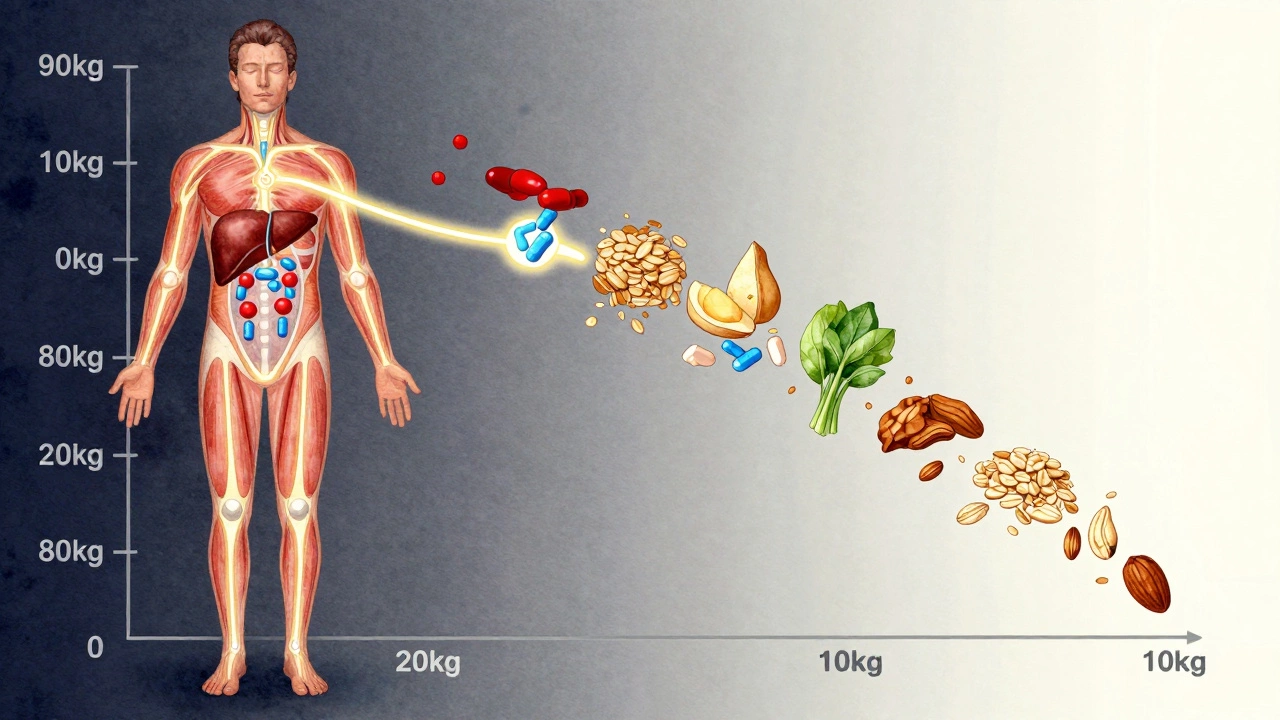
Metformin isn’t a weight loss drug. It was never designed to be one. It’s a medicine approved by the FDA since the 1990s to treat type 2 diabetes. It works by lowering blood sugar in two main ways: it reduces how much glucose your liver releases, and it makes your body’s cells more sensitive to insulin. That means your body doesn’t have to pump out as much insulin to handle the sugar in your blood.
High insulin levels are a problem for many people trying to lose weight. Insulin tells your body to store fat. When insulin stays high-often because of eating too many refined carbs or having insulin resistance-your body holds onto fat instead of burning it. Metformin helps break that cycle. By improving insulin sensitivity, it takes some of the pressure off your pancreas and reduces fat storage.
How Much Weight Do People Lose on Metformin?
Studies show that people taking metformin lose, on average, 2 to 4 kilograms (4.5 to 9 pounds) over six months to a year. That’s not dramatic, but it’s consistent. In a 2012 review published in the Journal of Clinical Endocrinology & Metabolism, researchers looked at 14 clinical trials involving over 1,200 people with prediabetes or type 2 diabetes. Those on metformin lost more weight than those on placebo, even when both groups followed the same diet and exercise plan.
People who are heavier or have higher insulin resistance tend to lose more. One study found that those with a BMI over 35 lost around 6% of their body weight after a year on metformin. That’s significant-especially when you consider they weren’t on a strict low-carb diet or taking other weight loss meds.
But here’s the catch: if you stop taking metformin, the weight often comes back. That’s because metformin doesn’t change your appetite or metabolism permanently. It just helps your body manage sugar and insulin better while you’re taking it.
Who Benefits Most from Metformin for Weight Loss?
Metformin isn’t a universal weight loss solution. It works best for people with specific biological patterns:
- Those with insulin resistance-signs include belly fat, dark patches on skin (acanthosis nigricans), frequent sugar cravings, and energy crashes after meals
- People with prediabetes or early type 2 diabetes
- Women with PCOS (polycystic ovary syndrome), who often struggle with weight gain and hormonal imbalances
- Individuals who’ve tried dieting and exercise but hit a plateau
If you’re lean, have normal blood sugar, and no signs of insulin resistance, metformin won’t help you lose weight. In fact, it might cause unnecessary side effects like stomach upset or vitamin B12 deficiency over time.
Why Doesn’t Metformin Work for Everyone?
Not everyone responds the same way. Genetics, gut bacteria, and lifestyle all play a role. Some people’s bodies respond strongly to metformin’s effect on insulin. Others barely notice a difference.
One study from the University of California found that people with a specific gene variant (SLC22A1) had better weight loss results on metformin. Those without it saw little to no change. That’s why some people swear by it while others say it did nothing.
Also, metformin doesn’t suppress appetite like GLP-1 drugs (such as Ozempic or Wegovy). If your weight gain is driven by hunger and cravings, metformin alone won’t fix that. You’ll still need to manage your food intake.
Side Effects and Risks
Metformin is generally safe, but it’s not harmless. The most common side effects are digestive: nausea, diarrhea, bloating, and stomach cramps. These usually fade after a few weeks as your body adjusts. Taking it with food helps. Starting with a low dose (500 mg once a day) and slowly increasing it also reduces discomfort.
Long-term use can lower vitamin B12 levels. About 30% of people on metformin for more than four years develop a deficiency. That can lead to fatigue, nerve tingling, or even anemia. Doctors should check B12 levels annually if you’re on metformin long-term.
Very rarely, metformin can cause lactic acidosis-a dangerous buildup of acid in the blood. This happens mostly in people with kidney disease, heart failure, or severe liver problems. That’s why doctors test kidney function before prescribing it.
Metformin vs. Other Weight Loss Options
Compared to newer weight loss drugs, metformin is mild. Here’s how it stacks up:
| Medication | Average Weight Loss (1 year) | Primary Use | Appetite Suppression? | Cost (monthly, US) |
|---|---|---|---|---|
| Metformin | 2-4 kg (4.5-9 lbs) | Type 2 diabetes, insulin resistance | No | $10-$30 |
| Liraglutide (Saxenda) | 5-8 kg (11-18 lbs) | Obesity | Yes | $1,000-$1,300 |
| Semaglutide (Wegovy) | 10-15 kg (22-33 lbs) | Obesity | Yes | $1,200-$1,500 |
| Orlistat (Alli) | 2-3 kg (4-7 lbs) | Obesity | No | $50-$80 |
Metformin is cheaper and safer than GLP-1 drugs, but it’s also less effective. If you’re looking for quick, dramatic results, it’s not the best choice. But if you’re trying to fix the root cause of weight gain-like insulin resistance-it’s one of the few tools that actually targets the problem, not just the symptom.
How to Use Metformin for Weight Loss (If Your Doctor Recommends It)
If your doctor prescribes metformin for weight loss, it’s not a magic pill. It’s a support tool. You still need to eat well, move regularly, and sleep enough.
- Start low: 500 mg once daily with dinner to reduce stomach upset
- Take it consistently: Skipping doses reduces its effect on insulin sensitivity
- Pair it with a low-glycemic diet: Cut sugary drinks, white bread, and processed snacks
- Get blood tests: Monitor HbA1c, kidney function, and B12 levels every 6-12 months
- Be patient: It takes 3-6 months to see noticeable changes in weight or energy
Many people report feeling less hungry and having fewer sugar cravings after a few weeks. That’s not because metformin kills appetite-it’s because stable blood sugar means fewer crashes and less drive to snack.
Can You Take Metformin Without Diabetes?
Yes, but only under medical supervision. Doctors sometimes prescribe metformin "off-label" for weight loss in people with prediabetes, PCOS, or metabolic syndrome. Insurance won’t cover it for weight loss alone, so you’ll likely pay out of pocket.
Don’t buy metformin online or take it because a friend said it worked. Self-medicating can be dangerous. It can mask underlying conditions or interact with other drugs. Always get tested first-fasting glucose, HbA1c, insulin levels, and kidney function.
Final Verdict: Is Metformin Worth It for Weight Loss?
Metformin helps with weight loss-but only for a specific group of people. If you have insulin resistance, prediabetes, or PCOS, it can be a useful, low-cost tool to help your body burn fat more efficiently. It won’t make you lose 20 pounds overnight, but it can give you the metabolic boost you need to make other changes stick.
If you’re healthy, active, and your blood sugar is normal, metformin won’t help you lose weight. You’re better off focusing on sleep, protein intake, strength training, and stress management.
Metformin isn’t the solution to weight loss. But for the right person, it’s one of the few medications that actually fixes the broken system behind the weight gain-not just hides the symptoms.
Can metformin help me lose belly fat?
Yes, but only if your belly fat is linked to insulin resistance. Metformin reduces visceral fat-the deep abdominal fat around organs-by improving how your body handles sugar. It doesn’t target fat in one area, but when insulin levels drop, your body starts burning stored fat, including belly fat. Studies show people with metabolic syndrome lose more abdominal fat on metformin than on placebo.
How long does it take to see weight loss on metformin?
Most people notice small changes in energy and cravings within 2-4 weeks. Visible weight loss usually takes 3-6 months. The biggest drop often happens in the first 3 months, then it slows. Patience is key-it’s not a fast-acting drug.
Does metformin cause weight gain?
No, metformin doesn’t cause weight gain. In fact, it’s one of the few diabetes drugs that’s weight-neutral or slightly weight-loss promoting. Other diabetes medications like insulin or sulfonylureas often lead to weight gain, but metformin doesn’t. That’s why it’s preferred for people with obesity and diabetes.
Can I take metformin with other weight loss supplements?
Some supplements are safe, others aren’t. Avoid combining metformin with high-dose chromium or berberine without medical supervision-they can have similar effects and increase the risk of low blood sugar or stomach issues. Vitamin B12 supplements are recommended if you’re on metformin long-term. Always tell your doctor what you’re taking.
Is metformin safe for long-term use?
Yes, for most people. Metformin has been used for over 60 years and is one of the most studied drugs in medicine. Long-term use is linked to lower risks of heart disease, cancer, and even dementia in people with diabetes. The main concerns are vitamin B12 deficiency and rare kidney issues. Regular checkups make it safe.

Write a comment