
The 4 A's Orthopedic Recovery Planner
Navigate your orthopedic treatment plan by exploring the four critical pillars of care. Click on each phase below to see what to expect and how you can actively participate in your recovery.
1. Assessment
Diagnosis & Planning2. Alignment
Structural Correction3. Activity
Movement & Rehab4. Aftercare
Long-term MaintenanceSelect a Phase
OverviewBefore any procedure, a thorough investigation is required.
- Physical Exam: Checking range of motion, strength, and stability.
- Imaging: MRI/CT scans to visualize soft tissue and bone structure.
- Pain Mapping: Identifying exact pain triggers to rule out referred pain (e.g., hip pain from spine).
My Recovery Checklist
Check off items as you complete them or discuss them with your doctor.
You walk into an orthopedic hospital, and suddenly you're surrounded by jargon. X-rays, MRIs, arthroscopy, total knee arthroplasty-it’s a lot. But behind all that technical talk lies a simple framework designed to keep you safe and get you back on your feet. It’s called the 4 A's of orthopedics. If you’re facing surgery or dealing with chronic pain, understanding these four pillars can change how you interact with your doctor and what you expect from your treatment plan.
Most patients think orthopedics is just about fixing broken bones. It’s not. It’s about restoring function. The 4 A's-Assessment, Alignment, Activity, and Aftercare-are the roadmap surgeons use to ensure you don’t just heal, but actually return to your life. Let’s break down why each step matters and how you can play an active role in your recovery.
The First A: Assessment
Before any scalpel touches skin, there’s assessment. This isn’t just about looking at an X-ray and nodding. It’s a deep dive into your history, lifestyle, and physical limitations. Your surgeon needs to know if you’ve had previous surgeries, if you have diabetes (which slows healing), or if your job requires heavy lifting.
A thorough assessment includes:
- Physical Examination: Checking range of motion, strength, and stability.
- Imaging: Using MRI, CT scans, or ultrasound to see soft tissue damage, not just bone fractures.
- Pain Mapping: Identifying exactly where it hurts and what triggers the pain.
If your doctor skips this and jumps straight to "you need surgery," ask questions. Why? Because misdiagnosis leads to failed treatments. For instance, hip pain often comes from the lower back, not the hip itself. Without proper assessment, you might undergo unnecessary joint replacement while your spine remains the real culprit.
The Second A: Alignment
In orthopedics, alignment is everything. Whether you’re having a knee replacement or treating a fractured femur, the goal is mechanical correctness. Misalignment causes uneven wear, early implant failure, and chronic pain.
Think of your car tires. If they aren’t aligned, one wears out faster than the others. Your joints work the same way. Surgeons use advanced tools like computer-assisted navigation and robotic arms to ensure every cut and placement is precise. Even a deviation of two degrees can shorten the lifespan of a joint implant by years.
For non-surgical cases, alignment means correcting posture and gait. Physical therapists prescribe exercises to fix muscle imbalances that pull your spine or knees out of place. You can help here by maintaining good posture during daily activities-slouching at your desk undoes hours of therapy.

The Third A: Activity
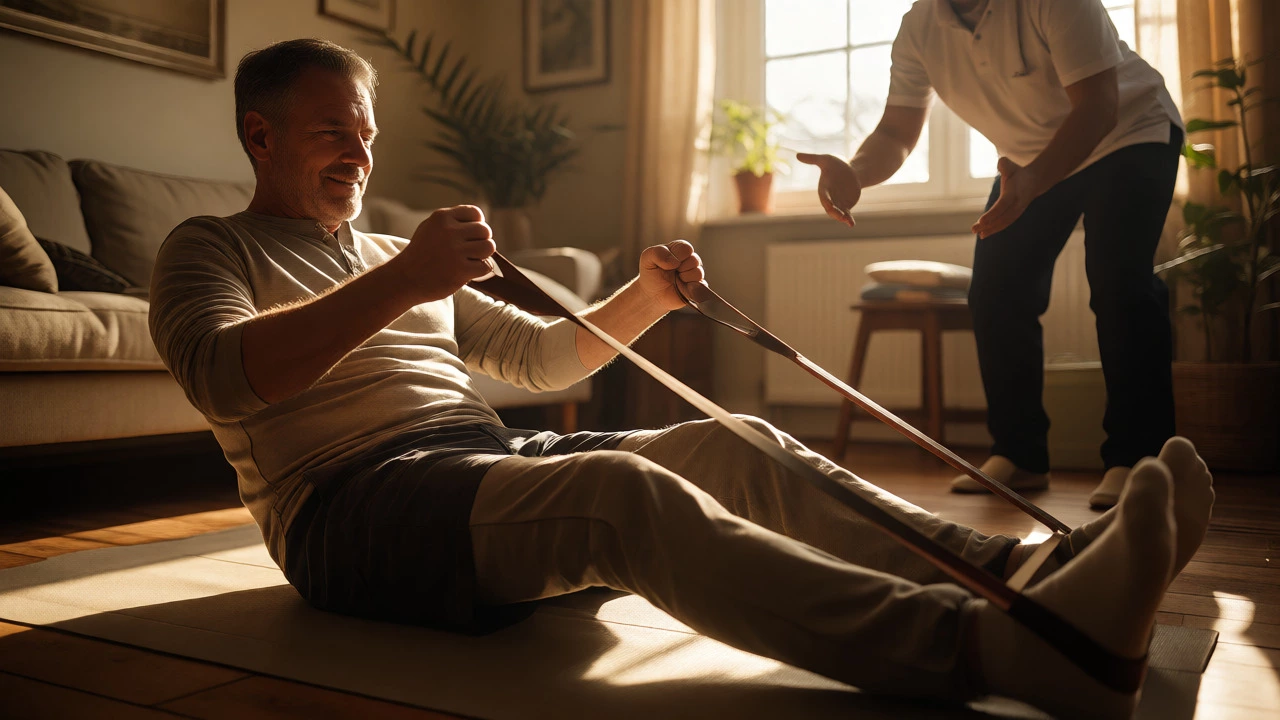
Rest is good, but too much rest is bad. The third A focuses on controlled movement. Modern orthopedics pushes for "early mobilization." This means getting up and moving sooner than you might expect. Why? Because immobility leads to blood clots, muscle wasting, and stiffness.
| Phase | Goal | Example Activities |
|---|---|---|
| Immediate Post-Op | Prevent Clots | Ankle pumps, short walks with walker |
| Weeks 1-6 | Restore Motion | Straight leg raises, stationary bike |
| Months 2-3 | Build Strength | Squats, resistance bands, swimming |
| Month 4+ | Return to Life | Jogging, sports-specific drills |
Don’t be afraid of discomfort during activity. Sharp, stabbing pain is a red flag. Dull ache or stretching sensation is normal. Push through the latter; stop for the former. Your physiotherapist will guide you, but your willingness to participate determines your speed of recovery.
The Fourth A: Aftercare
Surgery ends when you leave the operating room, but treatment continues for months. Aftercare is where many patients fail. They feel better, skip appointments, and ignore home exercise programs. Then, six months later, the pain returns.
Effective aftercare involves:
- Wound Care: Keeping incisions clean and dry to prevent infection.
- Medication Management: Weaning off painkillers properly to avoid dependency or withdrawal.
- Follow-ups: Regular check-ups to monitor bone healing and implant integration.
- Lifestyle Changes: Weight management and smoking cessation, which directly impact bone density.
Smoking, for example, reduces blood flow to bones. Smokers have a significantly higher risk of non-union fractures (bones that never heal). If you smoke, quitting isn’t just a health suggestion; it’s part of your surgical protocol.
Why These Principles Matter More Than Ever
With India’s aging population rising, orthopedic issues are exploding. According to recent health surveys, osteoarthritis affects over 60% of Indians above 60. Hospitals are busy. Doctors have minutes per patient. Understanding the 4 A's helps you advocate for yourself. You can ask, "Have we completed a full assessment?" or "What is my activity plan for next week?" This shifts the dynamic from passive patient to active partner.
Moreover, technology is changing how these principles are applied. Telemedicine allows remote monitoring of activity levels via wearable devices. AI-driven imaging helps in more accurate assessments before surgery even begins. But no machine replaces the human judgment required to balance these four elements for your specific body.
Common Pitfalls to Avoid
Patients often sabotage their own recovery by ignoring one of the A's. Here’s what usually goes wrong:
- Skipping Assessment: Assuming a generic diagnosis without personalized testing.
- Rushing Alignment: Returning to heavy labor before muscles support the new joint alignment.
- Fearing Activity: Staying in bed for weeks, leading to frozen joints.
- Neglecting Aftercare: Missing follow-up visits until something breaks again.
Remember, orthopedics is collaborative. Your surgeon fixes the structure; you rebuild the function. Both are essential.
Do I always need surgery for orthopedic problems?
No. In fact, most orthopedic conditions respond well to conservative treatment. The 4 A's framework starts with Assessment, which often reveals that physical therapy, medication, and lifestyle changes (Activity) are sufficient. Surgery is typically reserved for cases where structural damage prevents functional recovery through non-invasive means.
How long does the 'Aftercare' phase last?
It varies by procedure. For minor injuries, it might be 4-6 weeks. For major joint replacements, active aftercare lasts 6-12 months. However, long-term maintenance, such as weight control and regular exercise, is lifelong. Follow-up appointments usually continue for at least a year post-surgery.
Can poor alignment cause other health issues?
Yes. Poor biomechanical alignment doesn't just hurt the affected joint. It alters your gait, which can strain your hips, lower back, and even the opposite knee. Over time, this compensation pattern can lead to secondary arthritis or chronic back pain. Correcting alignment early prevents these cascading effects.
What if I can't afford expensive robotic surgery?
Traditional techniques still yield excellent results when performed by skilled surgeons. Robotic assistance enhances precision, particularly in complex cases, but it is not mandatory for success. Focus on choosing a reputable surgeon who emphasizes thorough Assessment and structured Aftercare, regardless of the technology used.
Does age affect the 4 A's approach?
Absolutely. Older adults require more cautious Assessment due to comorbidities like heart disease or diabetes. Activity plans must be adjusted for bone density and balance risks. Aftercare may involve more support for wound healing. The principles remain the same, but the execution is tailored to physiological resilience.

Write a comment