
Herbal Remedy Finder
Select your primary health concern below to discover the most suitable natural herb, its active compounds, and expected time to feel effects.
Herb Name
TimeDescription goes here...
Mechanism details...
Key Details
-
Active Compound:
-
Best Form:
-
Safety Note:
You’re standing in the supplement aisle or scrolling through an online pharmacy, staring at rows of bottles labeled "Ashwagandha," "Turmeric," "Ginkgo," and "Holy Basil." The question hits you hard: what is the best natural herb to take? The frustrating truth? There isn’t one single winner. If someone tells you there’s a universal super-herb that fixes everything from your digestion to your mood, they’re selling you something. The "best" herb depends entirely on what your body actually needs right now. Are you burning out at work? Can’t sleep? Feeling stiff after a workout? Each symptom has a different botanical answer.
| Your Goal | Top Herb Candidate | Primary Active Compound | Time to Feel Effects |
|---|---|---|---|
| Stress & Anxiety | Ashwagandha | Withanolides | 2-4 weeks |
| Inflammation & Joint Pain | Turmeric (Curcumin) | Curcuminoids | 4-8 weeks |
| Sleep Quality | Valerian Root | Valerenic acid | 1-3 nights |
| Digestive Comfort | Ginger | Gingerols | Immediate - 1 hour |
| Mental Clarity | Bacopa Monnieri | Bacosides | 8-12 weeks |
Why "One Size Fits All" Doesn't Work with Herbs
Unlike pharmaceuticals, which are often designed to target a specific receptor with high precision, herbal supplements work through complex mixtures of compounds. This means their effects are usually subtler but broader. When you ask for the best herb, you’re really asking for the best tool for a specific job. Taking Ashwagandha when you have acute inflammation might do little for your knee pain, while taking Turmeric when you’re stressed won’t necessarily calm your nervous system quickly. The key is matching the herb’s mechanism of action to your physiological bottleneck.
The Stress Buster: Ashwagandha
If you live in a high-pressure environment like Bangalore, where traffic and deadlines blend into a constant hum, Ashwagandha is likely the most relevant herb for you. It is classified as an adaptogen, a substance that helps the body resist physical, chemical, and biological stressors. Unlike caffeine, which pushes you forward by stimulating the central nervous system, Ashwagandha works by regulating cortisol, the primary stress hormone.
Research published in journals like the Indian Journal of Psychological Medicine has shown that standardized extracts can significantly reduce perceived stress scores and lower serum cortisol levels. But here’s the catch: it doesn’t work overnight. You need consistent daily dosing for at least two to four weeks before you notice a tangible shift in your resilience. Look for extracts standardized to contain at least 5% withanolides, the active compounds responsible for its calming effects. If you feel "wired but tired," this is often the first line of defense.
The Inflammation Fighter: Turmeric
Turmeric is arguably the most famous herb globally, largely due to its active compound, curcumin. While many people sprinkle it on food, the amount of curcumin you get from cooking is negligible compared to therapeutic doses. Curcumin is a potent anti-inflammatory agent that inhibits NF-kB, a molecule that travels into the nuclei of cells and turns on genes related to inflammation.
The problem with raw turmeric powder is poor bioavailability; your body struggles to absorb it. To make it effective, you must pair it with black pepper extract (piperine), which boosts absorption by up to 2000%. Or, choose formulations that use lipid delivery systems, such as Meriva or BCM-95. These forms are particularly useful if you deal with joint stiffness, arthritis, or general post-workout soreness. Don’t expect immediate pain relief like ibuprofen; think of turmeric as a long-term maintenance strategy for keeping systemic inflammation in check.
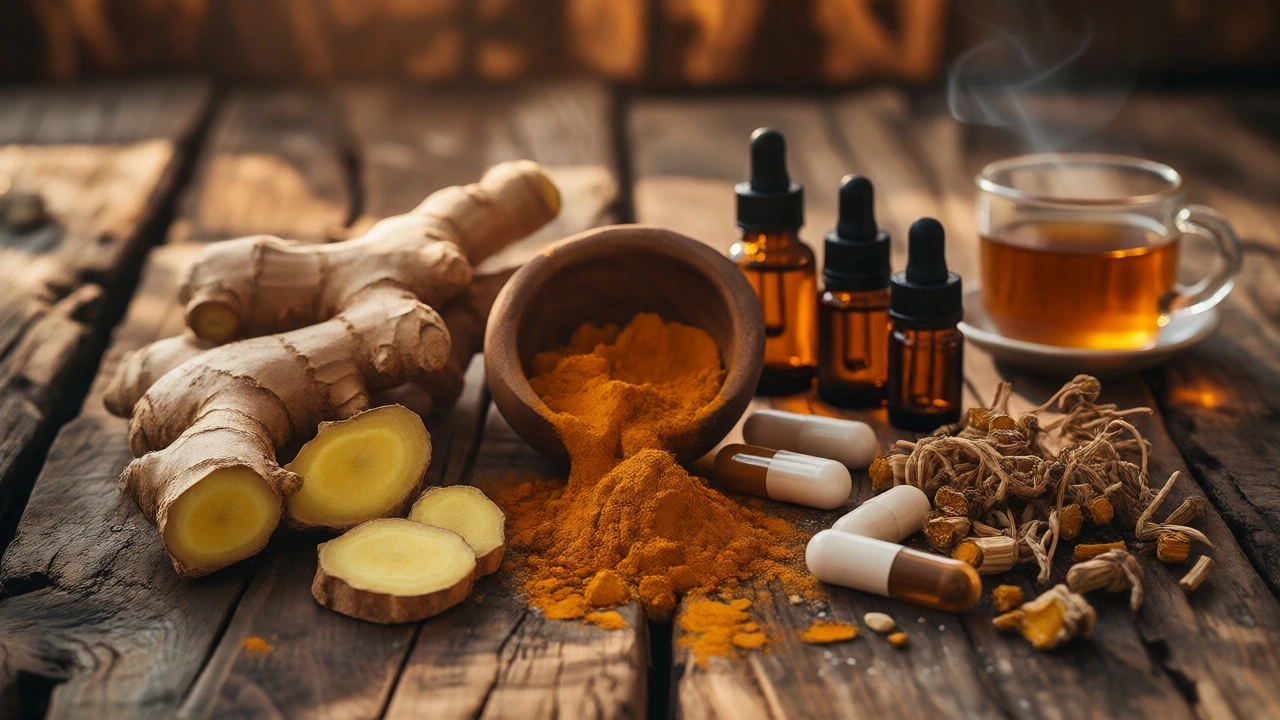
The Sleep Aid: Valerian Root
For those struggling with the inability to wind down, Valerian Root offers a non-habit-forming alternative to synthetic sedatives. It increases the amount of gamma-aminobutyric acid (GABA) in your brain, a neurotransmitter that reduces nerve transmission and promotes relaxation. Unlike melatonin, which signals your body that it’s time to sleep based on light exposure, Valerian directly calms the nervous system.
Timing matters here. Take it 30 to 60 minutes before bed. Some users report a mild headache upon waking if they take too much, so start with a low dose (around 300mg). It’s also worth noting that Valerian has a distinct earthy smell, which some find unpleasant. If you dislike the taste, capsule forms are essential. It pairs well with lemon balm or hops for enhanced effect, creating a synergistic blend that targets both sleep onset and sleep quality.
The Digestive Soother: Ginger
Not every problem is about stress or sleep. Sometimes, your gut is the source of discomfort. Ginger is a powerhouse for digestive health, specifically for nausea, bloating, and slow gastric emptying. The gingerols and shogaols in ginger stimulate saliva production and enhance gastrointestinal motility. If you suffer from functional dyspepsia-feeling full quickly or experiencing upper abdominal pain-ginger tea or capsules taken before meals can speed up stomach emptying rates significantly.
This is one of the few herbs where you might feel relief within an hour. However, be cautious if you are on blood-thinning medications, as ginger has mild anticoagulant properties. For most people, however, it’s safe and highly effective. Fresh ginger root steeped in hot water remains the most accessible form, though concentrated extracts offer higher potency for chronic issues.

The Brain Booster: Bacopa Monnieri
In Ayurvedic tradition, Bacopa Monnieri has been used for centuries to enhance memory and learning. Modern science backs this up, showing that bacosides, the active constituents, support neuronal communication and protect against oxidative stress in the brain. Studies indicate improvements in processing speed and attention span, but these benefits accrue over months, not days.
Bacopa is ideal for students, professionals, or anyone noticing age-related cognitive decline. A common side effect is initial gastrointestinal upset, so taking it with food is recommended. Because it takes 8 to 12 weeks to reach peak efficacy, patience is required. It’s not a quick fix for a bad day; it’s a structural upgrade for your cognitive baseline.
How to Choose the Right Form and Dosage
Once you’ve identified the herb, the next hurdle is quality. The supplement industry is loosely regulated, meaning a label saying "500mg Turmeric" doesn’t guarantee how much actual curcuminoid content is present. Always look for third-party testing seals like USP, NSF, or ConsumerLab. These verify that what’s in the bottle matches the label.
- Standardized Extracts: Prefer these over raw powders. They ensure a consistent concentration of active compounds.
- Whole Herb vs. Extract: Whole herbs provide fiber and co-factors but require larger volumes. Extracts are more convenient and potent.
- Cycling: Consider cycling certain herbs. For example, taking Ashwagandha for 8 weeks followed by 2 weeks off may prevent tolerance buildup, though evidence varies.
Safety First: Interactions and Contraindications
Just because it’s natural doesn’t mean it’s risk-free. Herbs interact with prescription drugs. St. John’s Wort, for instance, can render birth control pills ineffective and interfere with antidepressants. Garlic and Ginkgo Biloba increase bleeding risk, which is critical if you have surgery scheduled. Pregnant women should avoid many common herbs, including high-dose parsley and sage, unless approved by a healthcare provider.
Start with one herb at a time. If you introduce three new supplements simultaneously and feel better-or worse-you won’t know which one caused the change. Keep a simple journal tracking your energy, sleep, and mood for two weeks per herb. This personal data is more valuable than any generic study.
Can I take multiple herbs together?
Yes, but proceed with caution. Many commercial blends combine herbs like Ashwagandha and Brahmi for synergy. However, if you are taking prescription medications, consult your doctor. Certain combinations, like Turmeric and Warfarin, can amplify blood-thinning effects, leading to increased bruising or bleeding risks.
How long does it take for herbs to work?
It varies by herb type. Adaptogens like Ashwagandha typically require 2-4 weeks of consistent use to show noticeable stress reduction. Anti-inflammatories like Turmeric may take 4-8 weeks to reduce chronic pain. Acute remedies like Ginger for nausea or Valerian for sleep can work within hours or days.
Are herbal supplements safe for children?
Not all herbs are suitable for children. Chamomile is generally considered safe for mild anxiety or colic in infants under guidance. However, potent herbs like Echinacea or Goldenseal are often discouraged for young children due to lack of safety data. Always consult a pediatrician before giving supplements to kids.
What is the difference between fresh herbs and supplements?
Fresh herbs provide culinary nutrients and mild medicinal benefits. Supplements offer concentrated doses of specific active compounds. For example, eating turmeric in curry provides antioxidants, but a curcumin supplement delivers a therapeutic dose needed to combat significant inflammation. Supplements allow for precise dosing that diet alone rarely achieves.
Do herbs expire?
Yes. Most dried herbs and supplements have a shelf life of 1-3 years. Over time, volatile oils degrade, reducing potency. Store them in cool, dark places away from humidity. If a supplement smells rancid or looks discolored, discard it. Potency loss means you’re not getting the advertised benefit.

Write a comment