Cancer Treatment Mechanism Explorer
Select a treatment method below to visualize how it attacks cancer cells and the specific biological outcome it triggers.
How it works:
Powerful chemicals disrupt the cell's ability to copy DNA or organize its internal skeleton during division.
Side Effect Note: Also affects healthy fast-growing cells like hair follicles.
How it works:
High-energy X-rays create "free radicals" that tear through DNA strands, making them unrepairable.
Precision Note: Linear Accelerators allow pinpoint accuracy to spare healthy tissue.
How it works:
Removes the "camouflage" proteins cancer cells use to hide, or engineers T-cells to recognize specific markers.
Example: CAR T-cell therapy acts like "high-tech goggles" for the immune system.
How it works:
Drugs act as "keys" that jam the growth locks (receptors like EGFR) on the cell surface.
Precision Note: Targets specific mutations, reducing systemic side effects.
How it works:
Extreme heat or cold is applied directly to the tumor, cooking proteins and destroying structures.
Note: Cancer cells are more sensitive because they can't dissipate heat efficiently.
Whether it's a high-dose drug or a precise laser, every treatment is trying to find a way to force a cancer cell to commit suicide or make it so vulnerable that the body's own cleanup crew can finish the job.
The Quick Breakdown: How Cancer Cells Die
- Direct Damage: Using heat or radiation to shatter the cell's DNA.
- Chemical Attack: Using drugs to stop the cell from dividing.
- Immune Activation: Training your own white blood cells to hunt and kill tumors.
- Starvation: Cutting off the blood supply that feeds the growth.
Chemotherapy: Attacking the Fast Growers
Chemotherapy is the most well-known approach. It works on a simple but brutal principle: cancer cells divide much faster than normal cells. Chemotherapy is a systemic treatment using powerful chemicals to kill cells that are rapidly dividing. It doesn't just target one spot; it travels through the bloodstream to find these fast-growing cells anywhere in the body.
Drugs like cisplatin or paclitaxel interfere with the cell's ability to copy its DNA or organize its skeleton. When a cancer cell tries to divide but can't complete the process because of the drug, it triggers a failure signal. This signal tells the cell to undergo apoptosis. The reason people lose their hair or feel nauseous is that the drugs can't tell the difference between a cancer cell and a healthy cell that also grows fast, like those in hair follicles or the stomach lining.
Radiation Therapy: Shattering the Blueprint
If chemotherapy is like a poison, Radiation Therapy is like a precision strike. It uses high-energy particles or waves, such as X-rays, to destroy or damage the genetic material inside cancer cells.
Radiation works by creating "free radicals" inside the cell. These are highly reactive molecules that tear through the DNA strands. Once the DNA is shattered beyond repair, the cell can no longer function or replicate. Eventually, the cell collapses and is cleared away by the immune system. Modern machines, like the Linear Accelerator, can now aim beams from multiple angles to hit the tumor with pinpoint accuracy, sparing the surrounding healthy tissue.
Immunotherapy: Teaching the Body to Fight
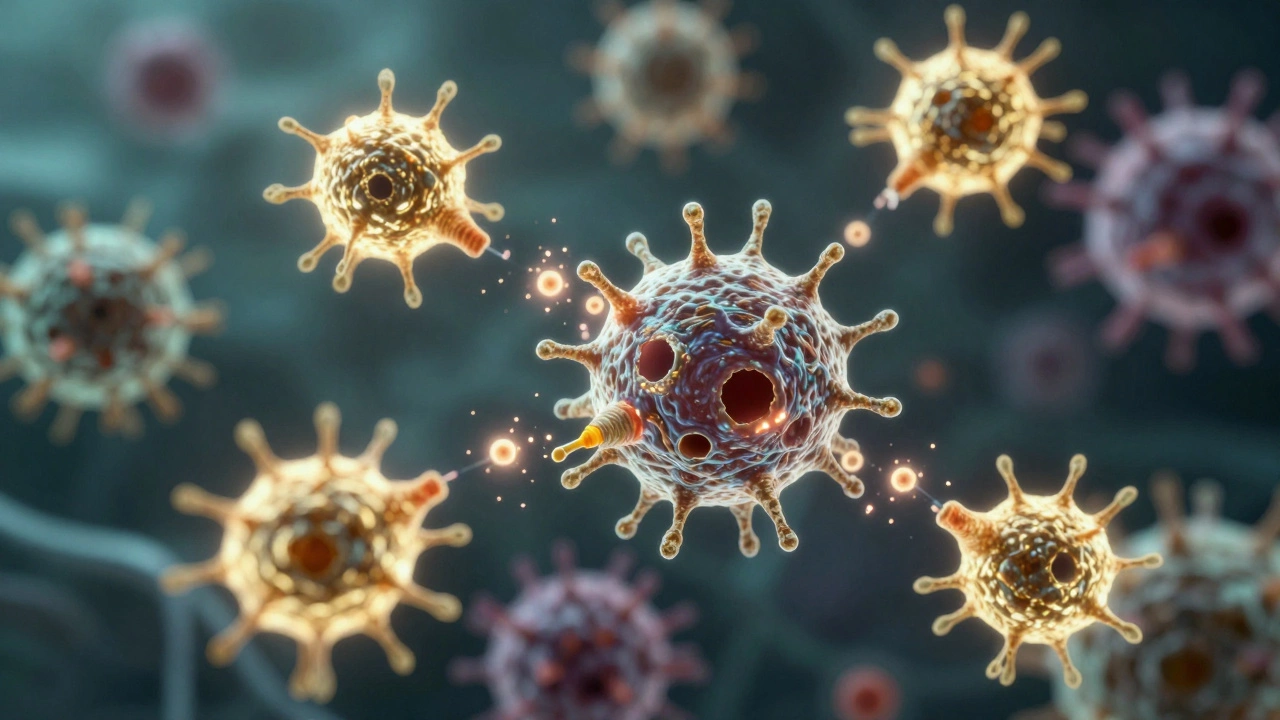
For a long time, cancer "won" because it was an expert at camouflage. It produced proteins that told the immune system, "I'm one of the good guys, don't eat me." Immunotherapy is a type of biological therapy that enables the immune system to recognize and attack cancer cells.
One of the most exciting versions of this is CAR T-cell Therapy, where doctors actually remove a patient's T-cells, genetically engineer them in a lab to recognize a specific protein on the cancer cell, and pump them back in. It's like giving your immune system a pair of high-tech goggles that make the cancer cells glow in the dark. Once the T-cells see the target, they release proteins called perforins that punch holes in the cancer cell's membrane, causing it to burst.
Targeted Therapy: The Molecular Sniper
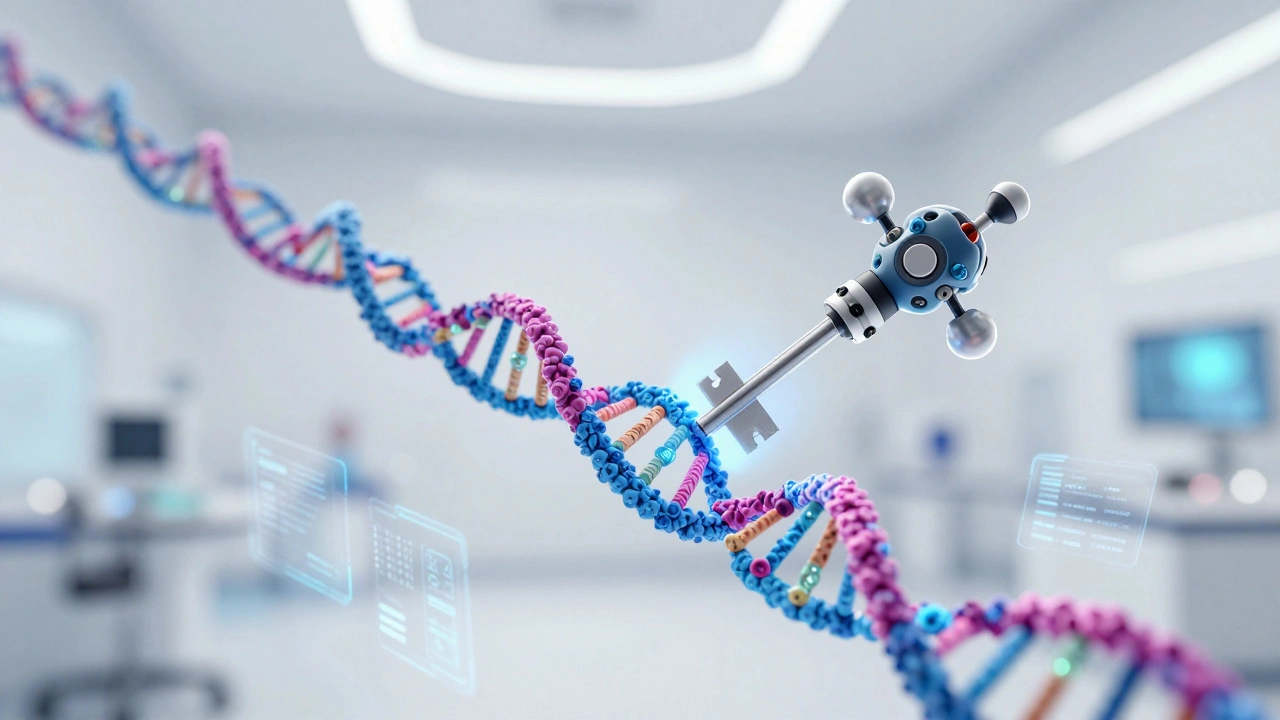
Unlike chemotherapy, which hits everything that grows fast, Targeted Therapy looks for a specific "signature" on the cell. It is a form of precision medicine that targets specific proteins or genes that contribute to cancer growth.
Imagine a cancer cell has a specific "lock" on its surface that tells it to keep growing. Targeted drugs act as a key that jams that lock. For example, some drugs target the EGFR (Epidermal Growth Factor Receptor). When the drug blocks this receptor, the cell stops receiving the signal to divide. Without that growth signal, the cell often enters a dormant state or triggers its own death sequence.
| Method | Target | Action | Systemic vs Local |
|---|---|---|---|
| Chemotherapy | Rapidly dividing cells | Interrupts DNA replication | Systemic |
| Radiation | Localized DNA | Physical breakage of strands | Local |
| Immunotherapy | Immune checkpoints | Unmasks cells for T-cell attack | Systemic |
| Targeted Therapy | Specific proteins/mutations | Blocks growth signals | Systemic |
Hormone Therapy: Cutting Off the Fuel
Some cancers, especially breast and prostate cancers, are "fuel-driven." They need hormones like estrogen or testosterone to grow. Hormone Therapy works by blocking the body's ability to produce these hormones or interfering with how the cancer cells use them.
If you remove the fuel, the cancer cells can't maintain their energy levels. They don't necessarily die instantly, but they stop growing and often shrink. This is often used as a way to make the cancer more manageable or to shrink a tumor before a surgeon removes it.
Hyperthermia and Ablation: The Direct Heat Approach
Sometimes, the best way to kill a cell is simply to overheat it. Ablation is a procedure that uses extreme cold (cryotherapy) or extreme heat (radiofrequency ablation) to destroy a tumor.
Cancer cells are often more sensitive to heat than healthy cells because their blood supply is messy and inefficient, meaning they can't dissipate heat as well. When a doctor inserts a needle and sends a high-frequency electrical current into the tumor, the friction creates heat that cooks the proteins inside the cancer cells, causing immediate necrosis (cell death).
The Role of the Immune System in Cleanup
None of these treatments work in a vacuum. After chemotherapy or radiation kills the cells, the body has to deal with the trash. This is where Macrophages come in. These are large white blood cells that act as the body's garbage disposal, eating the remains of dead cancer cells.
If the immune system is too weak, the debris from dead cancer cells can actually cause inflammation, which is why some patients experience a "tumor lysis syndrome"-a dangerous buildup of waste products in the blood when too many cancer cells die at once. This highlights why cancer cell death must be managed carefully by a medical team.
Does the body naturally kill cancer cells?
Yes, your immune system kills abnormal cells every day. Natural Killer (NK) cells and T-cells constantly patrol the body. Cancer occurs when a cell evolves a way to "hide" from these guards or suppresses the immune response entirely.
Why doesn't chemotherapy kill all the cancer cells?
Some cancer cells are "slow growers" or enter a dormant state, making them invisible to chemo drugs that target fast division. Other cells develop mutations that allow them to pump the drug back out of the cell before it can do any damage, leading to drug resistance.
What is the difference between apoptosis and necrosis?
Apoptosis is "programmed cell death"-a tidy, controlled suicide where the cell shrinks and is neatly absorbed. Necrosis is "uncontrolled death," like a cell bursting open due to injury, which often causes inflammation and damage to surrounding tissues.
Can diet and lifestyle kill cancer cells?
While a healthy diet can't "cure" an established tumor on its own, it can make treatments more effective. For example, maintaining a low-inflammation diet helps the immune system function better, which supports immunotherapy and chemotherapy efforts.
How does targeted therapy differ from chemotherapy?
Chemotherapy is a broad-spectrum attack on all fast-growing cells. Targeted therapy is like a guided missile; it only attacks cells with specific genetic mutations, which generally results in fewer side effects for healthy tissues.
What's Next for Treatment?
The future is moving toward "personalized oncology." Instead of a one-size-fits-all approach, doctors now sequence the DNA of a patient's specific tumor to see exactly which mutation is driving it. If the tumor has a specific protein glitch, they pick the targeted therapy that fits that exact lock.
We are also seeing the rise of "liquid biopsies," where a simple blood test can detect the fragments of dead cancer cells, telling doctors if a treatment is working long before a tumor shrinks on an MRI scan. The goal is to move away from blunt force and toward surgical precision at the molecular level.

Write a comment