Surgical Risk Complexity Calculator
Patient & Procedure Profile
Risk Assessment Result
Enter patient details and select a surgery type to generate a risk profile.
Surgeons often joke that they don’t fix people; they just give them a chance to survive long enough for their bodies to heal. But when we talk about the riskiest surgeries, we aren't talking about jokes. We are talking about procedures where the margin for error is measured in millimeters and seconds. You might think any major operation is scary, but some carry a statistical weight that makes even seasoned medical professionals pause before signing the consent form.
In 2026, thanks to better imaging, robotic assistance, and refined anesthesia protocols, survival rates have improved across the board. Yet, three specific procedures remain at the top of the danger list. These aren't just risky because they involve cutting into vital organs; they are risky because they require the body to withstand immense physiological shock while surgeons navigate complex anatomy with zero room for mistake.
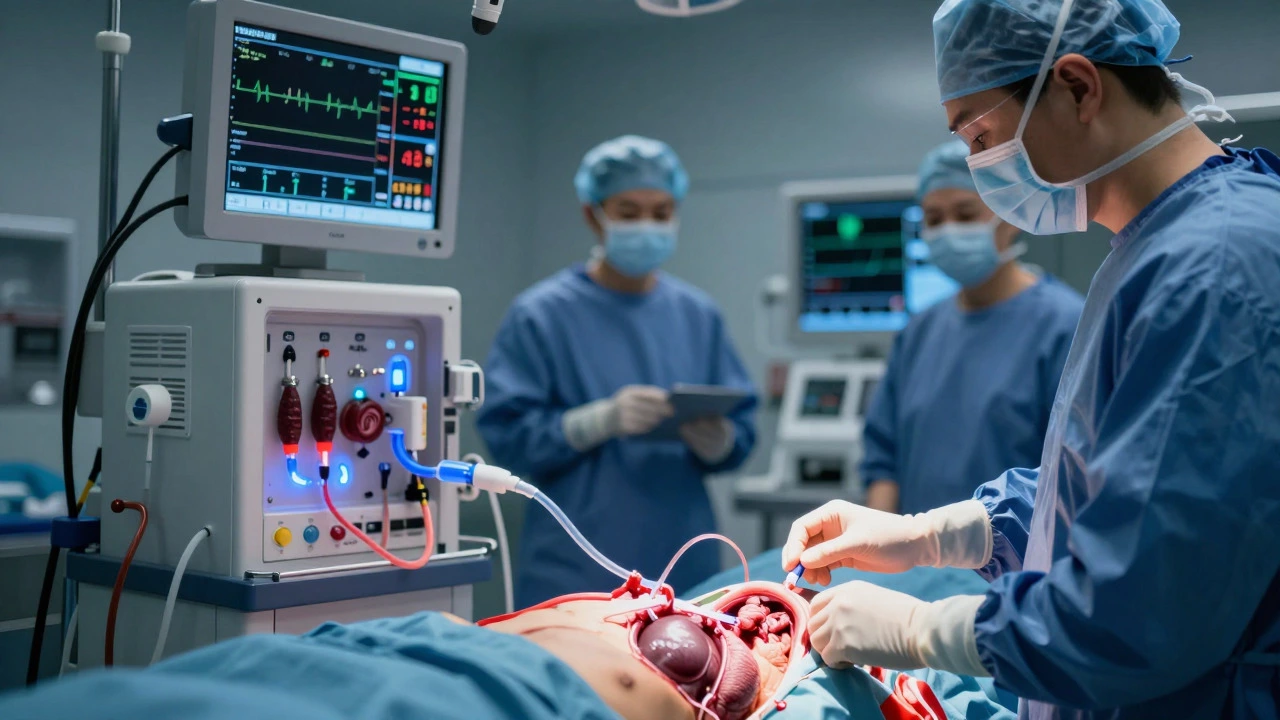
1. Heart-Lung Transplant: The Ultimate Biological Gamble
Why does it rank as the riskiest? Because you are dealing with two vital systems simultaneously. If the new heart rejects the body, or if the new lungs fail to oxygenate properly, the patient has no backup. The immune system’s reaction is unpredictable. Even with advanced immunosuppressant drugs used in 2026, the risk of infection remains high because these drugs weaken the body's natural defenses.
The surgery itself can take anywhere from 8 to 12 hours. During this time, the patient’s body temperature drops, and metabolic processes slow down. When the new organs are sewn in, the team must restart the heart-a moment known as "cross-clamp release." If the heart doesn't start beating on its own, defibrillators and emergency protocols kick in. The immediate post-op period is critical. Patients spend weeks in intensive care, monitored for signs of rejection, bleeding, or kidney failure caused by the stress on the body.
Statistically, while short-term survival has improved, the long-term outlook depends heavily on finding a perfect match. The scarcity of donor hearts and lungs means patients often wait years, sometimes deteriorating further before they get the chance to undergo the surgery. This pre-existing frailty adds another layer of risk that isn't present in elective procedures.
2. The Whipple Procedure (Pancreaticoduodenectomy): Anatomy’s Nightmare
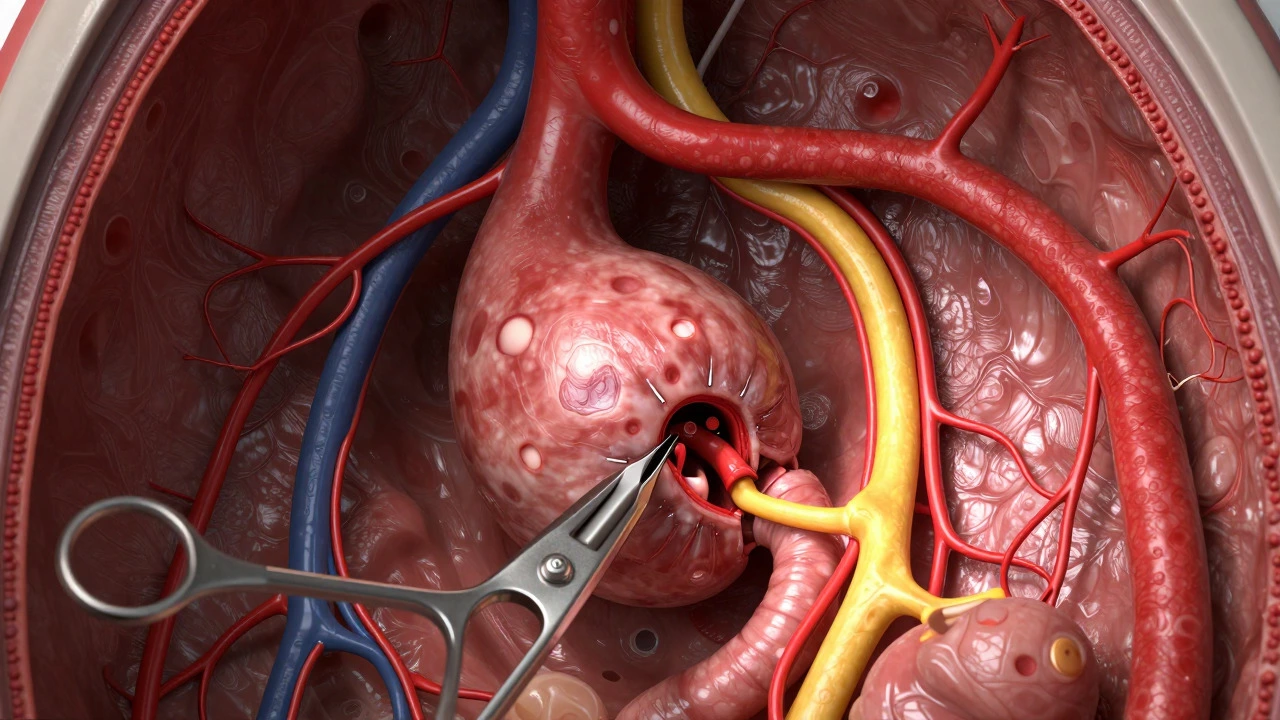
If heart surgery is about timing, the Whipple procedure is a complex abdominal surgery removing part of the pancreas, bile duct, gallbladder, and duodenum is about precision in a crowded space. Named after surgeon Allen Whipple, this operation is primarily used to treat pancreatic cancer, specifically tumors located in the head of the pancreas.
The pancreas sits deep in the abdomen, tucked behind the stomach and surrounded by major blood vessels like the superior mesenteric artery and vein. Imagine trying to untangle a knot of electrical wires while the power is still on. That’s essentially what surgeons do here. They have to remove the tumor along with surrounding tissue, then reconstruct the digestive tract by reconnecting the remaining pancreas, liver, and stomach to the small intestine.
The primary risks here are leaks. After reconstruction, there are several new connections (anastomoses) where tissues are stitched together. If any of these stitches leak bile, pancreatic enzymes, or gastric acid into the abdominal cavity, it causes severe infection, sepsis, or internal bleeding. Pancreatic fistula-a leak of digestive enzymes-is the most common complication and can be life-threatening if not caught early.
Recovery is brutal. Patients often stay in the hospital for 7 to 14 days. Pain management is intense, and returning to normal digestion takes months. Many patients struggle with diabetes afterward because part of the insulin-producing pancreas has been removed. In 2026, minimally invasive robotic approaches are becoming more common, which reduces blood loss and recovery time, but the inherent complexity of the anatomy keeps this surgery firmly in the "high-risk" category.
3. Thoracic Aortic Aneurysm Repair: The Ticking Time Bomb
Aortic aneurysms are silent killers. The aorta is the main highway carrying blood from your heart to the rest of your body. When a section of this vessel weakens and bulges, it forms an aneurysm. If it bursts, death follows within minutes. Therefore, surgeons must intervene before rupture occurs, but repairing a weakened aorta is incredibly dangerous.
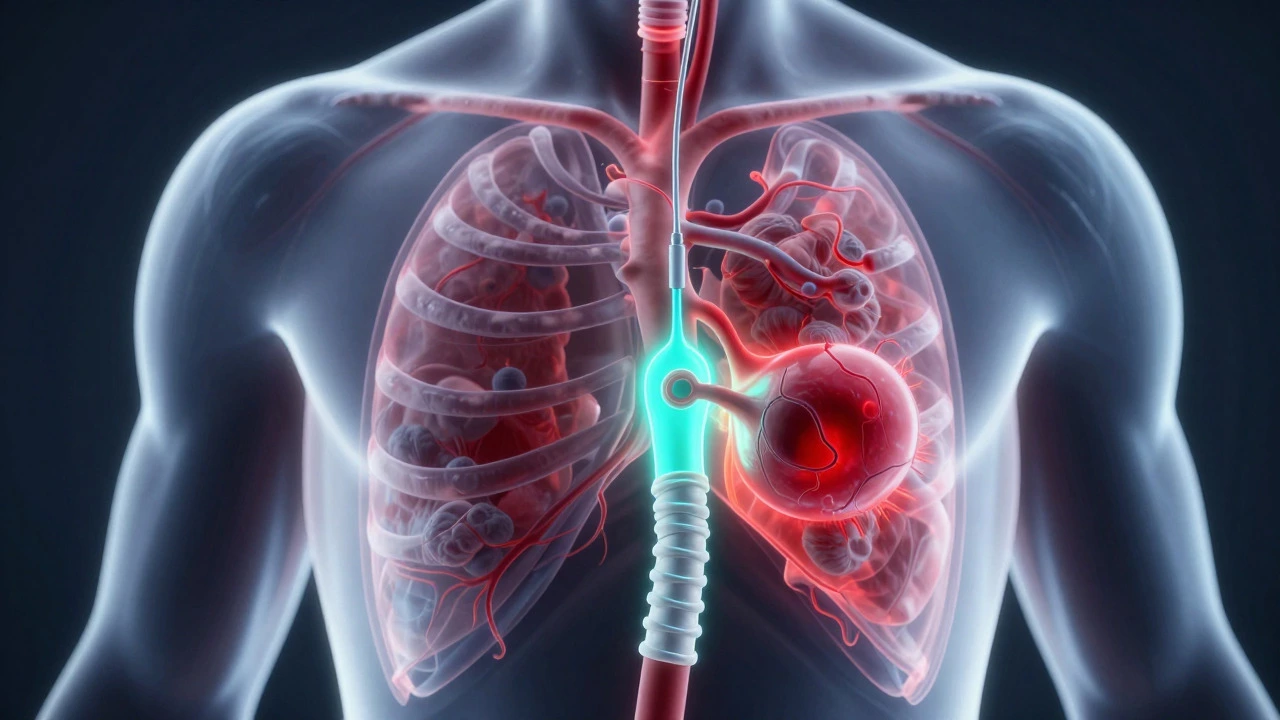
Thoracic aortic aneurysm repair is surgery to replace a damaged section of the aorta in the chest with a synthetic graft. The thoracic aorta is located near the heart and brain. Operating here carries two massive risks: stroke and spinal cord ischemia.
During open-heart repair, the aorta must be clamped off to stop blood flow so the surgeon can sew in the graft. This stops blood from reaching the brain and the spine. Surgeons use techniques like hypothermia (cooling the body) to protect the brain, but the risk of a clot breaking loose and causing a stroke remains significant. For the spine, lack of blood flow can lead to paralysis if collateral circulation isn't sufficient.
In recent years, Endovascular Aortic Repair (EVAR) and Thoracic Endovascular Aortic Repair (TEVAR) have offered less invasive alternatives. Instead of opening the chest, surgeons insert a stent-graft through arteries in the groin. While this reduces trauma, it introduces new risks such as endoleaks (blood leaking around the stent) and the need for lifelong monitoring. However, for complex cases involving the arch of the aorta near the brain, open surgery is still required, keeping it among the riskiest procedures performed today.
What Makes a Surgery "Risky"?
Understanding why these three stand out requires looking beyond just the cut. Risk is multifaceted. Here is how medical professionals evaluate surgical danger:
- Anatomical Complexity: How many vital structures are nearby? (High in Whipple and Aortic repair)
- Physiological Stress: How much shock does the body endure? (Extreme in Heart-Lung transplant)
- Dependency on External Factors: Does success rely on donor availability or perfect tissue matching? (Yes for transplants)
- Complication Severity: Are minor errors fatal? (Yes for all three)
It’s also important to note that "risk" is relative to the patient. A 40-year-old with a genetic condition faces different odds than an 80-year-old with multiple comorbidities. Age, smoking history, diabetes, and overall fitness play huge roles in whether a patient survives these procedures.
Comparison of High-Risk Procedures
| Surgery Type | Primary Target | Key Risks | Avg. Hospital Stay | Recovery Time |
|---|---|---|---|---|
| Heart-Lung Transplant | Heart & Lungs | Rejection, Infection, Bleeding | 2-4 Weeks | 6-12 Months |
| Whipple Procedure | Pancreas/Duodenum | Leaks, Sepsis, Diabetes | 7-14 Days | 3-6 Months |
| Aortic Aneurysm Repair | Aorta | Stroke, Paralysis, Graft Failure | 5-10 Days | 3-6 Months |
How Technology Is Lowering the Odds in 2026
While these surgeries remain dangerous, they are safer now than they were a decade ago. Robotic surgery platforms allow for tremor-free movements and 3D visualization, which helps in tight spaces like the pancreas. Artificial intelligence is being used to predict patient-specific risks before the knife even touches skin. Surgeons can simulate the operation on a digital twin of the patient’s anatomy to plan the best approach.
Better anesthesia drugs keep patients stable for longer periods. Enhanced Recovery After Surgery (ERAS) protocols help patients walk sooner, reducing the risk of blood clots and pneumonia. Despite these advances, the human element-skill, experience, and teamwork-remains the biggest factor in survival.
Frequently Asked Questions
What is the highest mortality rate surgery?
Historically, heart-lung transplants and complex pancreatic surgeries like the Whipple procedure have some of the highest mortality rates. While exact numbers vary by hospital and patient health, perioperative mortality for these procedures can range from 5% to 15%, compared to less than 1% for routine surgeries like hernia repairs.
Is the Whipple procedure painful?
Yes, it is considered one of the more painful abdominal surgeries due to the extensive dissection and reconstruction involved. Modern pain management techniques, including epidurals and multimodal analgesia, help control discomfort, but patients should expect significant pain during the first few weeks of recovery.
Can aortic aneurysm repair be done without open surgery?
In many cases, yes. Endovascular repair (EVAR/TEVAR) allows surgeons to place a stent graft through small incisions in the groin. However, this depends on the shape and location of the aneurysm. Complex aneurysms near the brain or those with unusual anatomy may still require traditional open-chest surgery.
Who is eligible for a heart-lung transplant?
Eligibility is strict. Patients must have end-stage failure of both organs, no other curable options, and be physically fit enough to survive the surgery and subsequent rehabilitation. Factors like age, active cancer, uncontrolled infections, or severe kidney disease can disqualify a candidate.
How has AI changed surgical risk assessment?
AI algorithms analyze vast amounts of patient data-including genetics, lab results, and imaging-to predict individual risk profiles more accurately than traditional scoring systems. This helps surgeons tailor pre-operative care and choose the safest surgical approach for each unique patient.

Write a comment