
You’re feeling overwhelmed. Maybe sleep is slipping away, anxiety feels like a constant hum in the background, or sadness has settled in deep enough to change your routine. You know you need help, but standing at the crossroads of “therapist” and “psychiatrist,” you might feel stuck. Which one do you pick? Do you need pills, talk, or both?
It’s a common confusion. The terms get swapped in casual conversation, but in healthcare, they represent two very different paths to healing. One focuses on changing how you think and behave through conversation; the other manages biological imbalances through medicine. Getting this right isn’t just about semantics-it’s about getting the right tool for the job so you don’t waste time or money.
The Core Difference: Talk vs. Pills
At its simplest level, the difference comes down to training and tools. A Psychiatrist is a medical doctor (MD or DO) who specializes in mental health, including substance use disorders. Because they are physicians, they can prescribe medication, order lab tests, and treat complex medical conditions that affect the brain.
A Therapist, often called a Psychotherapist or counselor, is a licensed mental health professional trained to provide talk therapy. They cannot prescribe medication (with rare exceptions in a few specific states). Instead, they use structured conversations to help you process emotions, identify patterns, and develop coping strategies.
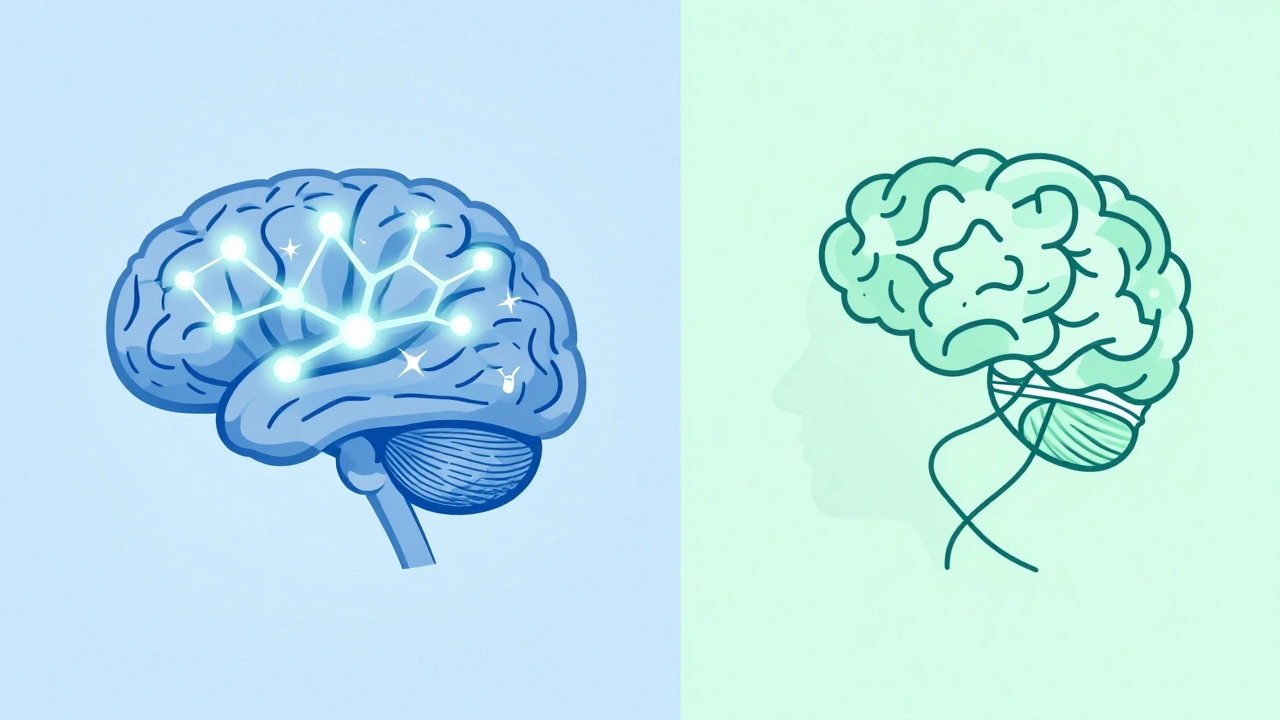
Think of it this way: If your mind were a computer, the psychiatrist checks the hardware-ensuring the circuits (neurotransmitters) are firing correctly. The therapist works on the software-debugging the code (thoughts and behaviors) that causes crashes.
When to Choose a Psychiatrist
You should lean toward seeing a psychiatrist if your symptoms are severe, disruptive, or clearly rooted in biology. These professionals are essential when safety is a concern or when daily functioning has ground to a halt.
- Severe Depression: If you’re unable to get out of bed, eat, or care for yourself, medication can be the bridge that gets you stable enough to engage in life again.
- Bipolar Disorder: This condition involves extreme mood swings (mania and depression). It almost always requires mood stabilizers or antipsychotics managed by a doctor.
- Schizophrenia or Psychotic Disorders: Hallucinations or delusions require immediate medical intervention with antipsychotic medications.
- Complex Medical History: If you have other physical health issues (like thyroid problems or heart disease), a psychiatrist can navigate how mental health meds interact with your existing prescriptions.
- Medication Management: Even if you see a therapist, you might need a psychiatrist to fine-tune your antidepressants or anti-anxiety meds.
In India, where we are writing from, psychiatrists are also crucial for navigating the cultural stigma around mental illness. Sometimes, having a "medical" diagnosis helps families understand that this is a health issue, not a character flaw.
When to Choose a Therapist
Therapy is the go-to for most people seeking mental health support. It’s ideal when you want to understand *why* you feel a certain way and learn skills to handle stress, trauma, or relationship issues.
- Anxiety and Stress: Cognitive Behavioral Therapy (CBT) is highly effective for managing worry, panic attacks, and generalized anxiety without medication.
- Grief and Loss: Processing the death of a loved one, a divorce, or a career change benefits deeply from the emotional space a therapist provides.
- Trauma and PTSD: Specialized therapies like EMDR (Eye Movement Desensitization and Reprocessing) help reprocess traumatic memories safely.
- Relationship Issues: Couples counseling or family therapy addresses communication breakdowns and conflict resolution.
- Mild to Moderate Depression: For many, talk therapy alone is sufficient to lift mood and restore motivation.
If you’re looking for someone to listen, validate your feelings, and give you practical tools to manage your day-to-day life, a therapist is likely your best first stop.
Types of Therapists: Not All Are the Same
“Therapist” is an umbrella term. In India and globally, several licenses exist under this banner. Knowing the difference helps you find the right fit.
| Professional Title | Education Required | Can Prescribe Meds? | Best For |
|---|---|---|---|
| Clinical Psychologist | PhD or PsyD (Doctorate) | No | Diagnosis, psychological testing, deep therapy |
| Licensed Clinical Social Worker (LCSW) | Master’s in Social Work (MSW) | No | Community resources, coping skills, social context |
| Marriage and Family Therapist (LMFT) | Master’s Degree | No | Relationship dynamics, family systems |
| Psychiatric Nurse Practitioner | Master’s or Doctorate in Nursing | Yes (in many regions) | Medication management, holistic care |
| Counselor (LPC/LMHC) | Master’s Degree | No | Career issues, general life transitions, mild anxiety |
Note that in India, the titles may vary slightly. You might look for a Clinical Psychologist registered with the Rehabilitation Council of India (RCI) or a Counselor with relevant master’s degrees. Always check credentials.
The Gold Standard: Combining Both
Here’s the secret most patients discover eventually: You don’t have to choose just one. In fact, research consistently shows that combining medication (from a psychiatrist) with therapy (from a psychologist) yields better outcomes than either alone for moderate to severe conditions.
This approach is called Integrated Care. The psychiatrist stabilizes your chemistry, reducing the intense symptoms that block progress. The therapist then helps you work through the underlying issues while your brain is more receptive to change.
For example, if you have panic disorder, a psychiatrist might prescribe an SSRI to lower the baseline anxiety. Meanwhile, your therapist uses exposure therapy to help you face feared situations. Without the med, the panic might be too overwhelming to start therapy. Without therapy, you might stay dependent on the med long-term without learning coping skills.
How to Find the Right Provider in 2026
Finding a provider can feel like searching for a needle in a haystack. Here’s a practical checklist to narrow it down.
- Check Your Insurance: Most plans cover both therapy and psychiatry, but networks differ. Look up “in-network providers” on your insurer’s portal. If you’re paying out-of-pocket, ask about sliding scale fees.
- Verify Credentials: Ensure your therapist is licensed in your state or country. In India, look for RCI registration for psychologists. For psychiatrists, verify their MBBS and MD/DNB in Psychiatry.
- Ask for Referrals: Your primary care physician (GP) is a great starting point. They can rule out physical causes (like thyroid issues) and refer you to a trusted specialist.
- Use Reputable Directories: Platforms like Psychology Today, GoodTherapy, or local hospital directories allow filtering by specialty, insurance, and language.
- Consider Telehealth: Since 2020, teletherapy has become mainstream. If you live in a rural area or have mobility issues, video sessions with a qualified provider are a valid and effective option.

Cost and Accessibility: What to Expect
Money is a real barrier. In the US, a psychiatrist visit might cost $150-$300 per session, while therapy ranges from $100-$250. With insurance, copays might be $20-$50. In India, costs vary widely. A private psychiatrist consultation might range from ₹1,500 to ₹5,000, while therapy sessions could be ₹2,000 to ₹8,000 depending on the professional’s experience and location (e.g., Bangalore or Mumbai vs. smaller towns).
If cost is a major concern, consider community mental health centers, university training clinics (where supervised students provide low-cost therapy), or online platforms that offer subscription-based access.
Common Misconceptions Debunked
Myth: “If I see a psychiatrist, I’m ‘crazy.’”
Reality: Millions of people take medication for blood pressure or diabetes. Mental health medication treats chemical imbalances, just as insulin treats diabetes. It’s a sign of self-care, not weakness.
Myth: “Therapy is just talking to a friend.”
Reality: Therapy is structured, evidence-based, and focused on goals. A friend offers empathy; a therapist offers strategy, boundaries, and professional expertise.
Myth: “Medication fixes everything instantly.”
Reality: Antidepressants can take 4-6 weeks to show full effect. They aren’t magic bullets. They work best alongside lifestyle changes and therapy.
Next Steps: How to Start Today
Don’t let perfection paralysis stop you. The goal isn’t to find the *perfect* provider immediately; it’s to find a *good enough* one to start the process.
1. **Write down your symptoms:** When did they start? How do they affect your work/sleep/relationships?
2. **Decide on urgency:** If you’re in crisis, go to the nearest emergency room or call a crisis hotline (e.g., Vandrevala Foundation Helpline in India: 1860-266-2345, or 9820466777).
3. **Make three calls:** Contact three potential providers. Ask: “Do you accept my insurance?” “What is your approach to treating [your condition]?” “Are you accepting new patients?”
4. **Schedule a consultation:** Many therapists offer a free 15-minute phone consult. Use this to gauge comfort level. Trust your gut-if you don’t feel heard, keep looking.
Remember, mental health care is iterative. You might switch therapists twice before finding the right match. That’s normal. The act of reaching out is the hardest part. Once you’re in the room, the path forward becomes clearer.
Can a therapist prescribe medication?
Generally, no. In most places, therapists (psychologists, LCSWs, LMFTs) cannot prescribe medication. However, in a few US states (like Louisiana, New Mexico, and Illinois), psychologists with additional training can prescribe. Psychiatric nurse practitioners can also prescribe in many regions. For standard medication management, you need a psychiatrist or a primary care physician.
Should I see a psychiatrist or therapist first?
Start with a therapist if your issues are related to stress, relationships, grief, or mild anxiety/depression. Start with a psychiatrist if you have severe symptoms (suicidal thoughts, hallucinations, inability to function), bipolar disorder, or schizophrenia. If unsure, a primary care doctor can help triage.
Is therapy covered by insurance?
Most insurance plans cover mental health services due to parity laws. However, coverage varies. Check your plan’s network directory for in-network therapists and psychiatrists to minimize out-of-pocket costs. Out-of-network providers may offer superbills for partial reimbursement.
How long does therapy take to work?
It depends on the issue. Short-term therapy (CBT) for specific phobias or mild anxiety might last 8-12 weeks. Long-term therapy for trauma or personality disorders can last months or years. Most people notice some improvement within 4-6 sessions if the therapeutic alliance is strong.
Can I see both a therapist and a psychiatrist?
Yes, and it’s often recommended for moderate to severe conditions. This is called integrated care. The psychiatrist manages medication, while the therapist provides talk therapy. They should communicate with each other (with your consent) to ensure coordinated treatment.

Write a comment