Calorie Balance: What It Really Means for Weight Loss and Health
When we talk about calorie balance, the relationship between the energy you consume and the energy your body burns. Also known as energy balance, it's the single most important factor in whether you lose, gain, or keep weight. It’s not magic. It’s math. But it’s not the simple math you see on fad diets. Your body doesn’t just count calories like a vending machine—it adjusts, adapts, and responds to what you eat, how you move, and how you sleep.
Calorie balance connects directly to your metabolism, how your body turns food into energy. When you eat more than you burn, the extra turns into fat. When you burn more than you eat, your body taps into stored energy. But here’s the catch: your metabolism isn’t fixed. It changes with age, muscle mass, stress, and even how much you sleep. That’s why losing 20 pounds after 50 feels harder than it did in your 20s. It’s not just about eating less—it’s about working with your body’s changing energy needs.
Many people think calorie balance means counting every single calorie. But the real focus should be on what those calories come from. A 200-calorie snack of chips won’t fill you up the same way 200 calories of chicken, veggies, and beans will. Protein keeps you full longer. Fiber slows digestion. Sugar spikes blood sugar and crashes it—making you hungrier again. That’s why the calorie intake, the total amount of energy consumed from food and drink matters less than the quality behind it. You can’t out-eat a bad diet, even if you’re technically in a deficit.
And it’s not just about food. Movement plays a huge role. You don’t need to run marathons. Strength training builds muscle, which burns more calories at rest. Walking after meals helps your body process sugar better. Sleep affects hormones that control hunger. Stress makes your body hold onto fat. All of these things influence calorie balance—even if you never step on a scale.
That’s why the posts here don’t just talk about weight loss pills or miracle drinks. They show you how real people manage their energy balance—through Ayurvedic eating, smart protein choices, safe exercise after surgery, and understanding how your body actually works. You’ll find advice on what to eat after chemo, how to reset your system with a 40-day Ayurvedic plan, and why some weight loss injections work better than others when paired with lifestyle changes. This isn’t about quick fixes. It’s about building habits that keep your calorie balance in check for the long term.
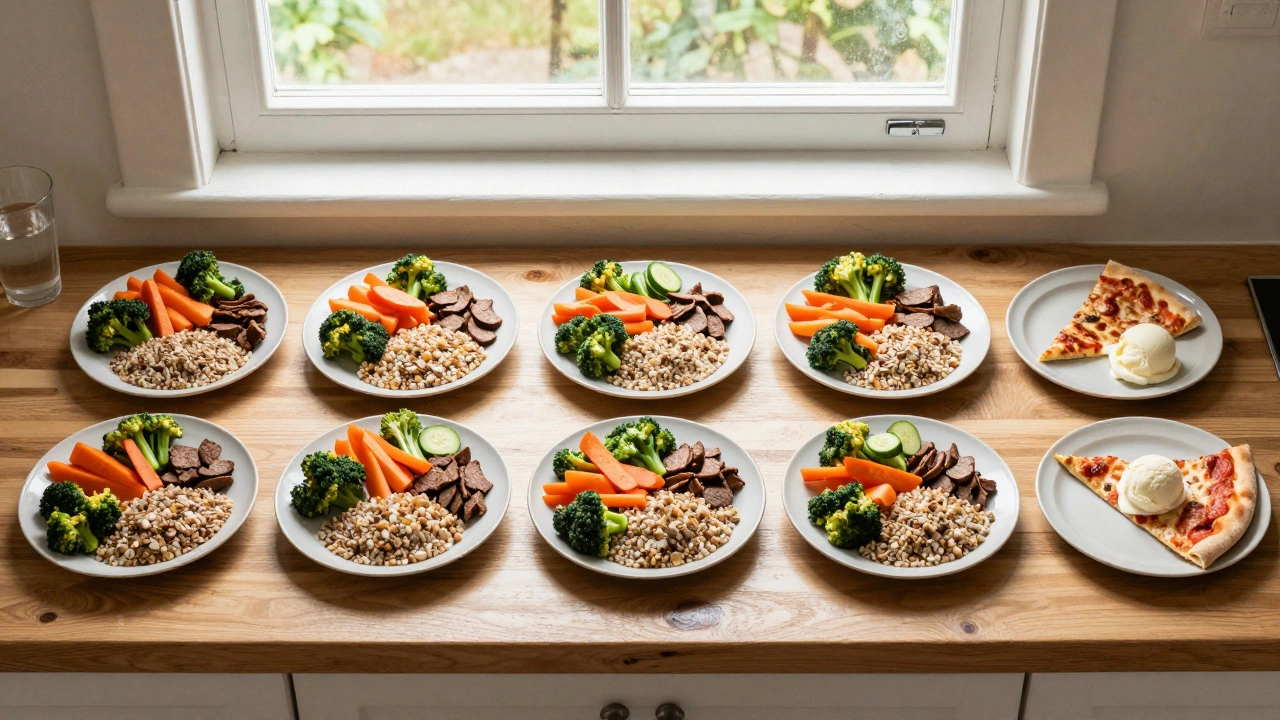
What Is the 80/20 Rule to Lose Weight? A Simple Guide That Actually Works
The 80/20 rule for weight loss means eating healthy whole foods 80% of the time and allowing flexibility for treats the other 20%. It's a sustainable, science-backed approach that works better than strict diets.
read more