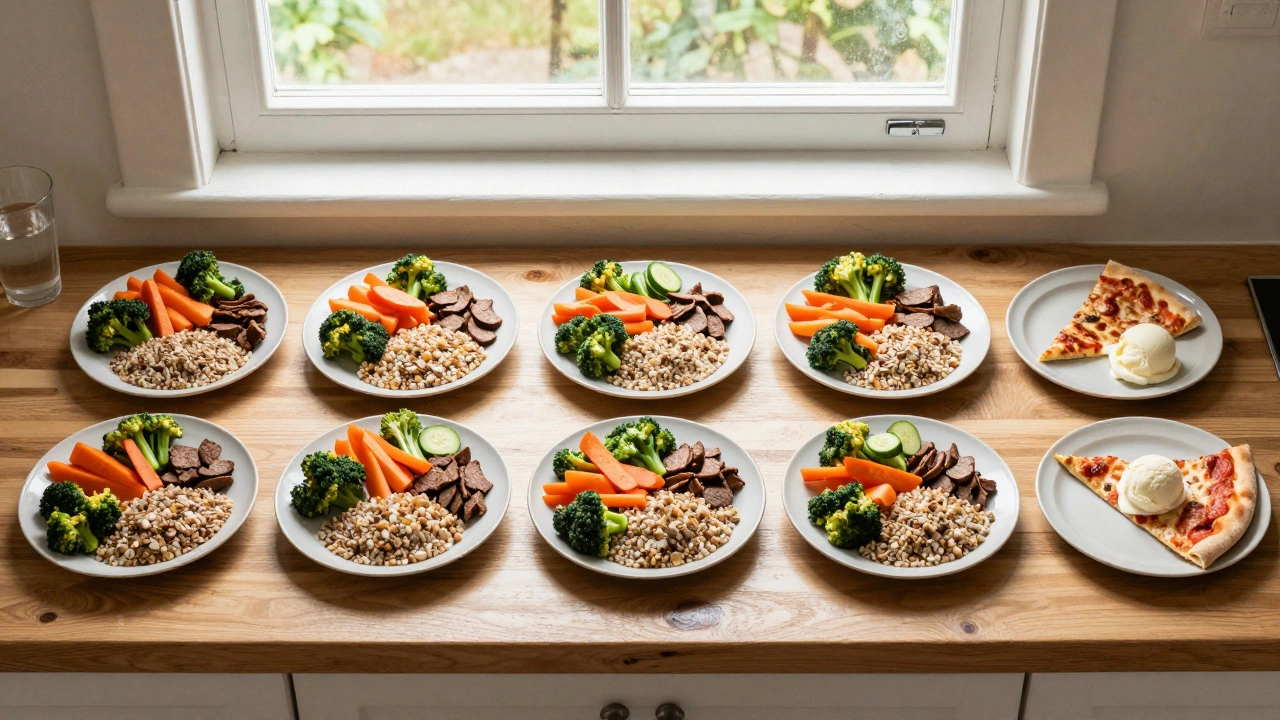
80/20 Weight Loss Meal Planner
Enter how many meals you typically eat each week. The tool will calculate your ideal 80% healthy meals and 20% flexible meals based on the 80/20 rule.
Example: If you eat 21 meals per week, 17 should be healthy meals (80%) and 4 should be flexible meals (20%).
Enter your meal count to see your 80/20 split.
Remember: 80% should be nutrient-dense meals (vegetables, lean protein, whole grains). 20% can be your favorite indulgences.
Most people who try to lose weight fail-not because they lack willpower, but because they’re overcomplicating it. You don’t need a 12-week meal plan, expensive supplements, or 90-minute daily workouts. What actually works is a simple idea called the 80/20 rule. It’s not a diet. It’s not a trend. It’s a practical way to eat better without feeling like you’re on a punishment diet.
What the 80/20 rule really means for weight loss
The 80/20 rule for weight loss means that 80% of your results come from 20% of your actions. In practice, that translates to: eat nutritious, whole foods 80% of the time, and allow yourself flexibility for the other 20%. This isn’t about perfection. It’s about consistency with room for real life.
Think of it this way: if you eat 21 meals a week, 17 of them should be balanced meals made from unprocessed ingredients-vegetables, lean proteins, whole grains, healthy fats. The other 4 meals? You can have pizza, ice cream, or that birthday cake without guilt. The key isn’t avoiding treats. It’s not letting them take over.
This approach works because it matches how humans actually behave. Strict diets fail because they’re unsustainable. You can’t say no to every cookie, every weekend brunch, every holiday feast. But you can say yes to mostly healthy choices-and that’s enough.
Why 80/20 beats restrictive diets
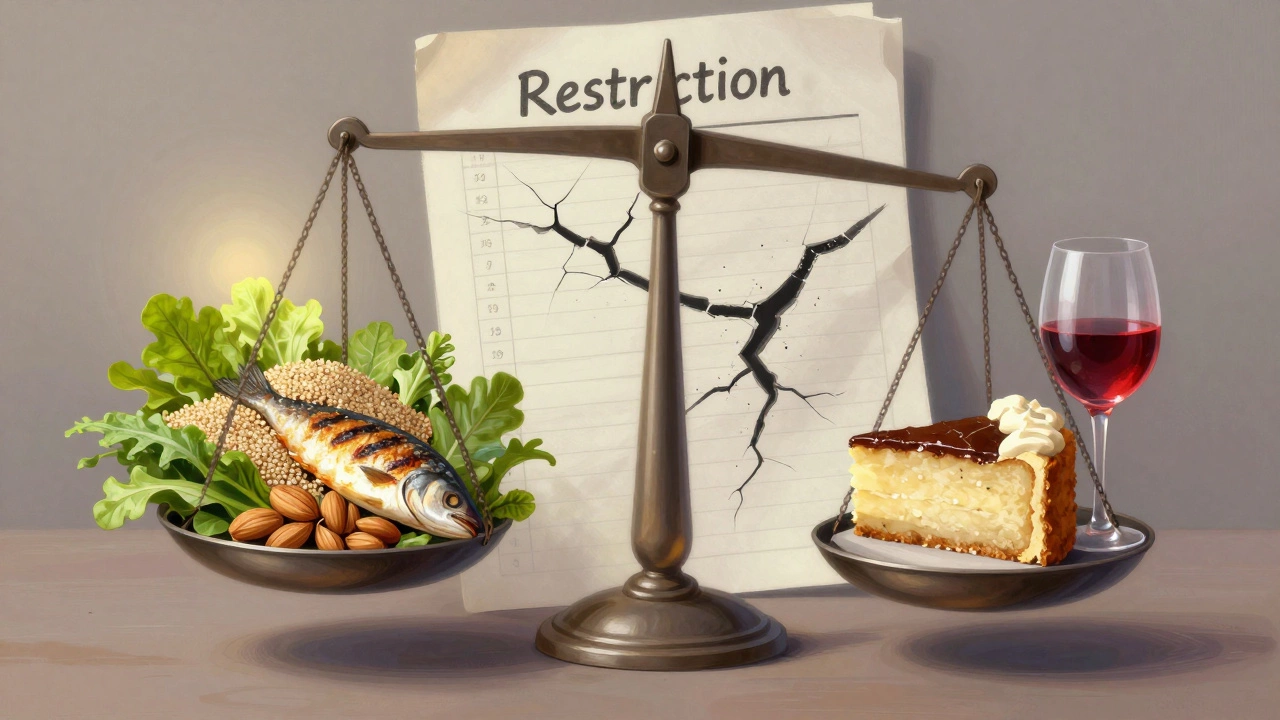
Restrictive diets like keto, intermittent fasting, or low-carb plans often work short-term. But studies show that over 80% of people who lose weight on extreme diets regain it within two years. Why? Because they treat food like an enemy. They create rules that feel like punishment.
The 80/20 rule doesn’t ask you to eliminate anything. It asks you to prioritize. You’re not cutting out carbs-you’re just choosing them wisely most of the time. You’re not banning sugar-you’re just not making it the main event.
A 2023 study from the University of California tracked 1,200 adults over 18 months. Those following a flexible 80/20 eating pattern lost an average of 11 pounds and kept it off. The group on a strict keto diet lost similar weight at first-but 72% of them gained back more than they lost by month 12.
The difference? The 80/20 group didn’t feel deprived. They didn’t binge. They didn’t quit.
How to apply the 80/20 rule in real life
Here’s how to make it work without thinking too hard:
- Plan your 80%-Fill your plate with vegetables (at least half), a palm-sized protein (chicken, fish, tofu, beans), and a small portion of whole grains or starchy veggies. That’s your default.
- Keep snacks simple-Nuts, yogurt, fruit, hard-boiled eggs. These are easy to grab and keep you from reaching for chips or candy.
- Allow your 20%-Pick your favorite indulgences. Maybe it’s wine on Friday, chocolate on Sundays, or burgers with friends. Make it intentional, not accidental.
- Don’t track every bite-You don’t need an app. Just notice how you feel. If you’re eating mostly real food, you’ll naturally eat less and feel better.
- Ignore the scale for a week-Weight fluctuates. Focus on how your clothes fit, your energy levels, and whether you’re craving junk less often.
One woman in her 40s, who lost 32 pounds over 10 months using this method, told me: "I stopped counting calories. I started asking myself: Is this food going to make me feel good after I eat it?" That’s the whole rule in one sentence.

What the 20% really looks like
The 20% isn’t an excuse to binge. It’s a safety valve. Think of it like a budget. You don’t spend 20% of your income on lottery tickets-you spend it on things you truly enjoy.
Here are realistic examples of 20% meals:
- One slice of pizza with friends on Saturday night
- A small scoop of ice cream after dinner on Sunday
- A glass of wine with your meal during a dinner party
- That birthday cake at work-not the whole cake, just a piece
- A fast-food burger once every two weeks
Notice something? None of these are daily habits. None of them are guilt-filled. They’re planned, enjoyed, and forgotten about by the next meal.
When people try to make their 20% into 50%, that’s when it falls apart. The trick is to keep the 80% solid. If you’re eating mostly real food, your body naturally regulates hunger. You won’t crave junk as much. You’ll sleep better. Your energy will stabilize.
Common mistakes people make with the 80/20 rule
Even simple rules get twisted. Here’s what usually goes wrong:
- Mistake 1: "I ate healthy all week, so I deserve to binge on the weekend." That’s not 80/20. That’s 50/50. The rule isn’t a reward system. It’s a balance.
- Mistake 2: "I only ate one unhealthy thing this week, so I’m good." If you’re eating mostly processed snacks, fast food, and sugary drinks, you’re not at 80%. You’re at 20%.
- Mistake 3: "I need to eat clean 100% to see results." That’s the myth that keeps people stuck. You don’t need perfection. You need progress.
- Mistake 4: Ignoring portion sizes in the 80%. You can eat kale and still overeat. A plate of roasted veggies with three tablespoons of olive oil isn’t healthy-it’s calorie-dense.
The 80/20 rule isn’t about what you eat. It’s about how you think about food. If you’re always thinking about restriction, you’ll burn out. If you’re thinking about nourishment, you’ll stick with it.
Who the 80/20 rule works best for
This method is perfect for:
- People who hate dieting
- Those who travel or eat out often
- Parents juggling family meals
- Anyone who’s tried and failed with strict plans
- People who want to lose weight without giving up life
It’s not ideal for:
- People with diagnosed eating disorders (they need professional support)
- Those who need medically supervised weight loss (like after bariatric surgery)
- Anyone who uses food to cope with stress or trauma (this is a lifestyle tool, not therapy)
If you’ve tried every diet and nothing stuck, the 80/20 rule might be the first one that actually fits your life.
How long until you see results?
You won’t lose 10 pounds in a week. But you will start noticing changes in about 3-4 weeks:
- Less bloating
- More steady energy
- Fewer cravings
- Better sleep
- Clothes fitting looser
On average, people lose 1-2 pounds per week using this method. That’s 4-8 pounds a month. Slow? Yes. But sustainable? Absolutely.
And here’s the real win: you don’t have to go back to your old habits when you reach your goal. The 80/20 rule is your new normal.
Final thought: It’s not about food. It’s about freedom.
The 80/20 rule isn’t a diet. It’s a way to live without fear of food. It’s about trusting your body, not fighting it. You don’t need to be perfect. You just need to be consistent.
Food isn’t the enemy. Restriction is. The 80/20 rule gives you back control-not by limiting you, but by freeing you from the all-or-nothing mindset that keeps so many people stuck.
Start tomorrow. Eat 80% well. Enjoy the rest. Repeat. That’s it.

Write a comment