Post-Knee Surgery Bathroom Readiness Planner
Answer a few questions about your current recovery status to get a tailored plan for safe and comfortable bathroom use.
Recommended Strategy
Essential Equipment Checklist
Watch Out For
Recovery Timeline Snapshot
Waking up after knee replacement is a major orthopedic procedure involving the resurfacing of the joint with metal and plastic components often brings a surprising challenge that nobody warns you about: how do you actually use the bathroom? While most patients focus on walking or pain management, the mechanics of sitting down, positioning your body, and managing the urge to void can feel awkward and even intimidating in those first few days. You are not alone; this is one of the most common questions asked by patients preparing for total knee arthroplasty.
The good news is that with the right preparation and technique, you can manage urination comfortably without straining your new joint. This guide breaks down exactly what to expect, the best positions to use, and how to avoid common pitfalls like urinary retention or falls during the critical early recovery phase.
Why Urination Feels Different After Surgery
Your bladder doesn’t change just because your knee does, but your ability to access it efficiently certainly does. The primary issue isn’t the bladder itself, but the physical limitations imposed by the surgical site. Immediately after surgery, your leg is immobilized or restricted in range of motion. Bending at the waist to reach a standard toilet bowl requires flexibility in the hips and lower back, which might be uncomfortable due to the general anesthesia or epidural effects still lingering.
Furthermore, the stress of surgery can trigger a condition known as acute urinary retention. This happens when the muscles controlling the bladder relax too much or when pain medications interfere with the nerve signals needed to initiate urination. If you’ve ever had trouble going after taking strong opioids, you already know how frustrating this can be. Post-surgical swelling around the knee also makes shifting weight from one leg to another difficult, so any maneuver that requires balance needs extra care.
The Best Positions for Using the Toilet
You don’t need to perform gymnastics to pee. In fact, simplicity is key. Here are the three most effective methods, ranked by ease and safety:
- Squatting over the Toilet (If Mobile): If you are using a walker or crutches and have enough mobility, you can sit on the toilet normally. However, instead of bending forward, keep your torso upright. Use your arms to support your weight on the armrests if available, or hold onto a grab bar. Keep your feet flat on the floor. This is the most natural position but requires the most stability.
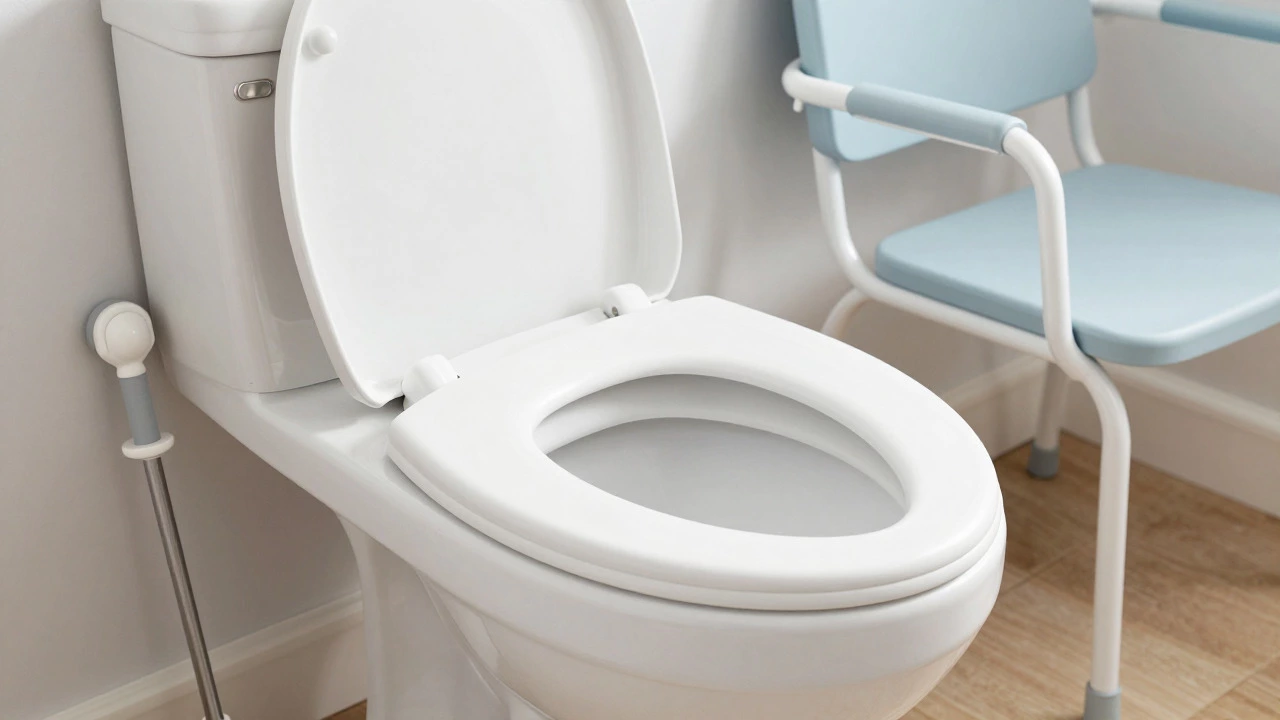
- The "Chair" Method (Using a Raised Seat): This is the gold standard for the first week. A raised toilet seat with handles turns a standard toilet into a safe, elevated platform. It reduces the distance you need to drop and lift, minimizing strain on the knee. The handles provide crucial support for standing up.
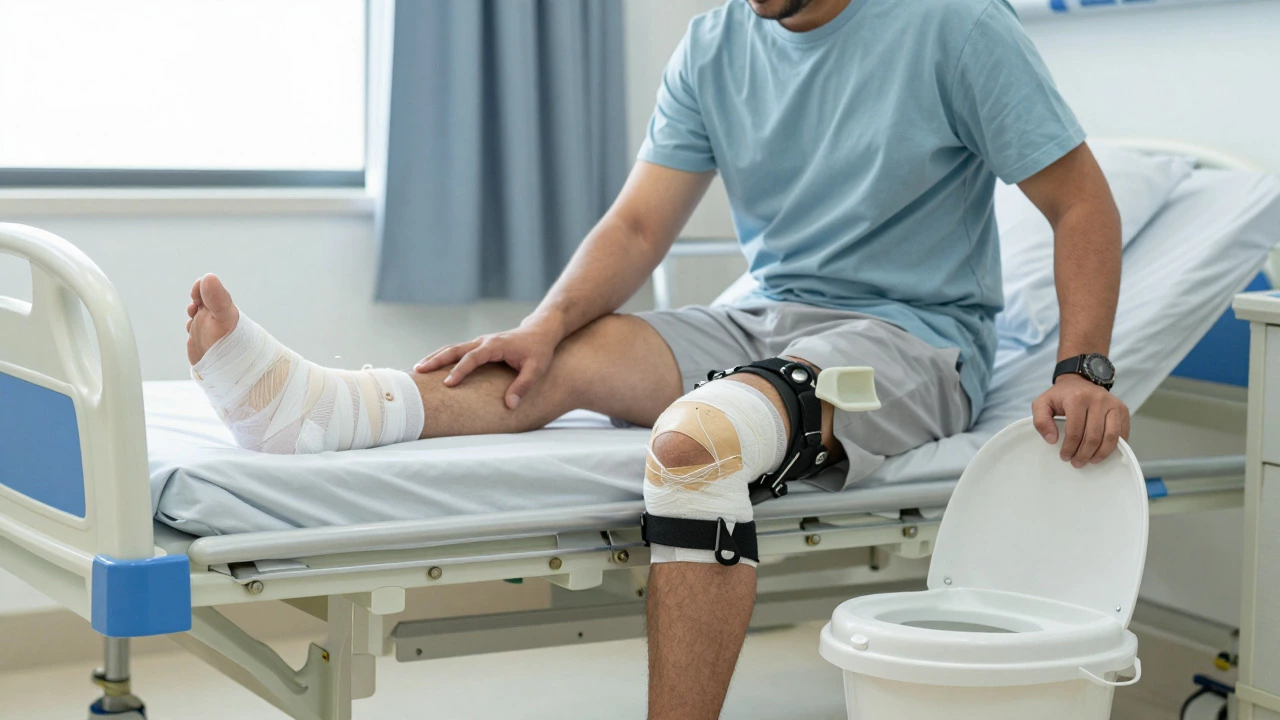
- Standing Over a Bedpan or Commode: For the very first 24-48 hours, when you might be too weak to walk to the bathroom, nurses will often bring a bedpan. For male patients, this can be tricky. Many find it easier to stand sideways over a bedside commode or a high chair placed next to the bed. This avoids the need to lie down completely, which can be painful if the leg is in a brace.
Male vs. Female Considerations
Anatomy plays a significant role in the strategy here. Female patients generally find it easier to adapt because they can simply sit on the toilet or a raised seat without needing to aim. The main challenge is getting down and up safely.
For male patients, the traditional act of standing and aiming is complicated by the inability to bear full weight on the operated leg. Trying to shift your weight while balancing on one leg is a recipe for a fall. Instead, consider these options:
- Sit Down: Yes, men can pee while sitting. It takes some practice, but it eliminates the balance issue entirely. Use a funnel-shaped device if necessary, though many men get used to sitting within a day or two.
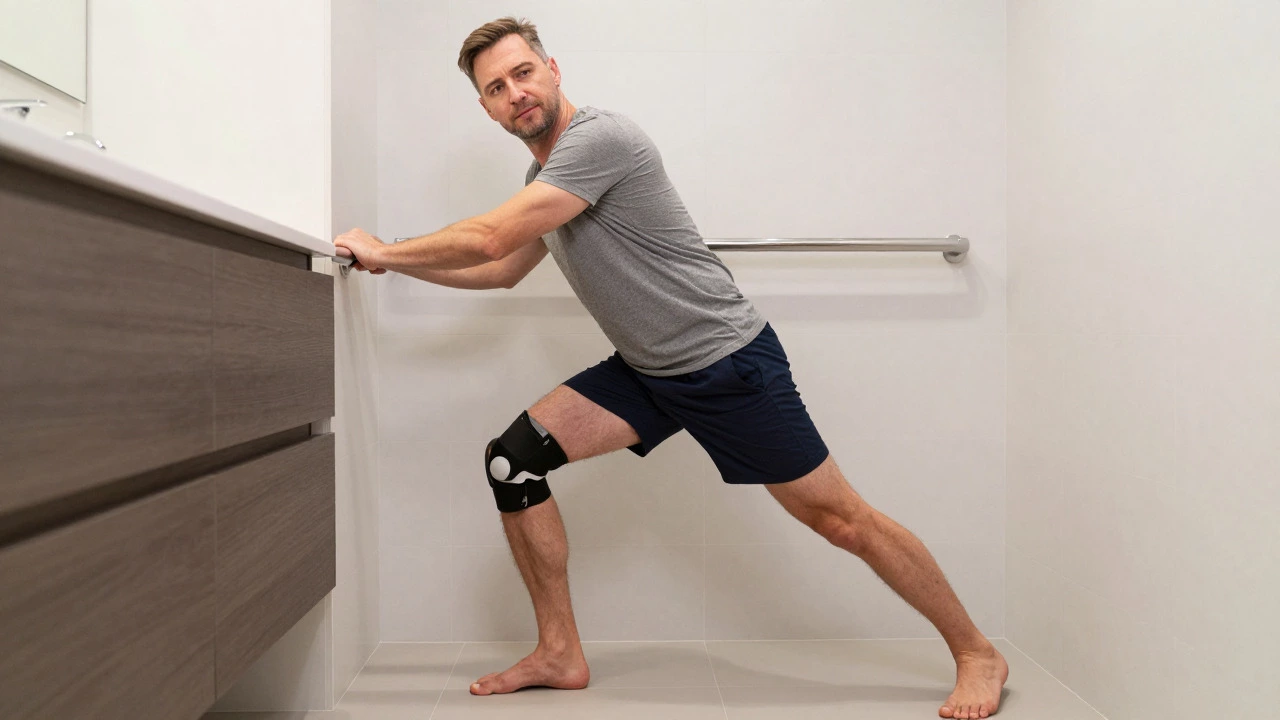
- Side-Stance: If you prefer standing, turn your body sideways to the toilet. Place your non-operated leg slightly forward and bear the weight there. Keep your operated leg straight and relaxed behind you. Hold onto a wall or sturdy object for balance. Do not try to cross your legs.
Preventing Urinary Retention
If you find yourself straining and nothing comes out, don’t panic. Acute urinary retention is a known side effect of spinal anesthesia and opioid painkillers. It usually resolves once the medication wears off, but in the meantime, you need to manage the discomfort.
- Stay Hydrated, But Strategically: Drink water regularly, but avoid chugging large amounts right before bed to reduce nighttime trips.
- Relax Your Pelvic Floor: Tension in the pelvic muscles can block urine flow. Try deep breathing exercises. Imagine relaxing your anal sphincter; this often helps the bladder neck open as well.
- Listen to Your Body: Don’t wait until the urge is overwhelming. Go to the bathroom as soon as you feel the initial signal. Waiting increases pressure and makes it harder to start.
- Ask for Help Early: If you haven’t urinated within 6-8 hours after surgery, tell your nurse. They may need to insert a catheter temporarily to drain the bladder and prevent damage. This is a routine procedure and nothing to be embarrassed about.
Essential Equipment for Home Recovery
Before you go home, make sure your bathroom is set up for success. You don’t need expensive gadgets, but a few specific items will save you countless headaches.
| Item | Primary Benefit | Best For |
|---|---|---|
| Raised Toilet Seat with Handles | Reduces bending, provides support for standing | All patients, especially in weeks 1-4 |
| Shower Chair | Allows sitting while washing, prevents slips | Bathing and hygiene routines |
| Reach-It Grabber | Picks up dropped items without bending | General household maintenance |
| Bedside Commode | Eliminates travel to bathroom initially | First 3-5 days post-discharge |
A raised toilet seat is an accessory that elevates the toilet bowl height and includes handrails for stability is the single most useful purchase. Look for one with padded handles that you can grip firmly. When standing up, push down on the handles rather than pulling up with your arms, as this engages your core and hip muscles more effectively.
Navigating the First Week at Home
The first few days at home are when the novelty of your new routine sets in. Here is a realistic timeline of what to expect:
- Days 1-3: You will likely rely on a bedside commode or frequent assistance. Fatigue is high, and pain meds may cause drowsiness. Plan bathroom trips every 2-3 hours.
- Days 4-7: As pain decreases and you start walking with a walker, you’ll begin making short trips to the actual bathroom. Practice your standing technique daily. Start incorporating the raised seat if you haven’t already.
- Week 2: Most patients feel more confident. You can transition to normal toilet use if your balance is stable, but keep the raised seat handy for bad days. Swelling may fluctuate, so listen to your body.
Remember, the goal is not to rush back to normal immediately. It’s to build confidence gradually. If you slip, it’s better to happen in the bathroom with supports than in the kitchen without them.
Frequently Asked Questions
Do I need to wear a catheter after knee replacement?
Not usually. Most surgeons remove the catheter before you leave the hospital. You only need a temporary catheter if you experience urinary retention, which happens in about 5-10% of cases. It is a quick fix and rarely leads to long-term issues.
Can I shower after knee replacement?
Yes, typically after 48 hours, provided your incision is closed and covered with a waterproof dressing. Use a shower chair to sit while washing. Avoid soaking the wound in a tub or pool for the first 2-4 weeks as advised by your surgeon.
What if I can't get up from the toilet?
Use the "push-up" method. Scoot to the edge of the seat, place your hands on the handles or armrests, and push down to extend your hips. Keep your knees bent at 90 degrees. Do not pull yourself up using only your arms, as this strains the shoulders. If you struggle, call for help or use a mechanical lift if available.
Is it okay to pee standing up if I'm a man?
It is okay if you can maintain balance. However, many men find it safer and easier to sit for the first few weeks. If you choose to stand, use a side-stance with your good leg forward and hold onto a stable surface. Never try to cross your legs or twist your torso sharply.
How long does it take to stop feeling awkward about using the bathroom?
Most patients adjust within 3-5 days. By the end of the second week, the movements become automatic. The key is consistent practice and using the right equipment to reduce fear of falling.

Write a comment