Knee Surgery Recovery Timeline Calculator
Where Are You in Recovery?
Next Milestone
Key Activities to Expect
Recovery Accelerators
How you can speed up recovery:
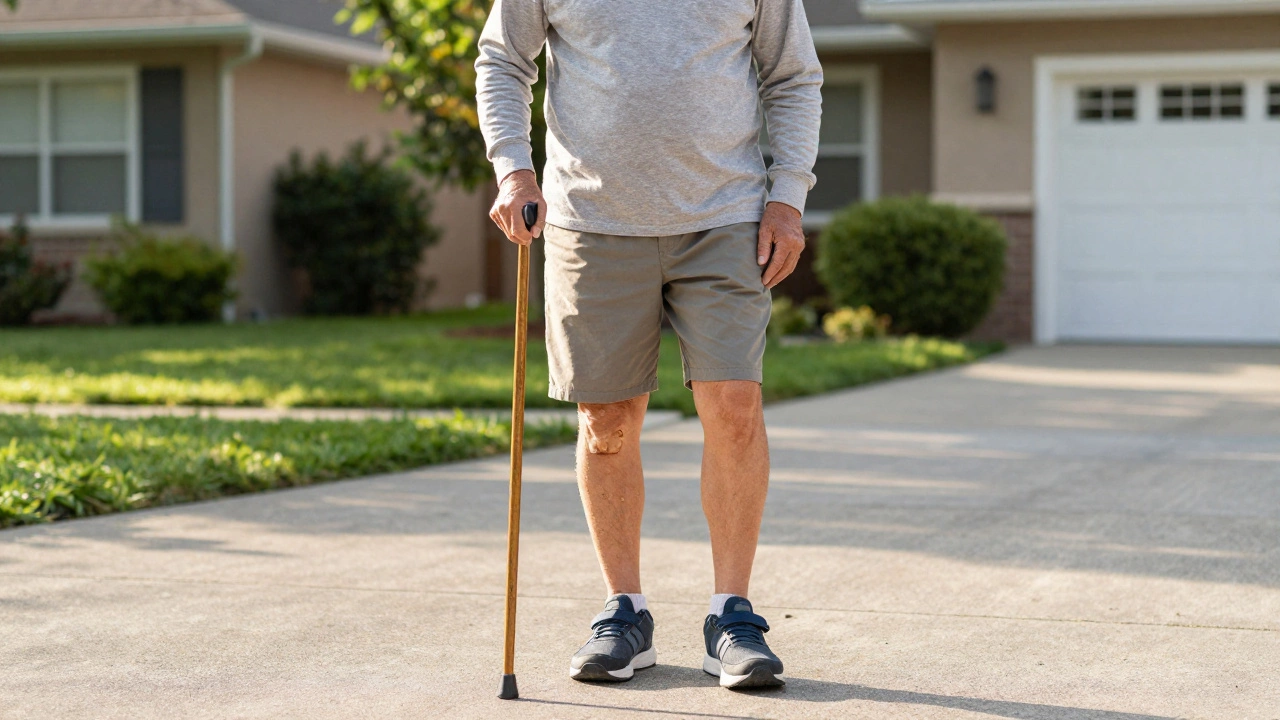
When a 70-year-old undergoes knee replacement surgery, the big question isn’t just whether it will work-it’s how long it will take to get back to normal life. The answer isn’t the same for everyone, but it’s not as long as most people fear. Many seniors start walking with a cane within days, and most return to light daily activities within 6 to 12 weeks. Full recovery, where strength and mobility feel natural again, usually takes 3 to 6 months.
What Happens in the First Week?
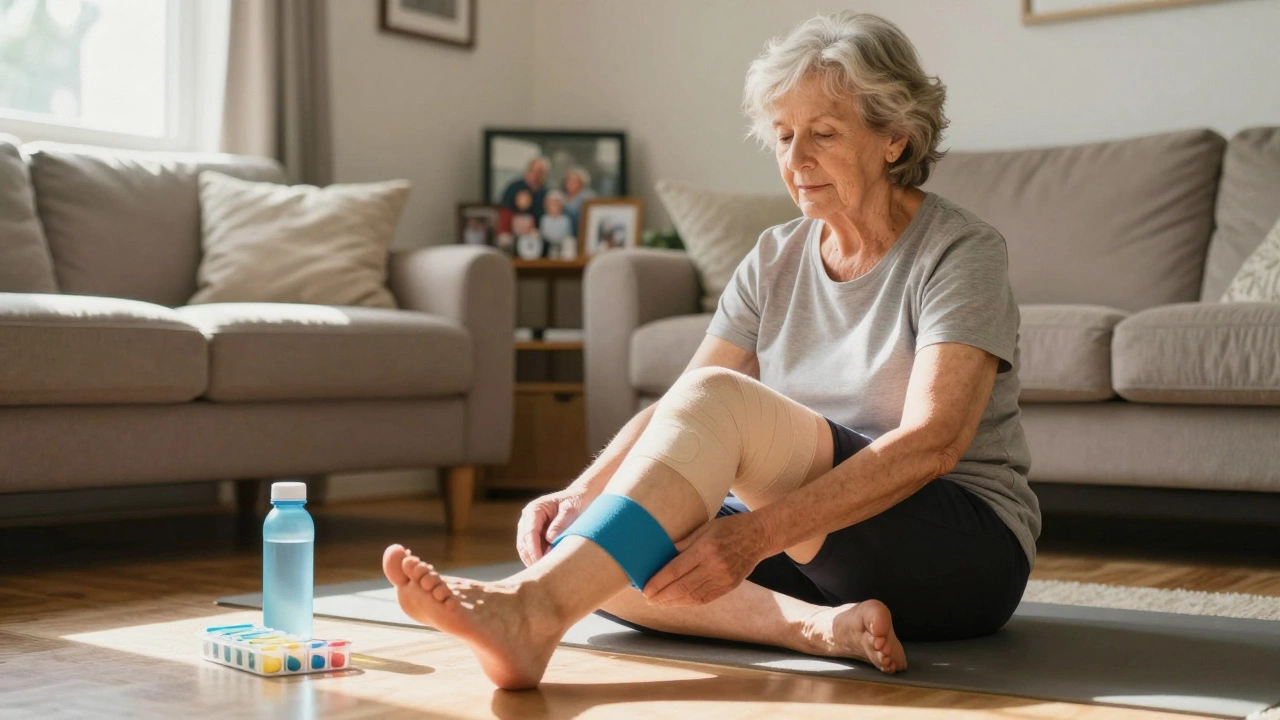
The first week after surgery is about survival, not speed. Most patients leave the hospital within 1 to 3 days. Pain is managed with medication, and physical therapy starts the same day. You won’t be running, but you’ll be asked to stand, take a few steps with a walker, and bend your knee a little. This early movement is critical. Studies show that patients who start moving within 24 hours have fewer complications like blood clots and pneumonia.At home, the focus shifts to swelling control and following the therapist’s instructions. Ice, elevation, and compression wraps help. You’ll likely need help with bathing, dressing, and cooking for the first week. Don’t push yourself. Rest is part of healing, not laziness.
Weeks 2 to 6: Building Strength, Not Speed
By week two, most people switch from a walker to a cane or no assistive device at all. Stairs become manageable. You’ll start doing simple exercises at home: straight leg raises, heel slides, and seated knee bends. These aren’t flashy, but they rebuild the muscles around the knee that have weakened from years of pain.By week six, many seniors can walk a quarter mile without stopping. Driving may be allowed if the right knee was operated on and you’re off strong painkillers. Most people return to light activities like walking in the park, gardening, or short shopping trips. But don’t mistake this for full recovery. The joint is still healing inside. Swelling can linger. Muscle strength is still low.
Months 2 to 4: The Real Turning Point
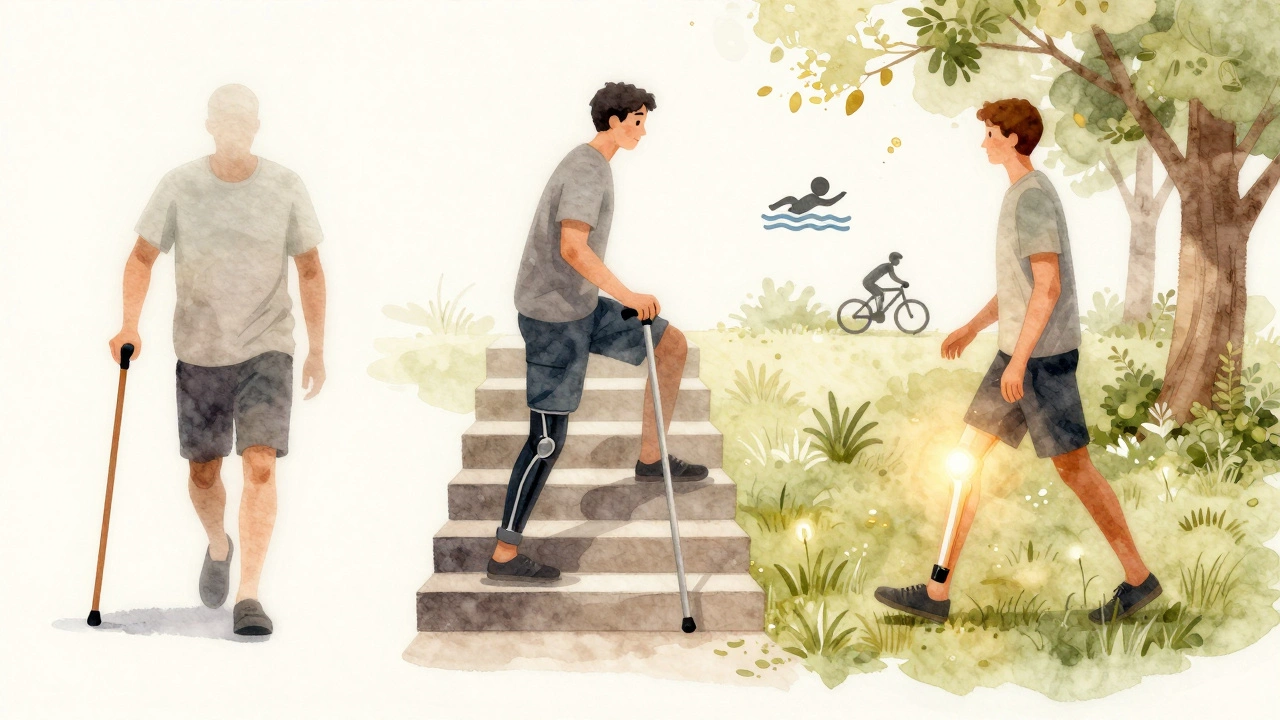
This is where progress becomes visible. Around 8 to 12 weeks, most patients report feeling like themselves again-just with a better knee. The stiffness eases. Walking feels less like a chore. You might start doing low-impact exercises like swimming or stationary cycling. These aren’t just for fun-they rebuild endurance and joint stability.At this stage, physical therapy often tapers off, but you’re expected to keep doing your exercises daily. Many 70-year-olds who stick with their routine gain back 90% of their pre-surgery mobility. Those who skip exercises often plateau or lose gains. It’s not about intensity-it’s about consistency.
Months 5 to 6: Full Recovery, Not Just Healing
By six months, the bone has fully fused to the implant. The soft tissues have remodeled. Most people can walk for 30 minutes without pain, climb stairs without holding on, and even enjoy gentle golf or bowling. You won’t be hiking steep trails or playing tennis, but you’ll be doing the things that make life worth living.Studies from the Mayo Clinic and the American Academy of Orthopaedic Surgeons show that 90% of patients over 70 report significant pain relief and improved quality of life one year after surgery. The key? Not age-but preparation and follow-through.
What Slows Down Recovery?
Age isn’t the main barrier. What really slows recovery are things you can control:- Being inactive before surgery - If you were barely walking before, your muscles won’t bounce back fast.
- Obesity - Extra weight puts stress on the new joint. Losing even 5-10 pounds before surgery helps.
- Chronic conditions - Diabetes, heart disease, or poor circulation can delay healing.
- Not doing therapy - Skipping home exercises is the #1 reason recovery stalls.
- Painkiller dependence - Relying on opioids too long can make you sluggish and slow muscle retraining.
One patient in Bangalore, 72, recovered faster than her doctor expected because she walked 10 minutes twice a day starting day one-even when it hurt. She didn’t wait to feel ready. She just moved.
What Can Speed It Up?
There’s no magic trick, but these habits make a real difference:- Pre-surgery conditioning - Even 4 weeks of light walking, leg lifts, and breathing exercises helps.
- Good nutrition - Protein is essential. Aim for 1.2 grams per kilogram of body weight daily. Eggs, lentils, fish, and Greek yogurt help rebuild tissue.
- Sleep quality - Healing happens at night. Aim for 7+ hours. Use pillows to keep the knee elevated.
- Hydration - Dehydration makes swelling worse and muscles cramp. Drink water, not just tea or coffee.
- Support system - Having someone to help with meals, rides, or reminders to move makes a huge difference.
One study from the University of Toronto tracked 400 patients over 70. Those who ate enough protein and walked daily recovered 30% faster than those who didn’t.
When Should You Worry?
Some discomfort is normal. But call your doctor if:- Your knee is red, hot, or draining fluid
- You have sudden swelling in your calf or chest pain
- You can’t bend your knee past 90 degrees after 8 weeks
- You’re still needing strong pain meds after 6 weeks
- You feel dizzy, faint, or short of breath
These aren’t normal. Infection, blood clots, or implant issues need quick attention.
Realistic Expectations
Don’t expect to run marathons. Don’t expect to kneel comfortably. But do expect to walk without pain, climb stairs easily, and sit in a chair without help. That’s the goal-and it’s achievable.Most 70-year-olds don’t get back to 100% of what they could do at 50. But they get back to 90% of what they could do at 70-and that’s life-changing.
What About Long-Term Results?
Modern knee implants last 15 to 20 years in 90% of patients. For someone 70 at surgery, that means the implant likely lasts for life. You won’t need a second one.Follow-up X-rays every 2-3 years check for wear. Most patients don’t need another surgery. The real long-term win? Staying active. People who move after knee replacement live longer, have fewer falls, and stay independent longer.
Can a 70-year-old walk normally after knee replacement?
Yes, most 70-year-olds walk normally after knee replacement-without a limp or pain. It takes time, usually 3 to 6 months, but by then, walking without assistance is common. Many patients say they feel like they’ve gotten their mobility back after years of pain.
Is knee replacement safe for a 70-year-old?
Yes, knee replacement is one of the safest major surgeries for seniors. The risk of serious complications is under 2% for healthy patients. Hospitals now screen carefully for heart, lung, and diabetes risks before surgery. Age alone is not a reason to avoid it.
How long do you need help after knee surgery at 70?
Most people need daily help for 1 to 2 weeks-especially for bathing, dressing, and cooking. After that, they usually manage on their own but may still need help with heavy chores or rides to appointments. By 6 weeks, most are independent again.
Do you need physical therapy after knee replacement?
Yes, physical therapy is essential. Most patients get 2 to 3 sessions a week for the first 4 to 6 weeks, then switch to home exercises. Skipping therapy is the biggest reason people don’t regain full mobility. Even 15 minutes a day of simple stretches makes a difference.
What activities can you do after full recovery?
After full recovery, you can walk, swim, cycle, garden, golf, and dance. Avoid high-impact sports like running, jumping, or contact sports. These wear out the implant faster. Low-impact movement is not just safe-it’s recommended to keep the joint healthy.

Write a comment