Herb Interaction Checker
Select two substances below to check for known interactions. This tool highlights high-risk combinations that require medical consultation.
You’ve probably heard the phrase, “If it’s natural, it’s safe.” It sounds comforting, doesn’t it? But here is the hard truth: herb interactions are real, and they can be dangerous. Just because a plant grew in your garden or was sold in a glossy bottle at a health store doesn’t mean it plays nicely with other things you’re putting into your body. In fact, some combinations can turn a helpful remedy into a harmful one.
Think of your liver as a busy traffic controller for chemicals entering your body. Most herbs need to pass through this checkpoint to be processed. When two herbs (or an herb and a medication) fight for the same lane, things get jammed. One substance might block the breakdown of another, causing its levels to spike dangerously high. Or, worse, one might speed up the processing of the other, rendering it useless before it can do its job. This isn’t just theoretical; these mix-ups land people in emergency rooms more often than you’d think.
The Big Three: High-Risk Herb Combinations
If you only remember three rules about mixing herbs, let them be these. These pairings are well-documented by pharmacologists and clinical trials as having significant negative outcomes.
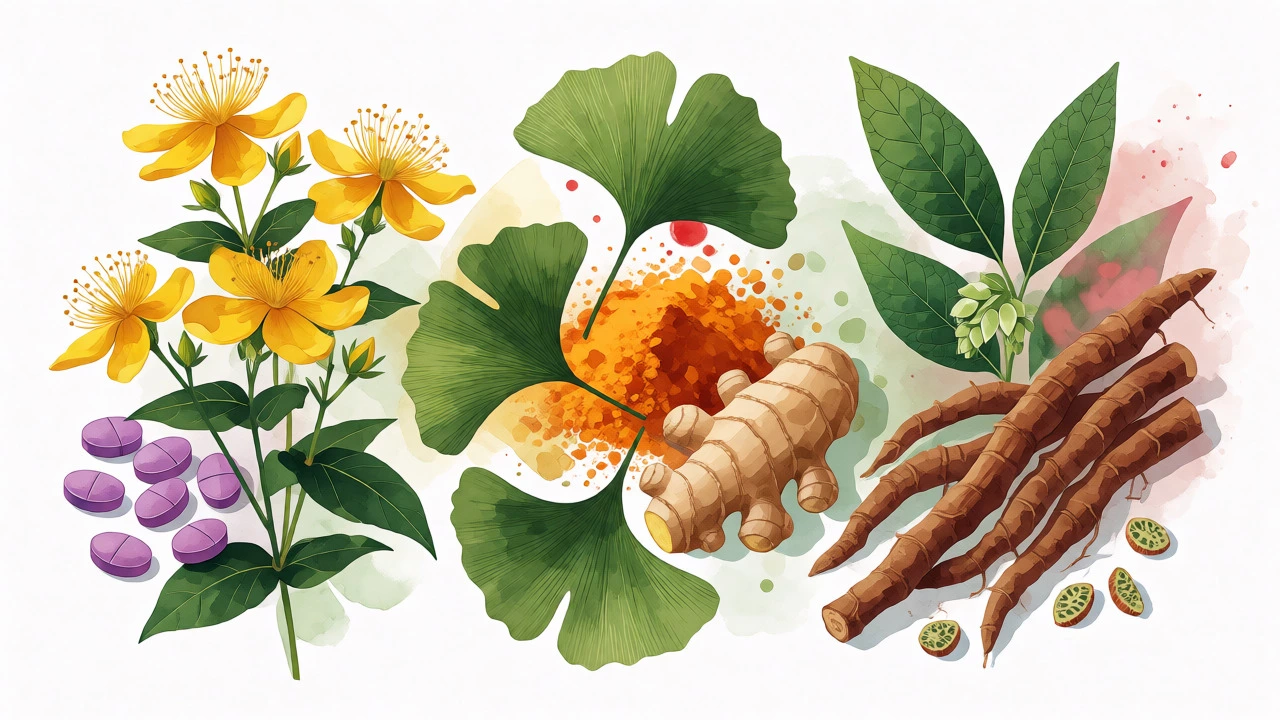
St. John’s Wort is a flowering plant commonly used for mild depression and anxiety. While effective for mood, it is notorious for interacting with almost everything else. It induces enzymes in the liver (specifically CYP3A4) that chew up other drugs and herbs too quickly. If you take St. John’s Wort alongside birth control pills, antidepressants, or even certain HIV medications, you risk treatment failure. But what about other herbs? Combining St. John’s Wort with Serotonin-Boosting Herbs like 5-HTP or SAMe can lead to Serotonin Syndrome-a condition where too much serotonin accumulates, causing agitation, rapid heart rate, and confusion.
Next, consider Ginkgo Biloba, which is an extract from the leaves of the Ginkgo tree, widely used to improve memory and circulation. Ginkgo has a mild blood-thinning effect. Now, pair it with Ginger or Turmeric, both of which also possess antiplatelet properties. On their own, they are fine. Together? They significantly increase bleeding risk. This is critical if you have a surgery coming up or if you are already taking anticoagulants like Warfarin. The combined effect isn't additive; it's synergistic, meaning the risk jumps disproportionately.
Finally, watch out for Kava Kava. This root from the Pacific Islands is popular for relaxation. However, Kava has been linked to rare but severe cases of liver toxicity. Taking Kava with other hepatotoxic substances-such as Comfrey (which contains pyrrolizidine alkaloids known to damage the liver) or even high doses of Valerian Root-can stress the liver beyond its capacity. The result? Elevated liver enzymes and potential long-term damage.
How Your Body Processes Herbs
To understand why these clashes happen, you need a basic grasp of pharmacokinetics-the fancy term for how your body handles substances. It boils down to absorption, distribution, metabolism, and excretion.
Most interactions occur during metabolism. Your liver uses a family of enzymes called Cytochrome P450 (CYP450) to break down compounds. Think of these enzymes as workers on an assembly line. Some herbs act as "inhibitors," tying up the workers so other substances pile up. Others act as "inducers," speeding the workers up so other substances disappear too fast.
- Inhibition Example: Grapefruit juice is a classic inhibitor. If you take a statin (cholesterol drug) with grapefruit, the drug stays in your system longer, increasing side effects. Similarly, some herbs inhibit CYP1A2, affecting caffeine metabolism.
- Induction Example: St. John’s Wort induces CYP3A4. This means it speeds up the removal of many drugs and herbs, lowering their effectiveness.
When you stack multiple herbs, you’re essentially asking your liver to manage a complex logistical challenge. If you add prescription meds to the mix, the chaos multiplies. This is why "natural" doesn't mean "simple." It means "complex chemical mixture."
Ayurvedic and Herbal Contexts
In India, where Ayurveda is deeply woven into daily life, the idea of combining herbs is ancient. Texts like the Charaka Samhita discuss "Viruddha Ahara" (incompatible foods/herbs). Modern science is starting to validate some of these old warnings.
For instance, traditional wisdom warns against mixing heating herbs (like ginger or garlic) with cooling herbs (like mint or coriander) in large therapeutic doses. While culinary amounts are harmless, concentrated supplement forms can disrupt digestion or alter body temperature regulation. Another common misconception is that all Ayurvedic formulations are safe together. Many contain heavy metals (like lead or mercury in Bhasmas) or potent alkaloids. Mixing a metal-containing formulation with a herb that increases gut absorption (like black pepper/piperine) could inadvertently raise the bioavailability of those metals, leading to toxicity.
Furthermore, Ashwagandha is an adaptogenic herb used to reduce stress and boost energy. It generally works well, but when combined with sedatives like Valerian or even alcohol, it can cause excessive drowsiness. Conversely, if you take Ashwagandha with thyroid medications, it might enhance the medication's effect, potentially pushing thyroid levels too high (hyperthyroidism). Always monitor how you feel.
Practical Rules for Safe Usage
You don’t need a PhD in pharmacology to stay safe. You just need to follow a few strict habits.
- Start Low, Go Slow: Never start three new herbs at once. Introduce one every two weeks. This way, if you feel sick, you know exactly which culprit caused it.
- Check the "Blood Thinner" List: If you are on aspirin, warfarin, or clopidogrel, avoid high-dose Ginger, Garlic, Ginkgo, Turmeric, and Dong Quai unless your doctor approves. These all affect clotting.
- Mind the Liver: Avoid stacking herbs known for liver stress. Do not take Kava, Comfrey, Chaparral, and Skullcap simultaneously without medical supervision.
- Timing Matters: Sometimes, spacing out doses helps. If you must take two interacting herbs, separate them by 4-6 hours. This gives your digestive system time to process one before the next arrives.
- Beware of Pregnancy: Many herbs that are safe for men or non-pregnant women are unsafe during pregnancy. Pennyroyal, Blue Cohosh, and high-dose Parsley can stimulate uterine contractions. Always consult an OB-GYN before using herbal remedies while pregnant.
| Herb A | Herb B / Drug | Potential Risk | Mechanism |
|---|---|---|---|
| St. John’s Wort | SSRIs (Antidepressants) | Serotonin Syndrome | Additive serotonin effects |
| Ginkgo Biloba | Warfarin / Aspirin | Increased Bleeding | Additive antiplatelet activity |
| Ginseng | Caffeine | Jitters / Insomnia | Additive stimulant effects |
| Licorice Root | Diuretics (Water Pills) | Hypokalemia (Low Potassium) | Licorice causes potassium loss |
| Echinacea | Immunosuppressants | Reduced Drug Efficacy | Echinacea stimulates immune system |
What About Food-Herb Interactions?
We often forget that food is chemistry too. Some herbs interact strongly with what you eat. For example, Fenugreek is a seed used to lower blood sugar and cholesterol. It has a strong affinity for binding to other substances in the gut. If you take Fenugreek with fat-soluble vitamins (A, D, E, K), it might reduce their absorption. Take them at different times of the day.
Another tricky one is Cascara Sagrada, a laxative herb. Long-term use depletes electrolytes, particularly potassium. If you combine this with a diet low in bananas or avocados, or with diuretic medications, you risk muscle cramps and heart rhythm issues. Hydration and electrolyte balance are key when using any bowel-moving herb.
When to See a Professional
Self-prescribing herbs is popular, but it carries risks. You should see a qualified naturopath, Ayurvedic practitioner, or pharmacist if:
- You are managing a chronic condition like diabetes, hypertension, or heart disease.
- You are scheduled for surgery within the next two weeks. Stop most herbs 7-14 days prior to prevent bleeding complications.
- You experience unexpected side effects like rash, digestive upset, or changes in sleep patterns after starting a new regimen.
- You are taking more than three prescription medications. The complexity of interactions rises exponentially with each added drug.
Remember, the goal of herbal medicine is to support your body’s healing intelligence, not to overwhelm it. By respecting the power of these plants and understanding their limits, you can harness their benefits safely. Don’t guess. Check. And when in doubt, leave it out.
Can I take turmeric and blood thinners together?
Turmeric has mild blood-thinning properties. While small dietary amounts are usually safe, high-dose curcumin supplements combined with blood thinners like Warfarin or Aspirin can increase bleeding risk. Consult your doctor before combining them, especially if you have a history of ulcers or upcoming surgeries.
Why does St. John’s Wort interfere with so many medications?
St. John’s Wort induces specific liver enzymes (CYP3A4 and others) that metabolize drugs. This speeds up the breakdown of medications, lowering their concentration in the blood and making them less effective. It affects antidepressants, birth control, HIV meds, and transplant rejection drugs.
Is it safe to mix Ginseng and Caffeine?
Both Ginseng and caffeine are stimulants. Taking them together can lead to excessive nervousness, insomnia, rapid heartbeat, and headaches. It is generally recommended to limit caffeine intake when using Ginseng, especially if you are sensitive to stimulants.
Which herbs should be avoided during pregnancy?
Many herbs are contraindicated during pregnancy due to risks of uterine stimulation or hormonal disruption. Common ones to avoid include Pennyroyal, Blue Cohosh, Black Cohosh, Mugwort, and high doses of Parsley. Always consult a healthcare provider before using any herbal supplement while pregnant.
Do herbal teas count as supplements for interaction purposes?
Yes, though the risk is lower than with concentrated extracts. Drinking moderate amounts of herbal tea is generally safer. However, drinking large quantities of potent teas like Chamomile (which interacts with blood thinners) or Licorice (which raises blood pressure) daily can still lead to significant interactions over time.

Write a comment