Biblical Herbal Remedy Calculator
Select a Condition
Remedy Results
When people ask what herb Jesus used, they’re often looking for more than a plant name-they want to connect with a time when healing was tied to the earth, not just medicine bottles. The Bible doesn’t list a prescription pad, but it does mention plants used for healing, anointing, and ritual. These weren’t just symbolic. They were real, smelled real, and were handled by real hands in first-century Palestine.
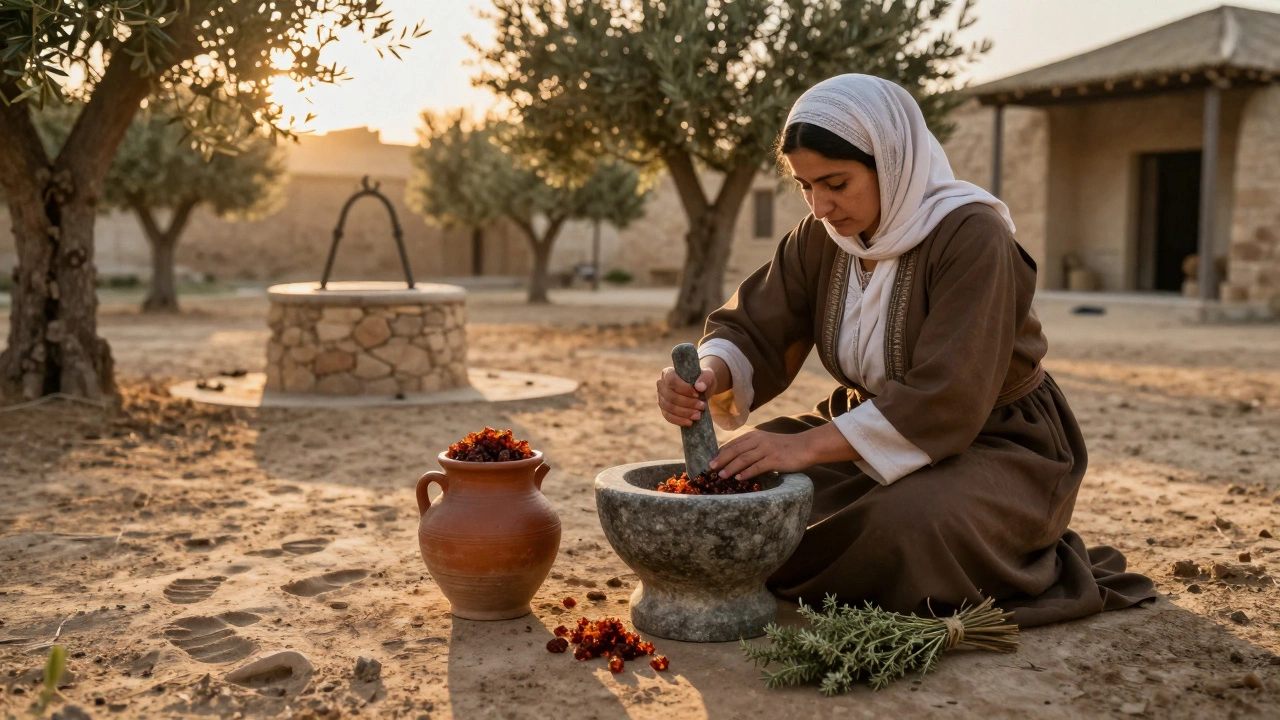
Myrrh: The Healing Resin
Myrrh comes from the sap of Commiphora trees, native to the Arabian Peninsula and parts of Northeast Africa. It was one of the most valuable substances in the ancient world. In the Bible, myrrh appears three times in key moments: as one of the gifts brought by the Magi to baby Jesus, as part of the burial spices used for his body, and as a component in the holy anointing oil described in Exodus.
It wasn’t just ceremonial. Myrrh has documented antimicrobial and anti-inflammatory properties. Ancient Egyptians used it in embalming. Roman soldiers applied it to wounds. Modern studies confirm it can reduce swelling and fight bacteria-like the kind that infected cuts in dusty, unsanitary conditions. Jesus likely encountered myrrh in everyday healing, not just in religious rites.
Hyssop: The Cleansing Herb
Hyssop is mentioned in Psalm 51:7: “Purge me with hyssop, and I shall be clean.” It’s also referenced in John 19:29, when a sponge soaked in vinegar was lifted to Jesus on a stalk of hyssop during the crucifixion.
Hyssop (Origanum syriacum, often confused with European hyssop) is a Mediterranean herb with a strong, minty scent. In ancient times, it was used to sprinkle water for ritual purification-think of it like a natural disinfectant brush. Its leaves and flowers were crushed and applied to sores, coughs, and respiratory infections. Today, it’s still used in Middle Eastern herbal teas for colds and digestion.
The fact that hyssop was used to offer Jesus a drink on the cross isn’t random. It was the most common, accessible herb for cleansing and relief. If someone was thirsty and in pain, hyssop was the plant you’d reach for.
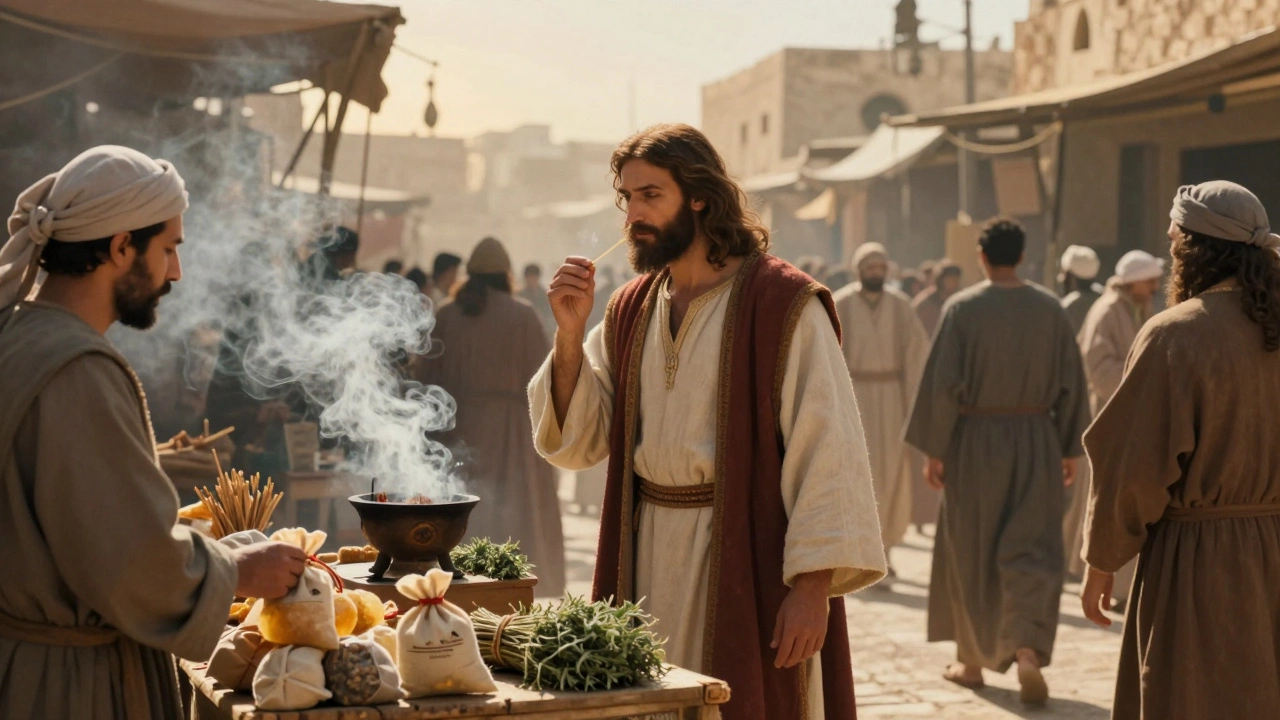
Frankincense: The Sacred Incense
Frankincense comes from Boswellia trees, tapped like maple syrup. It was burned in temples, used in funeral rites, and given as a gift to Jesus alongside gold and myrrh. It’s often called a “spiritual” herb, but its physical effects are just as real.
Modern research shows frankincense contains boswellic acids, which inhibit inflammation pathways in the body. It’s been studied for arthritis, asthma, and even certain types of chronic pain. In ancient times, priests and healers burned it to clear the air-possibly reducing airborne pathogens in crowded spaces. If Jesus walked through crowded markets or healing tents, he’d have breathed frankincense smoke daily.
It wasn’t just for prayer. It was for breathing easier.
Bitter Herbs: The Passover Meal
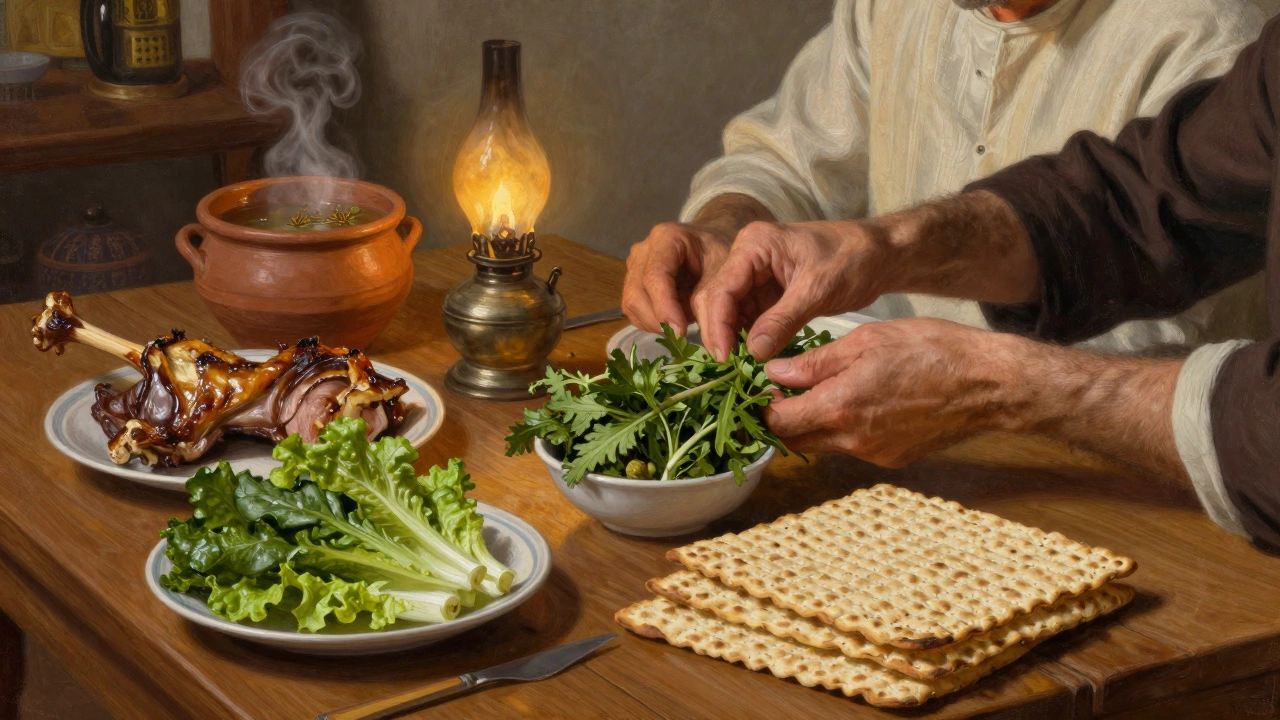
Exodus 12:8 commands the Israelites to eat the Passover lamb with “bitter herbs.” While the exact plant isn’t named, scholars agree it was likely wild lettuce, endive, or chicory-all native to the region and known for their sharp, cleansing taste.
These bitter herbs weren’t chosen for flavor. They were chosen for function. Bitter compounds stimulate bile flow, aiding digestion and detoxification. In a time before refrigeration and clean water, bitter herbs helped prevent foodborne illness. They were the original digestive aid.
Jesus would have eaten these herbs every year during Passover. He didn’t just follow tradition-he lived with its health benefits built into his diet.
Other Plants in Daily Use
Jesus lived in a world where people didn’t go to pharmacies. They went to the hills, the fields, the gardens. Other plants likely used in his time include:
- Cumin-used for stomach cramps and as a mild antiseptic.
- Cinnamon-added to oils for pain relief and to mask odors in wounds.
- Coriander-eaten as seeds or leaves for digestion and to reduce fever.
- Olives and olive oil-applied to skin for burns, wounds, and dryness.
These weren’t exotic imports. They grew in backyards. They were ground into pastes, steeped in water, or mixed with honey. Healing was hands-on, local, and simple.
Why This Matters Today
People today buy herbal supplements by the billions, often without knowing where they come from or how they work. The herbs Jesus likely used weren’t sold in capsules. They were grown, harvested, and prepared by families. Their power came from context-not marketing.
Modern science now backs what ancient cultures knew: myrrh reduces inflammation. Hyssop fights respiratory bugs. Frankincense eases joint pain. These aren’t myths. They’re evidence-based remedies that survived 2,000 years because they worked.
When you look at what herb Jesus used, you’re not just studying history. You’re seeing a model of healing that’s grounded in nature, community, and direct experience. No patents. No corporations. Just plants, people, and purpose.
Common Misconceptions
There’s a lot of guesswork around biblical herbs. Some claim Jesus used cannabis, sage, or even psychedelic mushrooms. These ideas come from modern wishful thinking, not historical evidence.
There’s zero mention of cannabis in the Bible. Sage was not native to the Levant. Psychedelics weren’t part of Jewish or early Christian practice. The plants used were common, safe, and well-documented in regional medicine.
Stick to the sources: the Bible, ancient texts like the Talmud, and archaeological findings from first-century homes and temples. The real herbs were humble, not hallucinogenic.
What You Can Learn From These Herbs
You don’t need to recreate ancient rituals to benefit from these plants. But you can learn from their use:
- Start with what’s local. Myrrh, hyssop, and frankincense are available as oils or resins. Try them in diluted form-never ingest raw resin.
- Use them for their known effects. Myrrh for skin irritation. Hyssop for coughs. Frankincense for joint stiffness.
- Respect their potency. These aren’t teas you can drink by the gallon. Even natural remedies can be strong.
- Combine with modern care. These herbs support health-they don’t replace diagnosis or treatment.
The goal isn’t to become a biblical herbalist. It’s to reconnect with the idea that healing doesn’t always need a prescription. Sometimes, it just needs a plant, some patience, and the wisdom of those who came before.
Did Jesus use marijuana?
No, there is no historical, biblical, or archaeological evidence that Jesus or his followers used marijuana. Cannabis was not native to the Levant during the first century, and it is never mentioned in any canonical biblical text. Claims linking Jesus to cannabis are modern interpretations with no basis in ancient records.
Can I use myrrh or frankincense today for health?
Yes, but with care. Myrrh and frankincense are available as essential oils or resin extracts. They’re commonly used in aromatherapy and topical applications for inflammation, skin healing, and respiratory support. Always dilute essential oils with a carrier oil before applying to skin. Do not ingest them without professional guidance.
What’s the difference between hyssop in the Bible and modern hyssop?
The hyssop mentioned in the Bible is likely Origanum syriacum, also called Syrian oregano, not the European hyssop (Hyssopus officinalis). Biblical hyssop was used for purification and respiratory relief, while European hyssop is more commonly used in cooking and herbal teas today. They’re different plants with similar names.
Are these herbs still used in Middle Eastern medicine?
Yes. In countries like Lebanon, Syria, Jordan, and Palestine, myrrh, frankincense, hyssop, and cumin are still used in traditional remedies. They’re brewed as teas, applied as poultices, or burned as incense for respiratory and digestive issues. These practices have continued for centuries without interruption.
Why weren’t these herbs called ‘medicinal’ back then?
They didn’t need to be. In ancient times, there was no separation between spiritual, daily, and medical use. A plant that healed a wound was also used in prayer, burial, or cleansing. The idea of ‘medicinal herbs’ as a category is a modern invention. Back then, everything had a purpose-and plants were part of everyday life.

Write a comment