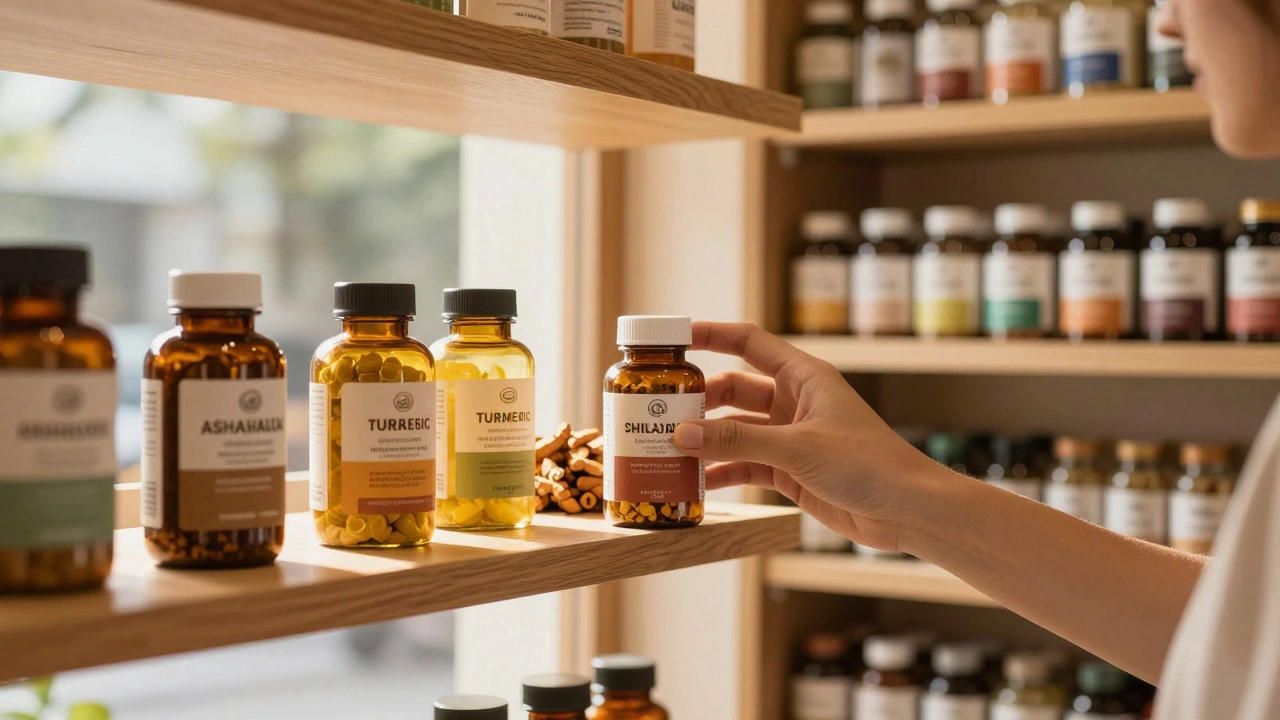
When you walk into a health store in Bangalore, the shelves are packed with bottles labeled herbal supplements. Turmeric capsules. Ashwagandha powders. Shilajit tablets. It’s easy to feel overwhelmed. But not all herbal supplements are the same. They don’t all work the same way. And not every one is right for you.
Adaptogens: Your Body’s Stress Shield
Adaptogens are herbs that help your body handle stress - not by blocking it, but by balancing your stress response. Think of them like a thermostat for your nervous system. When you’re burnt out, they nudge you back toward calm. When you’re sluggish, they give you a gentle lift - without caffeine jitters.
Ashwagandha is the most studied adaptogen. A 2019 trial published in the Indian Journal of Psychological Medicine showed that people taking 240 mg of ashwagandha daily for eight weeks had 28% lower cortisol levels than those on placebo. That’s not a small drop. It’s the kind of change that helps you sleep better, stop craving sugar, and feel less wired but tired.
Other common adaptogens include rhodiola, holy basil (tulsi), and ginseng. But here’s the catch: adaptogens take time. You won’t feel a rush. You’ll notice you’re less reactive to traffic, less anxious before meetings, or that your afternoon slump isn’t as bad. That’s the sign it’s working.
Antioxidant-Rich Herbs: Fighting Free Radicals at the Cellular Level
Free radicals are unstable molecules that damage your cells. Over time, that damage adds up - leading to aging, inflammation, and chronic disease. Antioxidant herbs fight back by neutralizing those radicals before they cause harm.
Turmeric is the poster child here. Its active compound, curcumin, is one of the most powerful natural antioxidants known. But turmeric alone doesn’t cut it. Curcumin isn’t absorbed well unless paired with black pepper (piperine). That’s why most quality supplements include both. A 2021 review in Phytotherapy Research found that curcumin with piperine increased absorption by up to 2,000%.
Other strong antioxidant herbs include green tea extract (rich in EGCG), gotu kola, and amla (Indian gooseberry). Amla is especially powerful - it has 20 times more vitamin C than an orange and works synergistically with other antioxidants in the body.
These aren’t quick fixes. You take them because you want your skin, joints, and brain to stay protected over years, not days.
Immune-Modulating Herbs: Not Just for Cold Season
Most people think of immune supplements as something you take when you feel a sore throat coming on. But that’s backwards. Real immune support isn’t about boosting - it’s about balancing.
Herbs like echinacea, astragalus, and reishi mushroom don’t turn your immune system into a firehose. Instead, they help it respond smarter. If you’re run down, they nudge it awake. If it’s overreacting - like in allergies or autoimmune flare-ups - they help calm it down.
A 2020 meta-analysis in Current Medical Research and Opinion found that people taking echinacea during cold season had a 58% lower risk of catching a cold. Even better, when they did get sick, symptoms lasted 1.5 days less on average.
Reishi mushroom, used in traditional Chinese medicine for over 2,000 years, is now backed by modern science too. Studies show it increases natural killer cell activity - the body’s first line of defense against viruses and cancer cells.
These herbs are for long-term resilience, not emergency fixes.

Digestive and Liver Support Herbs: Healing from the Inside Out
Your gut and liver are your body’s detox and nutrient factories. If they’re sluggish, nothing else works well. That’s why herbs like milk thistle, ginger, and triphala are foundational.
Milk thistle’s active ingredient, silymarin, protects liver cells from toxins and helps regenerate damaged tissue. In a 2023 clinical trial involving people with fatty liver disease, those taking 140 mg of silymarin three times a day saw a 30% drop in liver enzyme levels - a clear sign of reduced inflammation.
Ginger isn’t just for nausea. It speeds up gastric emptying, reduces bloating, and increases bile flow - which helps digest fats. In India, it’s common to chew a small piece of raw ginger with salt before meals. That’s not tradition for no reason.
Triphala - a blend of amla, haritaki, and bibhitaki - is an Ayurvedic classic. It gently cleanses the colon, balances gut bacteria, and improves nutrient absorption. Unlike harsh laxatives, triphala works slowly and sustainably. Many people report better sleep and clearer skin after just four weeks.
Energy and Hormone Balancers: Beyond Caffeine
When people say they need an energy boost, they often mean they’re tired of being tired. Caffeine gives a quick spike, then a crash. Herbal energy boosters work differently - they support your body’s natural production of energy.
Shilajit, a mineral-rich resin from the Himalayas, contains fulvic acid, which helps mitochondria - your cells’ power plants - produce more ATP, the energy currency of your body. A 2022 study in Journal of Ethnopharmacology found that men taking 250 mg of purified shilajit daily for 12 weeks saw a 22% increase in testosterone levels and improved stamina.
Fenugreek seeds are another underrated player. They help regulate blood sugar, which prevents energy crashes. In women, fenugreek has been shown to ease PMS symptoms and support healthy estrogen levels.
For women going through perimenopause, herbs like black cohosh and red clover help manage hot flashes and mood swings by gently interacting with estrogen receptors - without the risks of hormone replacement therapy.

How to Choose What’s Right for You
Not every supplement works for everyone. Here’s how to cut through the noise:
- Match the herb to your goal: Stress? Try ashwagandha. Low energy? Look at shilajit or rhodiola. Poor digestion? Start with triphala or ginger.
- Check the form: Powder, capsule, tincture? Capsules are easiest. Tinctures act faster but taste strong.
- Look for third-party testing: Brands like Himalaya, Banyan Botanicals, and Organic India test for heavy metals and pesticides. Avoid brands that don’t share lab reports.
- Start low, go slow: Begin with half the recommended dose. Your body may react differently than someone else’s.
- Give it time: Most herbs need 4-8 weeks to show real effects. Don’t quit after a week.
And always talk to your doctor if you’re on medication. Ashwagandha can interact with thyroid drugs. Turmeric can thin the blood. Shilajit may affect blood pressure meds. Knowledge is your best protection.
Are herbal supplements safe to take every day?
Yes, most herbal supplements are safe for daily use when taken at recommended doses. But safety depends on the herb, your health, and what else you’re taking. Ashwagandha, turmeric, and ginger are generally well-tolerated long-term. Others, like licorice root or high-dose reishi, should be cycled (e.g., 6 weeks on, 2 weeks off). Always monitor how your body responds.
Can herbal supplements replace prescription medicine?
No. Herbal supplements support your body’s natural functions but don’t replace drugs for serious conditions like high blood pressure, diabetes, or depression. They can complement treatment - like ashwagandha helping reduce stress in someone on antidepressants - but never stop prescribed medication without consulting your doctor.
Why do some herbal supplements cost so much?
High prices often reflect quality. Premium brands use organically grown herbs, standardized extracts (meaning they guarantee a certain amount of active compound), and third-party testing for purity. Cheap supplements may contain fillers, low doses, or even contaminants. A $15 bottle of turmeric with no piperine or testing is likely useless. A $35 bottle with verified curcumin content and black pepper is worth it.
Do herbal supplements work faster than synthetic ones?
No - and that’s the point. Synthetic drugs are designed to act quickly, often by forcing a biological change. Herbal supplements work with your body’s rhythms. They support healing, balance, and resilience over time. You won’t feel instant relief from joint pain with turmeric, but after 6 weeks, you might notice you can walk farther without stiffness. That’s the difference: speed vs. sustainability.
Can I take multiple herbal supplements together?
Yes, but not randomly. Many herbs work well together - like ashwagandha + turmeric for inflammation and stress, or triphala + ginger for digestion. But avoid stacking too many at once. Start with one or two, observe how you feel, then add more if needed. Some combinations can be too strong - like taking both ashwagandha and rhodiola daily if you’re already prone to anxiety. Listen to your body.
What to Do Next
If you’re new to herbal supplements, start with one. Pick the category that matches your biggest concern - stress, digestion, energy, or immunity. Buy one quality product. Take it daily for six weeks. Keep a simple journal: How did you sleep? Did your energy shift? Any changes in mood or digestion?
Herbal medicine isn’t about quick wins. It’s about building a body that can handle life without falling apart. That takes time, consistency, and patience. But when it works - when you wake up without reaching for caffeine, or your joints don’t ache after walking - you’ll know it was worth it.

Write a comment