Ayurvedic Dosha Sleep Calculator
Discover your dominant Ayurvedic dosha (Vata, Pitta, or Kapha) to learn how to optimize your sleep according to ancient Ayurvedic principles.
How do you feel when you wake up?
How do you react to stress?
How is your digestion?
How much sleep do you need?
What's your energy pattern throughout the day?
Your Ayurvedic Dosha
Your Personalized Sleep Recommendations
Most people think sleep is just turning off the lights and waiting for morning. But in Ayurveda, sleep isn’t passive-it’s a healing ritual. Your body doesn’t just rest during sleep; it repairs, detoxifies, and recharges based on ancient rhythms that have guided Indian households for thousands of years. If you wake up tired even after eight hours, the problem isn’t how long you slept-it’s how you slept.
Why Ayurveda Cares About Sleep
Ayurveda calls sleep nidra, and it’s one of the three pillars of health, along with food and sexual energy. Without proper sleep, digestion falters, emotions go haywire, and immunity drops. The Charaka Samhita, one of Ayurveda’s oldest texts, says sleep is the best medicine for balancing the three doshas: Vata, Pitta, and Kapha. Each dosha governs different functions in your body, and your sleep pattern must match your dominant one.
But here’s the catch: you can’t copy someone else’s routine and expect it to work. A Vata-dominant person needs a different bedtime than a Kapha-dominant one. And if you ignore your dosha, you might be sleeping too much or too little without realizing why.
The Three Doshas and Their Sleep Needs
Your dosha determines your natural energy flow. When you sleep out of sync with it, you feel off-not because you’re lazy, but because your body is fighting its own rhythm.
- Vata (air and space): These people are creative, quick-thinking, and easily overwhelmed. They often have trouble falling asleep because their minds race. They need warmth, routine, and calming rituals. Without them, they suffer from light, interrupted sleep.
- Pitta (fire and water): Sharp, driven, and intense. Pitta types tend to wake up between 1 a.m. and 3 a.m. with a burning mind or stomach. Their sleep is often deep but short, and they may dream intensely or feel overheated at night.
- Kapha (earth and water): Grounded, slow, and steady. Kapha types sleep deeply and long-sometimes too long. They struggle to wake up and feel sluggish if they oversleep. Their challenge isn’t falling asleep, but waking up refreshed.
Most people are a mix, but one dosha usually dominates. If you’re unsure, think about how you feel in the morning. Do you feel scattered (Vata)? Irritated or overheated (Pitta)? Heavy and slow (Kapha)? That’s your clue.
The Perfect Ayurvedic Sleep Schedule
Ayurveda doesn’t just tell you when to sleep-it tells you when to prepare for it. The ideal window for sleep is between 10 p.m. and 6 a.m., aligned with the natural cycles of the sun and moon. Here’s why:
- 10 p.m. to 2 a.m.: This is the Pitta time, when the body detoxifies the liver and processes emotions. If you’re awake during this window, your body can’t cleanse properly. That’s why people who stay up late feel foggy or angry the next day.
- 2 a.m. to 6 a.m.: This is Kapha time, when deep rest and tissue repair happen. Waking up before 6 a.m. means you miss this critical healing phase.
So even if you’re a night owl, pushing sleep past 10:30 p.m. disrupts your body’s natural rhythm. It’s not about discipline-it’s about biology.
Evening Routine for Each Dosha
Your bedtime routine matters more than your alarm clock. Here’s what works for each type:
Vata: Calm the Mind, Warm the Body
- Drink warm milk with a pinch of nutmeg and cardamom 30 minutes before bed.
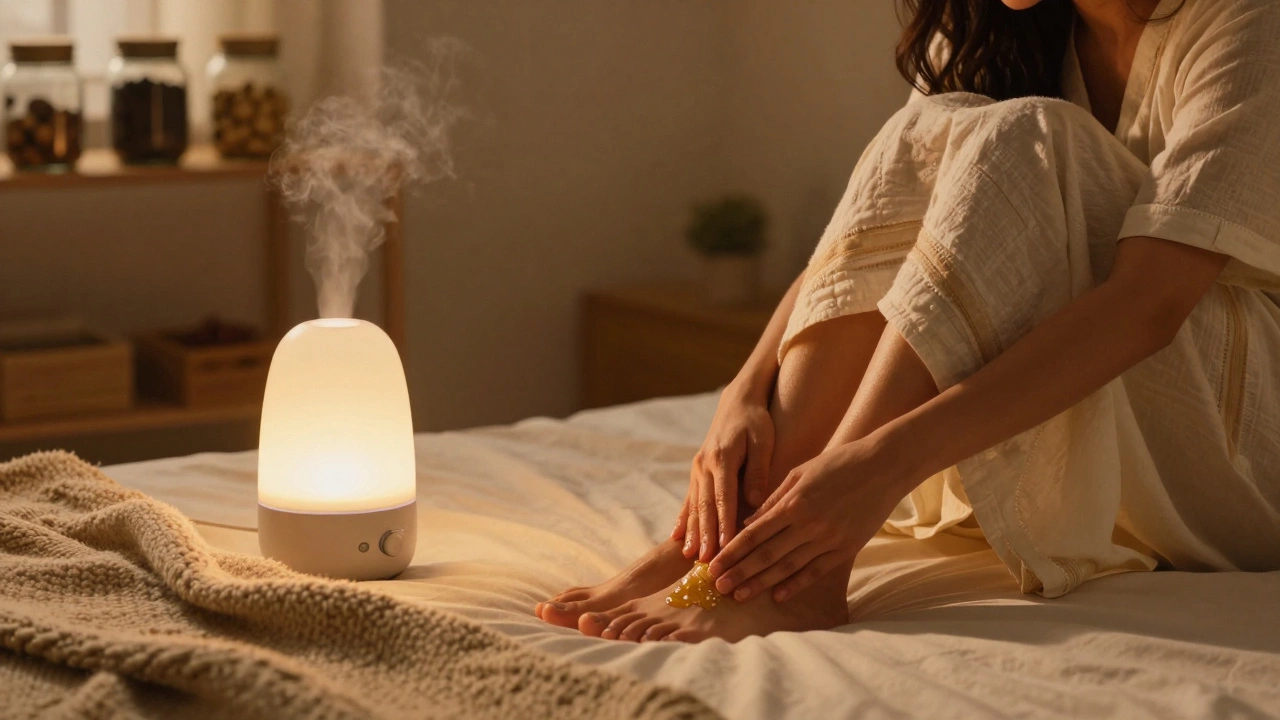
- Massage your feet with sesame oil. Focus on the soles-this grounds Vata energy.
- Read something soothing, not stimulating. Avoid screens for at least an hour before bed.
- Keep your room warm and quiet. Use a heavy blanket. A humidifier helps if the air is dry.
- Go to bed by 9:30-10 p.m. Don’t wait until you feel tired-Vata gets more restless the later it gets.
Pitta: Cool Down, Release Heat
- Have a light dinner by 7 p.m. Avoid spicy, sour, or fried foods-they stir up internal heat.
- Drink cooling herbal tea: fennel, coriander, or mint. Add a teaspoon of coconut water if you can.
- Take a cool (not cold) shower before bed. Splash your face and wrists.
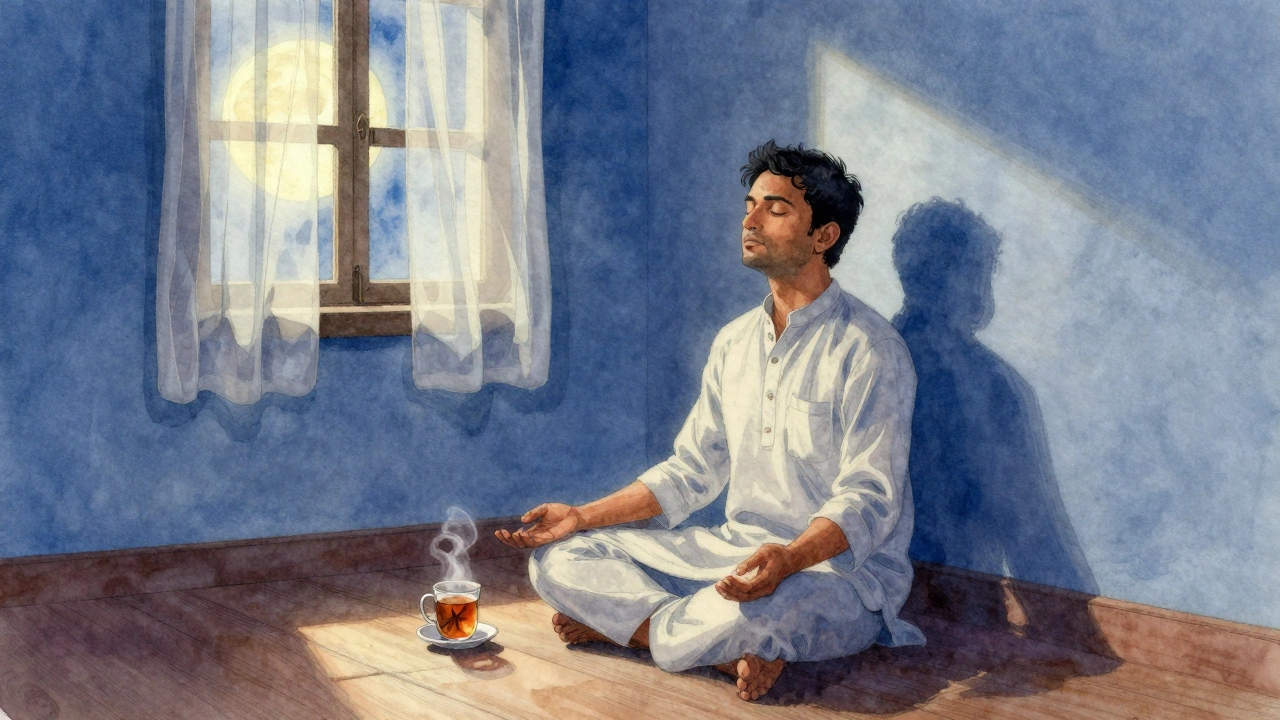
- Practice 5 minutes of breathwork: inhale for 4 counts, hold for 4, exhale for 8. Repeat 5 times.
- Keep your room cool and dark. Use cotton sheets. Avoid red or orange colors in the bedroom.
- Go to bed by 10 p.m. If you’re up past 10:30, your mind will start replaying the day’s stress.
Kapha: Stimulate, Don’t Snooze
- Eat dinner by 6:30 p.m. and keep it light-no heavy grains or dairy.
- Do 10 minutes of gentle movement before bed: stretching, yoga nidra, or walking around the house.
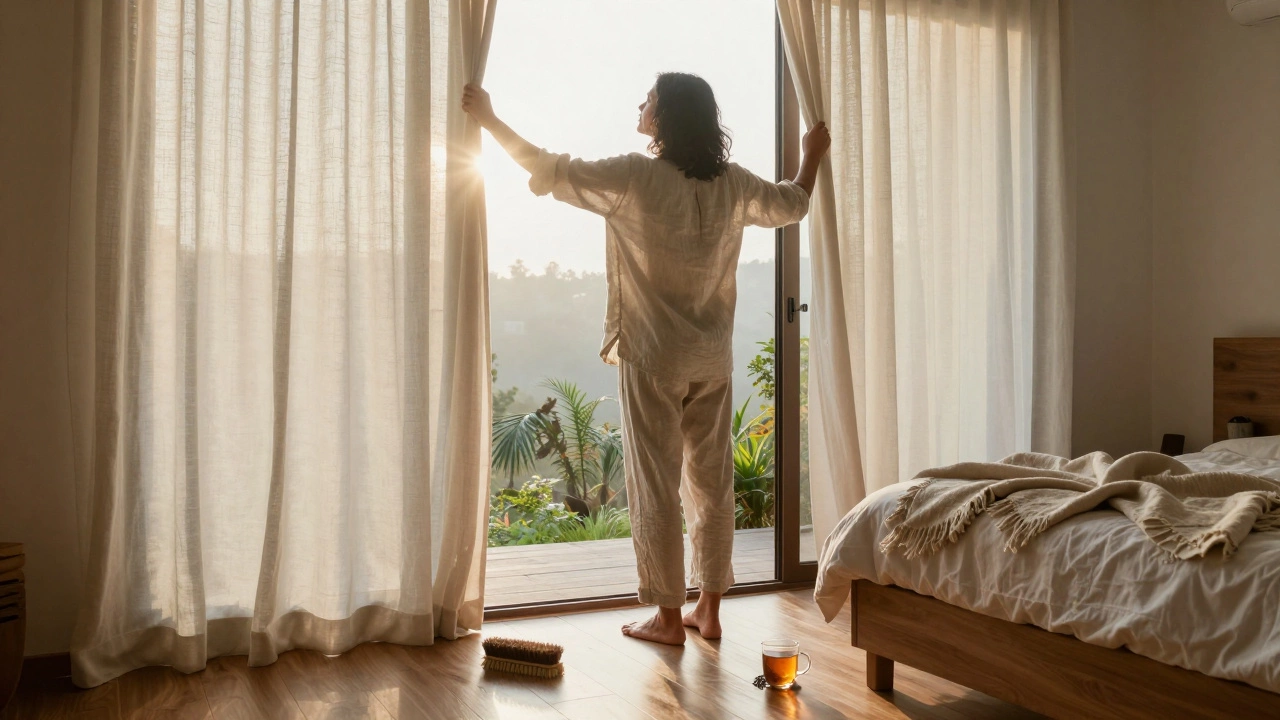
- Use a dry brush on your arms and legs before showering. It wakes up sluggish circulation.
- Keep your bedroom bright in the morning. Open curtains as soon as you wake up.
- Set your alarm for 5:30-6 a.m. Don’t hit snooze. Kapha types feel worse the longer they sleep in.
- Use a lighter blanket. Avoid sleeping on your back-it increases lethargy.
What to Avoid Before Bed
No matter your dosha, these habits sabotage Ayurvedic sleep:
- Screen time after 8 p.m. The blue light suppresses melatonin and tricks your brain into thinking it’s daytime.
- Heavy meals after 7 p.m. Your digestive fire (agni) slows down at night. Eating late means undigested food turns into toxins (ama).
- Caffeine after noon. Even green tea can keep Pitta and Vata types awake.
- Stressful conversations or arguments before bed. Emotions stored at night show up as nightmares or restless sleep.
- Alcohol. It may make you drowsy, but it disrupts deep sleep cycles and dehydrates your body.
Herbs and Supplements for Better Sleep
Ayurveda doesn’t rely on pills-it uses plants that work with your body, not against it.
- Ashwagandha: Best for Vata and Pitta. Reduces cortisol and calms the nervous system. Take 300 mg in warm milk at night.
- Brahmi: Great for Pitta and Vata. Enhances mental clarity and reduces anxiety. Often taken as a powder mixed with honey.
- Jatamansi: A powerful nervine herb. Helps with insomnia and racing thoughts. Use 1/4 tsp in warm water.
- Valerian root: Not traditional Ayurveda, but widely used in India today. Safe for short-term use if other herbs don’t work.
Don’t mix herbs without knowing your dosha. Ashwagandha can make Kapha types feel heavier. Brahmi can be too cooling for Vata in winter. Always start with small doses.
Real-Life Results: What People in Bangalore Are Saying
I’ve seen this work with patients in my clinic. One woman, 42, worked night shifts for years. She was always tired, had acid reflux, and couldn’t focus. She switched to a 9:30 p.m. bedtime, stopped eating after 7 p.m., and started massaging her feet with sesame oil. Within three weeks, her reflux vanished. She slept through the night for the first time in a decade.
A college student, 20, with Pitta dominance used to wake up at 2 a.m. with heartburn and anger. He cut out spicy food after dinner, drank fennel tea, and started breathing exercises. Within a week, he stopped waking up and felt calmer during the day.
These aren’t miracles. They’re simple adjustments to a system that’s been tested for 5,000 years.
What Happens When You Get It Right
When you align your sleep with Ayurveda, you don’t just sleep better-you wake up differently. You feel lighter. Your skin glows. You don’t crave sugar in the afternoon. Your emotions don’t swing like a pendulum. Digestion improves. You stop needing coffee to get through the day.
This isn’t about perfection. It’s about consistency. Even doing 3 of these things-like going to bed by 10:30, avoiding screens after 8, and drinking warm milk-will make a difference. Start small. Pick one dosha-specific habit and stick to it for a week.
Sleep isn’t a luxury in Ayurveda. It’s medicine. And like all medicine, it works best when you take it the right way, at the right time, for your body.
Can I sleep after 10 p.m. if I’m a night owl?
Yes, but only if your body demands it. Ayurveda recommends 10 p.m. as ideal because it matches the body’s natural detox cycle. If you’re naturally a night person (common in Vata types), try 10:30 p.m. as a limit. Sleeping past 11 p.m. regularly disrupts liver function and increases anxiety, especially for Pitta and Kapha types. The goal isn’t to force a rigid schedule, but to align with your body’s rhythm-not your phone’s notifications.
Is it okay to nap during the day?
It depends. Kapha types should avoid daytime naps-they make you sluggish and increase weight gain. Pitta types can nap briefly (20 minutes max) if they’re exhausted, but only before 2 p.m. Vata types benefit from a short rest after lunch, especially if they’re mentally drained. Never nap after 3 p.m., or you’ll mess up your nighttime sleep. A 15-minute rest with eyes closed is better than a full nap for most people.
Why do I wake up at 3 a.m. every night?
Waking up between 1 a.m. and 3 a.m. is a classic Pitta imbalance. This is when the liver is actively detoxifying. If you’re stressed, eat heavy meals late, or drink alcohol, your liver gets overloaded. Your body wakes you up because it’s trying to process toxins. To fix it: stop eating after 7 p.m., avoid spicy food, drink cooling teas like fennel or mint, and practice deep breathing before bed. If it continues, check for underlying inflammation or acidity.
Can Ayurvedic sleep help with insomnia?
Yes, but only if you address the root cause. Insomnia in Ayurveda isn’t one condition-it’s a symptom. Vata insomnia is caused by anxiety and racing thoughts. Pitta insomnia comes from overheating and anger. Kapha insomnia is rare but happens when someone is depressed or lethargic. The solution isn’t a pill-it’s a routine tailored to your dosha. Ashwagandha helps Vata, Brahmi helps Pitta, and movement helps Kapha. Most people see improvement in 7-14 days with consistent practice.
Do I need to follow all these rules perfectly?
No. Ayurveda is about balance, not perfection. If you’re new to this, start with just two things: go to bed by 10:30 p.m. and turn off screens an hour before sleep. That alone will improve your sleep quality. Add one more habit each week-like warm milk or foot massage. The goal is progress, not purity. Even 70% consistency brings noticeable results over time.

Write a comment